Evaluating Scene Hazards in a Snowstorm During a Medical Emergency
You’re at risk the moment you step into a snowstorm-whiteout conditions hide icy patches, frozen pipes, and falling ice, while winds over 25 mph speed frostbite in under 10 minutes. Wear insulated, high-visibility gear and move slowly, probing ahead for hidden hazards. A snowmobile cuts response time by 60% versus walking, and thermal drones scan 200 acres fast, confirming patient location safely. Staying warm and seeing clearly isn’t optional-it’s what keeps you functional when every minute counts. There’s a smarter way to manage cold emergencies, and it starts with preparation.
Notable Insights
- Assess scene safety first by pausing, scanning, and listening due to limited visibility and hidden hazards in snowstorms.
- Identify frostbite risks from wind chill and exposed skin, especially above 5,000 feet or in winds over 25 mph.
- Detect concealed dangers like ice patches, frozen pipes, and falling ice by moving slowly and probing snow ahead.
- Wear high-visibility, insulated, and waterproof gear to stay seen and protected in blizzard conditions.
- Use drones with thermal imaging to evaluate patient location and terrain risks before committing rescuers.
Check Scene Safety First in a Snowstorm
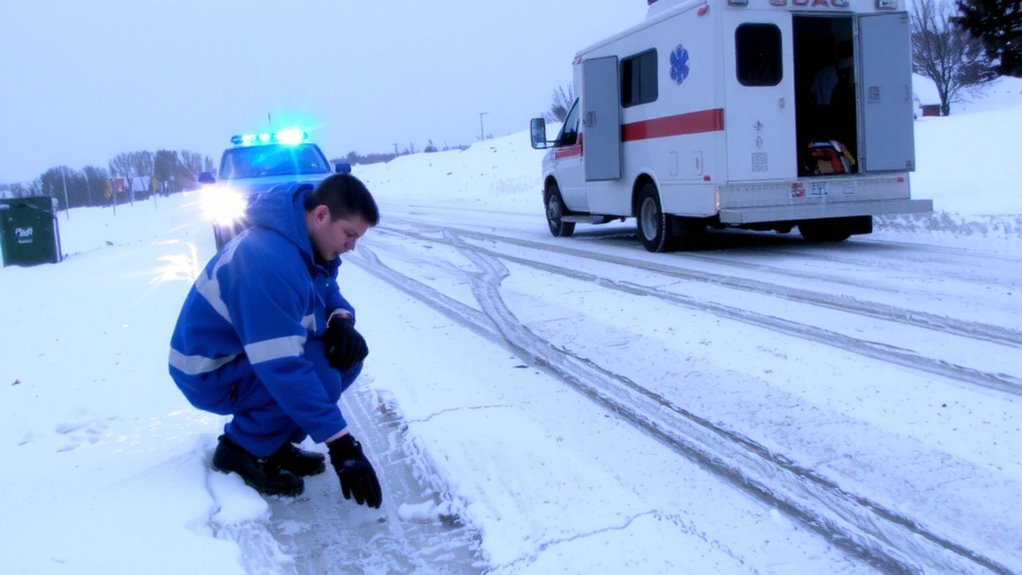
When you’re stepping into a snowstorm to assess a scene, checking for safety first isn’t just routine-it’s what keeps you from becoming part of the problem. Limited visibility means you can’t see hazards until you’re on top of them, increasing collision and misstep risks. You need to pause, scan, and listen before moving forward. Frostbite risk rises quickly when exposed skin is left unprotected, especially above 5,000 feet or in winds over 25 mph. Wear insulated, waterproof gloves and a balaclava-exposed skin can freeze in under 10 minutes under extreme conditions. Your outer layers should be high-visibility to counter limited visibility, helping team members spot you at 50 feet or more. Move slowly; traction is unreliable on snow-covered surfaces. Assume vehicles can’t see you. Prioritize shelter, warmth, and awareness. Your safety determines whether the rescue continues or becomes a recovery. Carrying essential gear in a properly fitted backcountry ski backpack ensures critical supplies are accessible without compromising mobility.
Find Hidden Winter Hazards That Delay Rescue
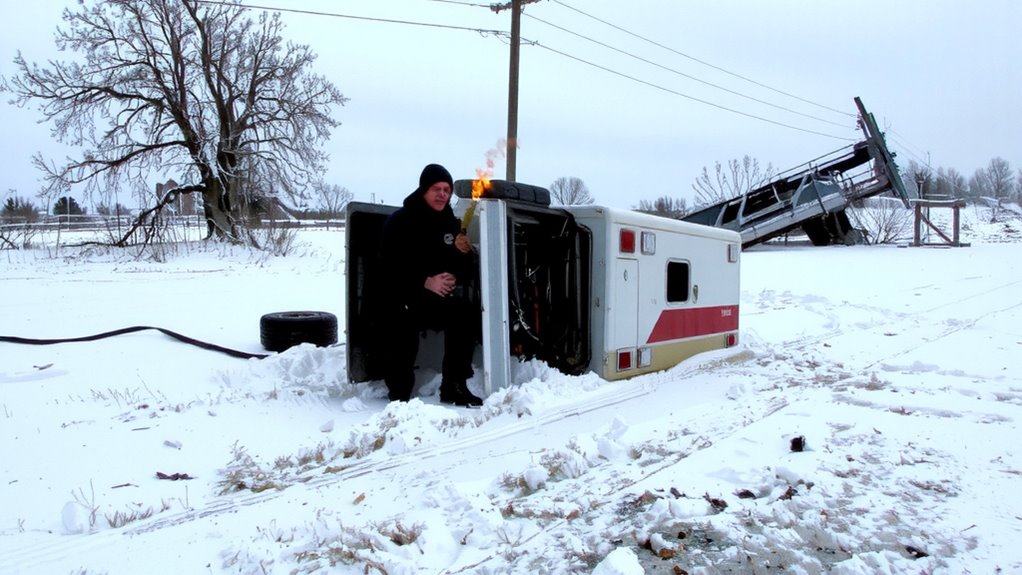
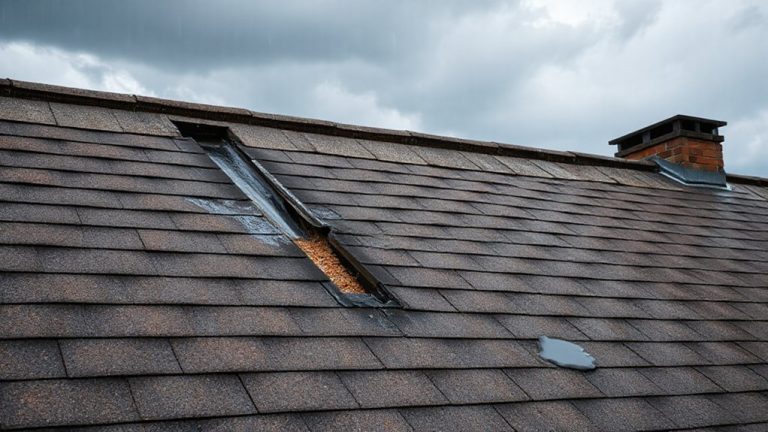
Your gear’s effectiveness means little if hidden winter hazards stop you before reaching the patient. Snow-covered ground often hides risks that delay rescue and compromise response time. Frozen pipes in unheated structures can rupture, creating unseen water pooling that rapidly turns to ice underfoot. What looks like stable ground might give way to slippery patches or uneven surfaces. Icy gutters along rooftops are another silent threat-they can shed large ice chunks without warning, especially as temperatures fluctuate. These hazards aren’t always visible during low visibility, making slow, deliberate movement essential. Probing ahead with your boot or tool helps detect soft spots or hidden ice. You can’t rush, even under pressure. Each step must account for concealed dangers that increase fall risk or block access. Recognizing these hidden threats improves your path assessment and keeps the mission on track-without unnecessary delays.
Protect Yourself Before Helping Others
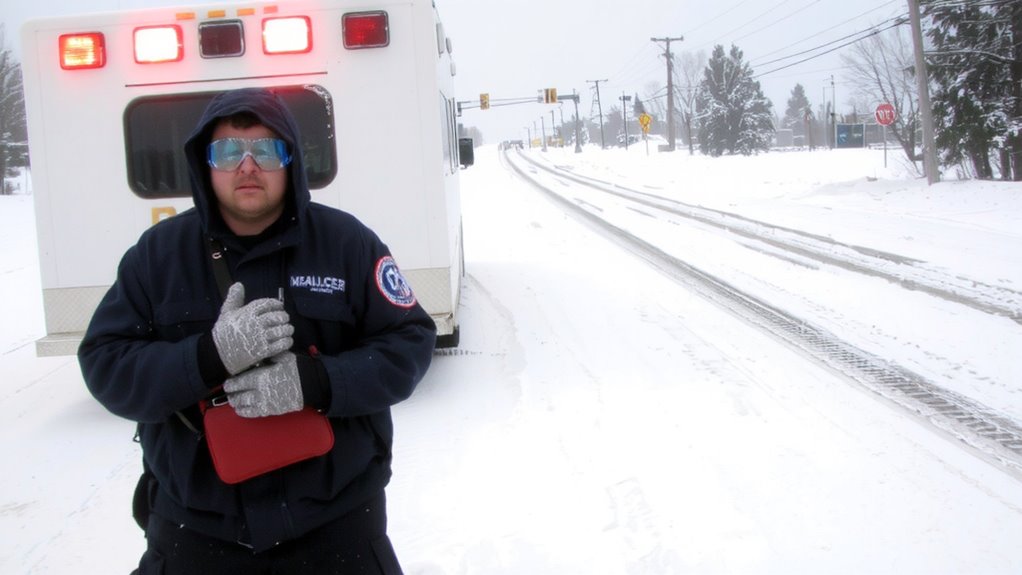
Even if the scene seems stable, you can’t help anyone if you become a casualty yourself, so personal protection comes first-every time. Maintaining personal warmth isn’t comfort-it’s critical function. Cold impairs dexterity, judgment, and stamina. Gear readiness determines your margin for error. Check layers, insulation, and outer shell durability before exiting your vehicle. Wet or compromised gear reduces effectiveness immediately. Use moisture-wicking base layers, insulated mid-layers, and windproof, waterproof outerwear. Carry extras in case of prolonged exposure. For extreme cold, consider investing in one of the best winter jackets for men in extreme cold conditions to ensure maximum protection and performance.
Spot Hypothermia and Cold-Induced Shock
How quickly can someone go from shivering to struggling to speak or move? In a snowstorm, hypothermia can set in under an hour, especially if wet or exposed. You’ll notice confusion, slurred speech, and weak motor control-early signs cold is winning. Vasoconstriction effects reduce blood flow to extremities, prioritizing core organs but increasing frostbite risk. This means hands, feet, ears, and nose cool fast. Check skin color: waxy white or grayish-yellow areas suggest frostbite identification is needed. Don’t wait for blisters. Numbness or hard texture confirms tissue damage. Cold-induced shock follows as core temperature drops below 95°F, impairing heart and lung function. You can’t reverse this onsite. Recognizing both hypothermia progression and frostbite early improves survival odds. Your assessment time matters more than your gear. Act fast, but stay sharp. You need clear judgment, not heroics.
Reach Patients Despite Blizzard Roadblocks
What good is a rescue plan if you can’t reach the patient? In a blizzard, roads become impassable, and standard vehicles stall. That’s where snowmobile access proves essential. A snowmobile with tracked propulsion and 15-inch or wider skis maintains mobility in deep snow, cutting response time by up to 60% compared to徒步 approaches. Pair it with preplanned routes tested in 30+ mph winds for reliable deployment. Before sending in personnel, conduct a drone assessment using a thermal-imaging UAV. Models like the DJI Matrice 30T withstand -20°C and scan 200 acres in 15 minutes, confirming patient location and terrain hazards. This reduces risk and confirms whether ground teams can proceed safely. Snowmobiles get you close; drones confirm the way. Neither replaces EMS, but together, they bridge the gap when minutes count and visibility drops below 50 feet. Plan for both.
Decide When to Wait for EMS in Winter Emergencies
When conditions exceed your gear’s limits, waiting for professional EMS isn’t surrender-it’s strategy. If visibility drops below 50 feet or winds exceed 35 mph, movement increases risk more than delay. You can’t maintain patient warmth if wet clothing freezes within minutes or shelter materials collapse under snow load. Hypothermia worsens quickly; core temperature drops fast in windchill below –10°F. Assess using clear emergency triage: prioritize breathing and circulation over mobility or minor injuries. If the patient’s conscious and stable, insulate them with vapor-barrier layers and reflective blankets-tested models retain 70% body heat even at –5°F. Don’t attempt evacuation if trails are impassable or GPS fails. Monitor responsiveness every 10 minutes. Waiting makes sense only if you’ve secured shelter, sustained patient warmth, and confirmed EMS is en route. Otherwise, risks outweigh delay. A reliable emergency blanket can make the difference in maintaining critical body heat during prolonged exposure.
On a final note
You can’t help if you’re hurt, so check for icy patches and drifting snow before moving in-visibility drops fast, and footing fails without warning. Cold numbs judgment; layer up but don’t overheat. Hypothermia sets in quicker than you think, especially if wet. Cell signals fade in storms, so carry a physical map. Roads may be impassable, but walking risks exposure. Wait when rescue is close. Act fast, but not reckless. Safety hinges on cold facts, not hope.