Balancing Amino Acids When Relying on Plant-Based Survival Foods
You can balance amino acids on a plant-based survival diet by relying on complete proteins like soy and quinoa, which supply all nine essentials. Pair legumes with grains or seeds with nuts to cover what one lacks. These combos don’t need to be in the same meal-your body pools amino acids over the day. Dried lentils, fermented rice, and shelf-stable soy products offer reliable nutrition for months. Smart pairings and proper storage keep protein quality high when options are limited-there’s more to optimizing this efficiently.
Notable Insights
- Soy and quinoa are complete plant proteins that provide all nine essential amino acids and store well for long-term use.
- Pair legumes with grains to balance amino acids, combining lysine-rich legumes with methionine-rich grains over the day.
- Use shelf-stable foods like dried lentils, brown rice, and sunflower seeds to maintain amino acid supply without refrigeration.
- Fermenting grains and sprouting legumes increases amino acid availability and improves protein quality in survival diets.
- The body pools amino acids daily, so consuming varied plant proteins throughout the day meets requirements without meal-time pairing.
Which Plant Proteins Are Complete?
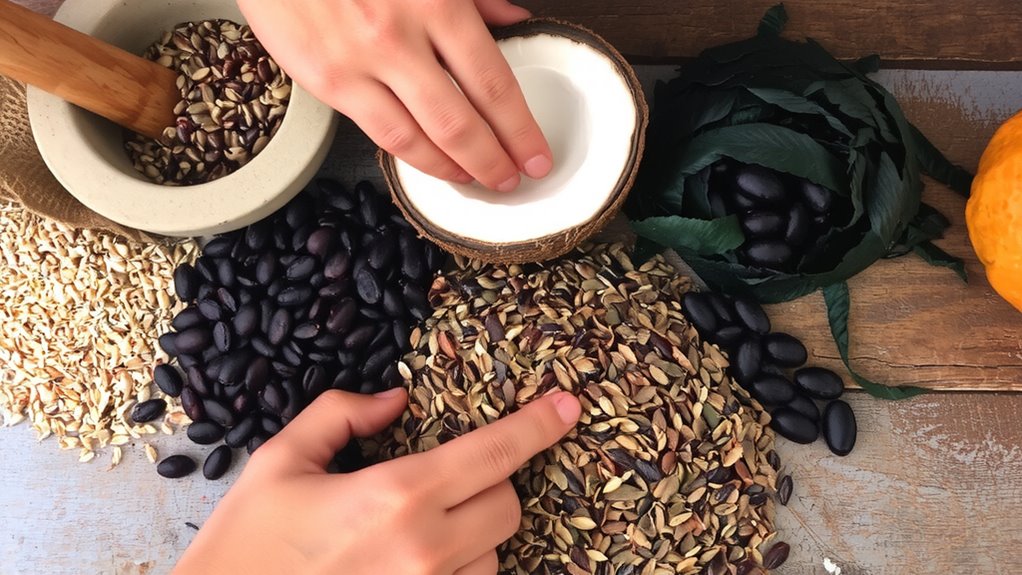
Complete proteins supply all nine essential amino acids your body can’t make on its own, and not every plant fits the bill. You’ll need reliable sources when counting every nutrient, especially in survival scenarios. Soy derivatives like tofu, tempeh, and edamame are complete and pack around 10–19 grams of protein per 100 grams, making them efficient choices. They’re shelf-stable when dried or properly stored, which matters in long-term planning. Quinoa varieties also deliver all nine amino acids, offering about 8 grams of protein per cooked cup. Unlike most grains, quinoa’s amino acid profile is balanced, with lysine levels high enough to meet daily requirements. It stores well when kept dry and can be grown in varied climates, adding to its survival value. Both options tested under real-world conditions show consistent nutrient retention. While soy derivatives offer higher protein density, quinoa varieties provide more fiber and micronutrients per serving. Choose based on storage, prep time, and nutritional trade-offs.
Best Food Combos That Make Complete Proteins
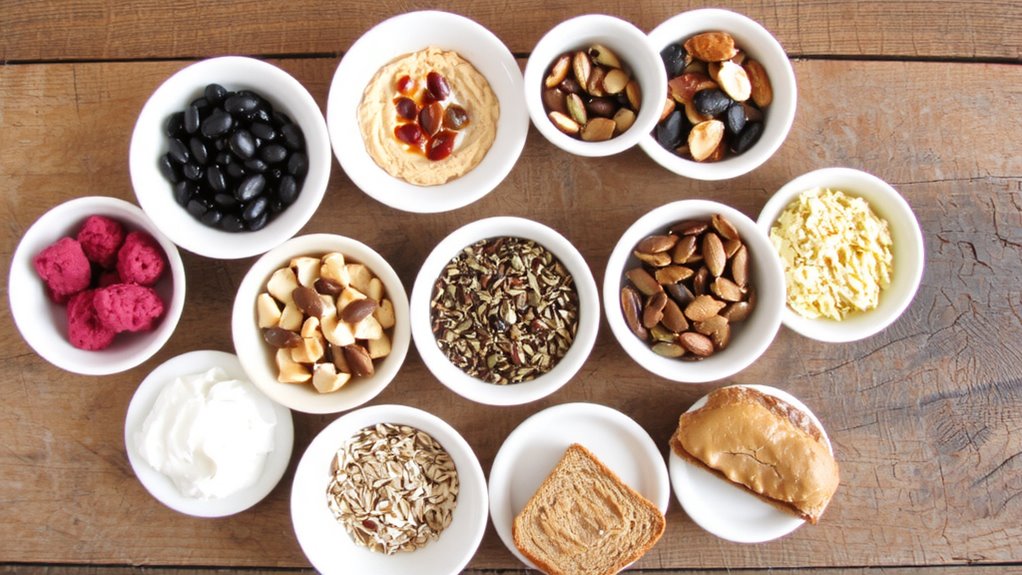
You’ll often need to combine plant foods to get all nine essential amino acids, since most aren’t complete on their own. The most reliable method is legume grain pairing-black beans with rice or lentils with barley-because legumes supply lysine, which grains lack, while grains contribute methionine, limiting in legumes. This combo reliably delivers a full amino acid profile with minimal effort. Seed nut blending also works well; mixing sunflower seeds with almonds or chia with walnuts balances deficiencies, as seeds often lack lysine but provide methionine, while nuts are richer in lysine. These pairings don’t need to happen in one meal but should occur over the day. Both strategies are practical in survival scenarios, using shelf-stable ingredients. Legume grain pairing tends to offer more calories and bulk, while seed nut blending provides more fats and fewer carbs. Choose based on your nutrient needs and available supplies.
Top Shelf-Stable Foods for Amino Acid Balance
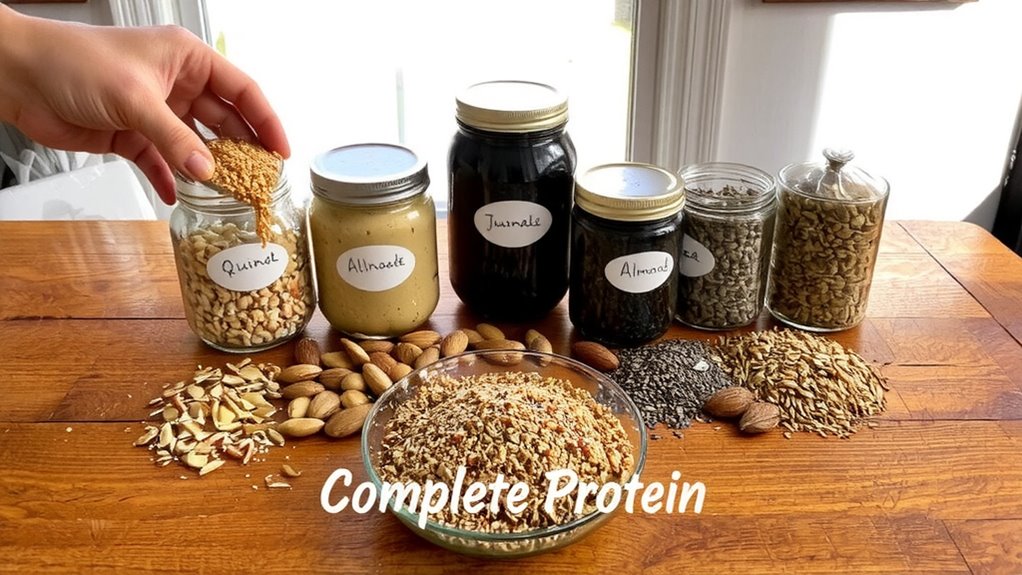
Pairing legumes with grains or seeds with nuts sets the foundation for balanced amino acids, but knowing which shelf-stable foods deliver the most reliable profiles makes a difference when supplies are limited. You’ll want to prioritize foods that retain quality over time and support amino acid balance with minimal prep. Sprouting legumes boosts lysine and digestibility, while fermenting grains increases methionine availability and shelf life. Stock these staples in airtight, dark-stored containers to maximize longevity.
| Food Type | Amino Acid Strength | Shelf Life (Stored Properly) |
|---|---|---|
| Lentils (dry) | High lysine | 2–3 years |
| Brown rice (fermented) | Better methionine | 1–2 years |
| Sunflower seeds | Rich in sulfur AAs | 1–2 years |
Sprouting legumes and fermenting grains are low-effort ways to enhance protein quality without refrigeration or additives.
Balance Amino Acids Over the Day: Not Every Meal
Why worry about getting all essential amino acids in every meal when your body can pool them over time? You don’t need perfect protein pairing at each sitting. Amino timing matters less than total daily intake, especially in survival scenarios. Your body maintains a free-amino acid pool, drawing from it as needed for synthesis. As long as you consume a variety of plant-based proteins throughout the day, deficits in one meal are balanced later. Think rice for lunch, beans for dinner-classic protein pairing spread out, still effective. Relying on shelf-stable options like lentils, quinoa, and peanut butter helps cover gaps over 24 hours. The trade-off? Slower muscle repair than with animal proteins, but adequate for maintenance. Obsessing over each meal’s completeness wastes energy. Focus instead on daily diversity. It’s practical, measurable, and sustainable-exactly what survival demands.
Survival Foods That Cover All Essential Amino Acids
A complete protein source contains all nine essential amino acids in sufficient amounts, and a few shelf-stable plant foods meet this standard on their own. You can rely on soybeans and quinoa as they score well in amino acid scoring, providing balanced profiles comparable to animal proteins. These foods support nitrogen retention, meaning your body holds onto protein more efficiently, preserving muscle during caloric deficits. Textured soy protein and canned soy products, such as edamame, offer long shelf life and consistent nutrition. Quinoa, though pricier, stores well in cool, dry conditions and cooks quickly. While most plant proteins lack one or more essential amino acids, these exceptions provide completeness without requiring pairing at every meal. Their high digestibility and functional profiles make them practical choices for sustained use. You won’t need to overconsume to meet needs, reducing dietary volume and strain on preparation resources when supplies are limited.
On a final note
You don’t need perfect protein balance at every meal-just over the day. Rely on shelf-stable combos like rice and beans or peanut butter on whole wheat to cover all essential amino acids. Include soy, quinoa, or spirulina when possible; they’re complete proteins. Most plant-based survival foods lack one or two amino acids, but smart pairing fixes that. Plan for variety, not perfection, and you’ll maintain muscle and function effectively.