Purifying Water With a Ceramic-Filter Squeeze Bottle
You can purify water by squeezing it through a 0.2–0.5 micron ceramic filter that traps bacteria and protozoa like E. coli and Giardia. It won’t remove viruses, chemicals, or heavy metals unless a carbon core is included. Flow slows over time, so scrub the filter surface with a soft brush to maintain performance. A clean filter delivers about 1 liter per minute and lasts 800 to 2,500 liters. Replacement costs $22–$35, with premium models offering better long-term value. Crack detection and consistent output matter most-keep an eye on both. You’ll want to know how maintenance affects longevity and performance over time.
Notable Insights
- Submerge and squeeze the silicone sleeve to prime the ceramic filter for optimal flow.
- Ceramic pores (0.2–0.5 microns) block bacteria and protozoa like E. coli and Giardia.
- Pre-filter murky water with a cloth to prevent clogging and maintain filtration speed.
- Clean the filter by scrubbing with a soft brush; avoid chemicals to preserve integrity.
- Replace the ceramic filter every 6–12 months or if cracked, to ensure safe water output.
How to Use a Ceramic-Filter Squeeze Bottle
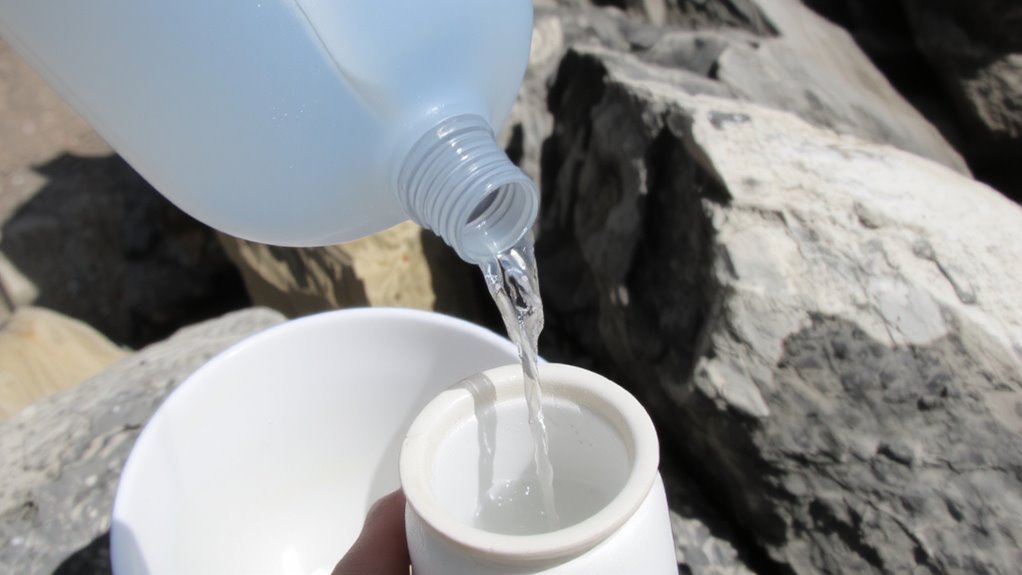
Ever wonder how to get clean water fast when you’re off the grid? You’ll need to master filter priming first-dip the ceramic-filter squeeze bottle fully in water, then squeeze the outer silicone sleeve to start suction. It takes a few seconds, but proper priming guarantees the flow rate stays steady. A clean ceramic filter delivers about 1 liter per minute, but if the water’s dirty, expect slower output. You can scrub the filter surface lightly to restore speed, but don’t expect miracles in silty sources. Flow rate drops as pores clog, so maintenance matters. Pre-filter murky water through a bandana if you can. The bottle’s lightweight, but squeezing for long periods gets tiring. Still, it’s reliable if you prime correctly and manage how hard you push the filter. It’s not fast like pumps, but it’s simple and durable.
Why Ceramic-Filter Squeeze Bottles Work
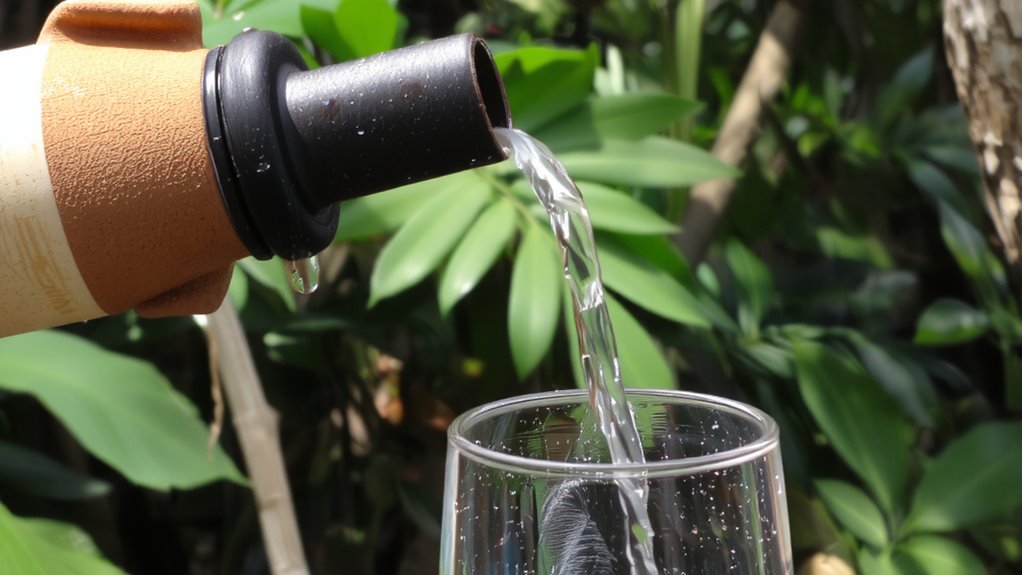
You’ve seen how to prime and use a ceramic-filter squeeze bottle, but knowing why it works helps you judge its real-world value. The key is the filter’s pore size, typically around 0.2 to 0.5 microns. This small opening physically blocks bacteria and protozoa, which are usually larger than 1 micron. Filtration efficiency is high for these pathogens, meaning most contaminants can’t pass through under normal pressure. The ceramic material traps particles on the surface, which you can clean by scrubbing to restore flow. It doesn’t rely on chemicals, so the taste stays neutral. However, smaller viruses may still get through, which limits its use in high-risk areas. You’re depending on mechanical filtration, not absorption or chemical treatment. That makes the system simple, predictable, and durable with proper care.
What Your Filter Removes (And What It Doesn’t)
A filter’s effectiveness hinges on what it actually removes-and what it doesn’t. Your ceramic filter traps bacteria and protozoa like E. coli and giardia, thanks to pores typically sized at 0.2 to 0.5 microns. That’s effective for most biological contaminants found in rivers or lakes. But it won’t stop chemical residues from agricultural runoff, industrial waste, or pharmaceuticals-those pass right through. Heavy metals and dissolved salts also remain in the water unless your filter includes an activated carbon layer, which helps reduce some chemicals but not all. More critically, ceramic filters don’t remove radioactive particles. If you’re in an area with potential radiological contamination, this filter won’t protect you. It’s reliable for microbial threats in typical backcountry settings, but limited against invisible, dissolved, or atomic-scale hazards. Know its boundaries so you don’t depend on it where it fails.
Clean and Maintain Your Ceramic Filter
Regularly cleaning your ceramic filter maintains its flow rate and effectiveness. When you notice slower flow, scrub the surface with a soft brush under clean water-this simple cleaning technique removes debris clogging the pores. Do this every few uses or whenever output drops. You don’t need chemicals; plain water works. Over time, wear reduces performance, so track filter replacement frequency: most ceramic filters last 6 to 12 months with regular use. Replace sooner if you spot cracks or flow doesn’t improve after cleaning. Unlike hollow fiber filters, ceramic elements can handle dirty water, but they’re fragile. Keep the filter intact-don’t use abrasive materials during cleaning. Each model varies slightly, so check manufacturer guidelines. A clean filter secures consistent filtration, while timely replacement guarantees continued protection. Maintain it properly, and it delivers reliable performance in the field.
Why Choose Ceramic Over Other Filters
Ceramic stands out for its durability and reliability in harsh conditions, making it a top pick when clean water isn’t guaranteed. You’ll find ceramic holds up better in a durability comparison with plastic or fiber filters, resisting cracks and wear over time. Its pore consistency guarantees reliable filtration down to 0.2 microns, effectively blocking bacteria and protozoa. Unlike some membranes that degrade with use, ceramic maintains performance across hundreds of liters. You can clean it repeatedly without reducing its lifespan, which matters in extended trips. While ceramic is heavier than some alternatives, its consistent pore structure gives predictable results, even in silty water. It doesn’t rely on chemicals or power, so you won’t face unexpected failures. When failure isn’t an option, ceramic’s measurable performance and resilience make it a practical choice. You get what’s been tested and proven-no guesswork.
When to Use a Ceramic-Filter Squeeze Bottle
You’ll want a ceramic-filter squeeze bottle when portability meets the need for dependable filtration on short trips or emergency kits. It’s ideal for backcountry camping where space and weight matter, yet you still need to filter silt and pathogens from streams or lakes. The system handles moderate water volumes efficiently, typically filtering up to 1,000 liters depending on the model, making it reliable for multi-day outings. For emergency preparedness, its durability and lack of reliance on power or chemicals give it an edge over alternatives. You can use it straight from storage without charging or assembly. However, flow rate slows as the filter clogs, so pre-filtering murky water helps. It won’t remove viruses unless paired with chemical treatment, a necessary trade-off to contemplate. Use it when bacterial and protozoan protection is the priority, and when simplicity outweighs the need for ultra-fast output.
Key Features of the Best Models
Don’t expect every ceramic filter squeeze bottle to perform the same-top models stand out with a pore size of 0.2 to 0.5 microns, effectively blocking bacteria and protozoa like E. coli and Giardia. You’ll want a long filter lifespan, ideally rated for 1,000 to 3,000 liters, so you’re not replacing it often. Consider replacement cost, too, since some cartridges exceed $30. A robust housing and smooth flow rate improve daily use without sacrificing reliability. Here’s a quick comparison:
| Feature | Budget Model | Premium Model |
|---|---|---|
| Filter lifespan | 800 liters | 2,500 liters |
| Replacement cost | $22 | $35 |
Premium models cost more upfront and for replacements, but last longer per dollar spent. Choose based on how much you’ll use it-frequent travelers need durability.
On a final note
You’ll get clean water fast in most backcountry conditions, but you’ll need to clean the filter often. It removes bacteria and protozoa, not viruses. Flow slows as it clogs, so carry backup or pre-filter murky water. It’s durable and doesn’t need batteries, unlike some pumps. Weight and size beat most gravity systems. For extended trips or questionable sources, pair it with chemical treatment. It works, but know its limits.