How to Harvest Seaweed Responsibly Along Coastal Emergency Routes
You can harvest seaweed like kelp, dulse, or nori along coastal emergency routes by cutting just above the holdfast to guarantee regrowth. Only take what you need-leave at least half and avoid polluted or storm-damaged areas where toxins may lurk. Stick to abundant patches, rotate harvest zones, and skip reproductive peaks to protect future yields. This keeps the ecosystem stable and your food source reliable. Smart, small-scale harvesting now pays off when supplies run low.
Notable Insights
- Harvest only abundant, regenerative species like kelp and dulse to ensure rapid regrowth and ecosystem resilience.
- Cut seaweed at the base above the holdfast with a sharp knife to allow regrowth and minimize damage.
- Avoid polluted areas near runoff, industry, or disaster sites where contaminants may accumulate in seaweed.
- Limit harvest to 20% of any patch and leave half the bed intact to sustain long-term yields.
- Rotate harvest locations seasonally and avoid ecologically sensitive zones to support environmental stability.
Identify Edible and Regenerative Seaweed Species First
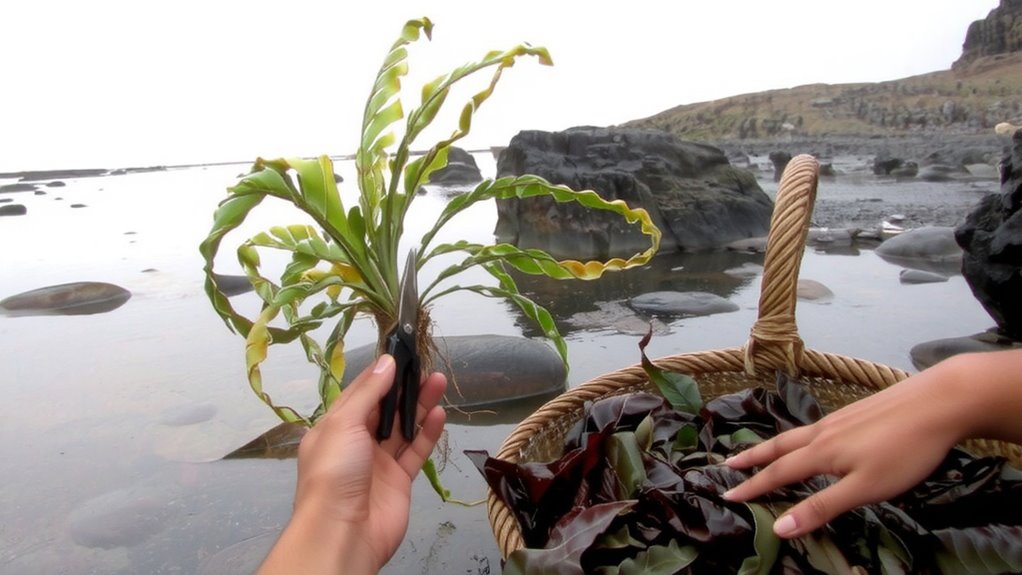
What good is harvesting if you don’t know what you’re picking? You could grab something toxic or damage a non-regenerative species. Start by learning which seaweeds are edible and regrow after harvest-like kelp, nori, and dulse. Each has a distinct taste profile: dulse is smoky, nori is mild, kelp is briny. Knowing this helps you avoid waste and select the right type for your needs. More importantly, check the nutrient content. Dulse offers iron and protein; kelp delivers iodine and calcium. Harvesting blindly risks poor nutrition and ecological harm. Use a field guide or app to confirm identity before collection. Mistaking a lookalike could mean eating something inedible or stripping a slow-growing species. Your survival depends on accuracy, not luck. Identify first-every time.
Cut at the Base to Preserve Roots and Regrowth
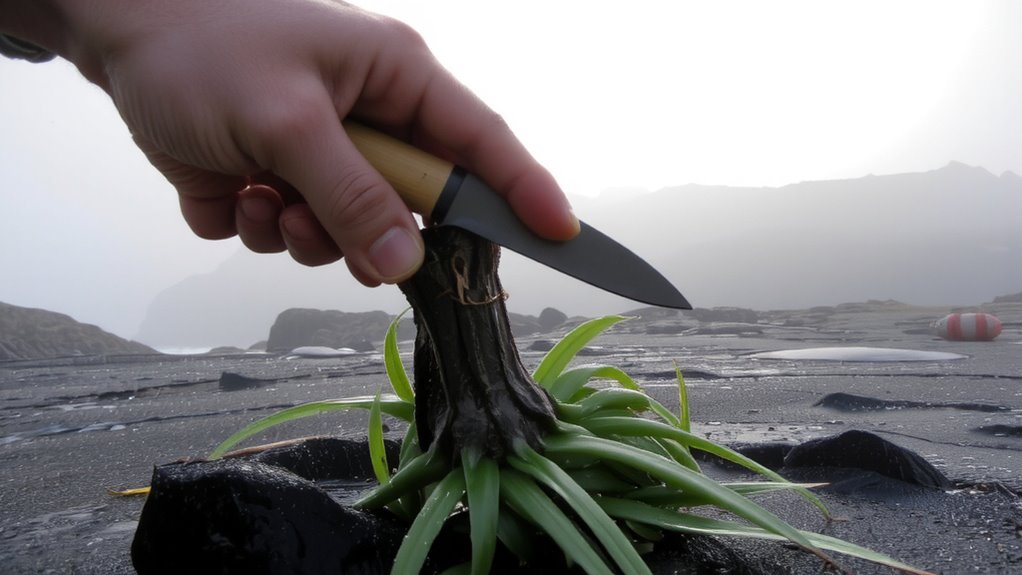
Now that you can tell the difference between edible species and their non-edible lookalikes, it’s time to focus on how you harvest. Cut seaweed at the base, just above the holdfast, instead of pulling it up. This allows the plant to regrow, maintaining its lifecycle and supporting sustainable harvesting. Removing the entire organism damages the seabed and disrupts ecological balance. Use a sharp knife for clean cuts-rough tearing reduces regrowth rates. Most regenerative species, like kelp and dulse, rebound within weeks if harvested correctly. Cutting at the base guarantees you take only what you need while preserving future yields. Overharvesting or root removal leads to long-term depletion. Stick to this method even when supplies seem abundant. Consistency supports resilience, especially along emergency coastal routes where resources may be critical. Your actions directly affect marine stability-practice restraint to uphold both supply and ecosystem health. Each cut shapes the coastline’s future.
Skip Harvesting Near Polluted Water or Disaster Zones
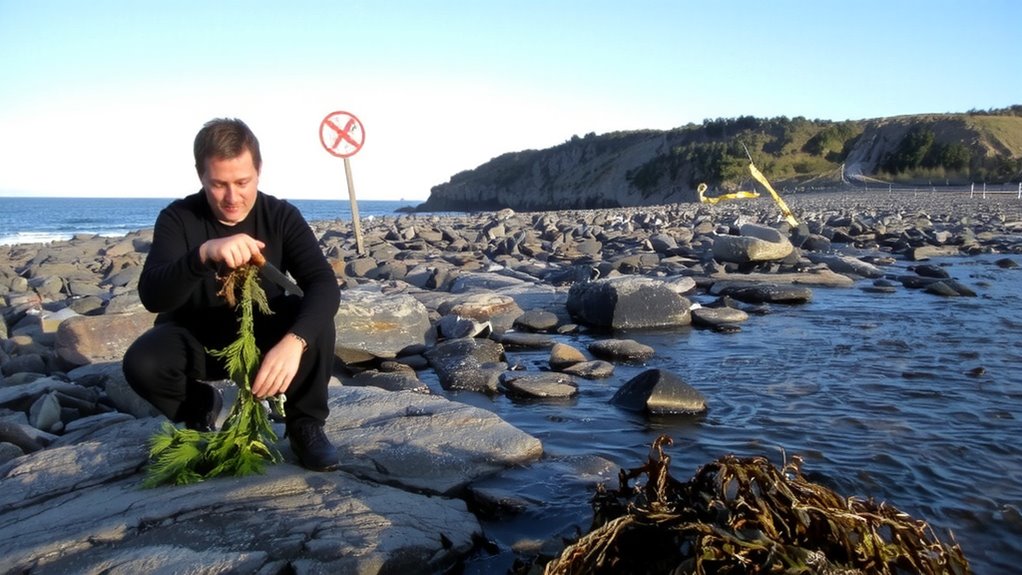
While water quality isn’t always visible, harvesting seaweed near polluted areas or recent disaster zones puts your health at risk and degrades ecosystem recovery. You can’t see water contamination, but it’s often present near runoff outlets, industrial sites, or damaged infrastructure. Consuming seaweed from these zones may expose you to heavy metals, bacteria, or toxins. Similarly, disaster debris lingers after hurricanes, tsunamis, or oil spills, releasing pollutants that accumulate in marine plants. Even if the seaweed looks clean, it can absorb harmful substances from its environment. Avoid shorelines with visible trash, oil sheens, or chemical odors. Stick to areas confirmed as safe by local authorities or recent water testing. Harvesting in compromised zones not only endangers you but also disrupts fragile recovery efforts. Skip these spots-your safety and the coast’s health depend on it.
Limit Your Take to Allow Natural Recovery
Take only what you need-leaving at least half the seaweed bed intact guarantees it can regenerate for future growth. Overharvesting damages long-term yield. Use sustainable timing: avoid peak reproductive seasons. Apply seasonal rotation to different beds so each area recovers fully before next harvest.
| Method | Recovery Time | Yield Impact |
|---|---|---|
| Cut top 1/3 | 6–8 weeks | Low |
| Strip entire plant | 3–5 months | High |
| Harvest every other bed | 10–12 weeks | Moderate |
Cutting just the top promotes faster regrowth. Full removal slows recovery. Rotating beds spreads impact. This approach secures consistent supply without collapse. You don’t gain by taking more-short-term gain brings long-term loss. Practice restraint. Regeneration is measurable, not theoretical. Track regrowth over weeks. Adjust based on observed recovery. Sustainable timing and seasonal rotation aren’t optional-they’re essential for reliable access during emergencies.
Protect Ecosystems by Harvesting Responsibly in Crises
If you’re harvesting seaweed during emergencies, you can’t afford to ignore the condition of the ecosystem-depleting a bed now means losing a food source later. Use ethical sourcing by taking only what’s necessary and avoiding rare or slow-growing species. Stick to abundant, fast-recovering types like kelp fronds or sea lettuce, and leave roots and holdfasts intact. This supports sustainable practices and guarantees regrowth. Cut, don’t tear, using a sharp knife to minimize damage. Limit harvest to 20% of any patch, spreading collection across wide areas to prevent localized depletion. Avoid harvesting in storm-damaged or polluted zones, where recovery is already compromised. Prioritize beds that aren’t critical for fish spawning or erosion control. Every decision affects long-term viability. Responsible harvesting isn’t optional-it’s essential for food security. Plan each take with the next tide in mind.
On a final note
You should only harvest seaweed you can positively identify as edible and regenerative. Cut at the base to let it regrow, never pull it out. Avoid areas near pollution or recent disasters-contaminants absorb quickly. Take less than half what’s available so ecosystems stay intact. In emergencies, this balance keeps your nutrition sustainable and protects coastal resilience. It’s not just survival-it’s smart resource use.