Cattail Debris Shelter: Build Guide With Fluff Insulation
Cut cattail reeds in late summer from clean, wet areas and use straight, 6–8 foot stalks for your shelter frame. Tie them tightly at the top and overlap side-by-side for strength. Stuff cattail fluff loosely inside for insulation-it traps air well but loses efficiency if damp. Layer reeds and broad leaves over the fluff at a 45-degree angle to shed rain. Keep the fluff dry and compress layers moderately; test with water to confirm waterproofing. Wind resistance improves with cross-bracing and tight lashings every 6 inches. A front baffle of packed reeds cuts wind exposure. Insulate the ground with debris and fluff, then add a survival blanket to reflect body heat. This design balances weight, insulation, and weather resistance better than most natural options when built correctly-you’ll see how each part performs under real conditions.
Notable Insights
- Harvest cattails from clean wetlands in late summer, selecting plants with brown seed heads for fluff collection.
- Use straight, mature reeds 6 to 8 feet long to construct a sturdy shelter frame with a secure ridgepole.
- Insulate the shelter with several inches of loose cattail fluff, which traps air effectively when kept dry.
- Layer reeds densely over the fluff, then add overlapping leaves or bark to shed rain and prevent moisture buildup.
- Angle the roof at 45 degrees and add a front baffle of packed reeds to improve wind resistance and heat retention.
Find and Harvest Cattails Safely
Where should you look for cattails? You’ll find them in wetlands, along pond edges, or in slow-moving streams where the soil stays saturated. They thrive in full sun and stand 3–10 feet tall, with distinctive brown seed heads and flat, sword-like leaves. Cattail identification is simple-look for the dense, cylindrical spike that starts green and turns dark brown. Avoid stands near polluted or runoff-contaminated water, as they absorb toxins. For safe harvesting techniques, use a sharp knife or your hands to cut the base of the stalk just above the root. Harvest in late summer to early fall when the fluff is dry and reeds are sturdy. Take only what you need, leaving enough to sustain the patch. Always check local regulations-some areas restrict wild harvesting.
Build a Sturdy Frame With Cattail Reeds
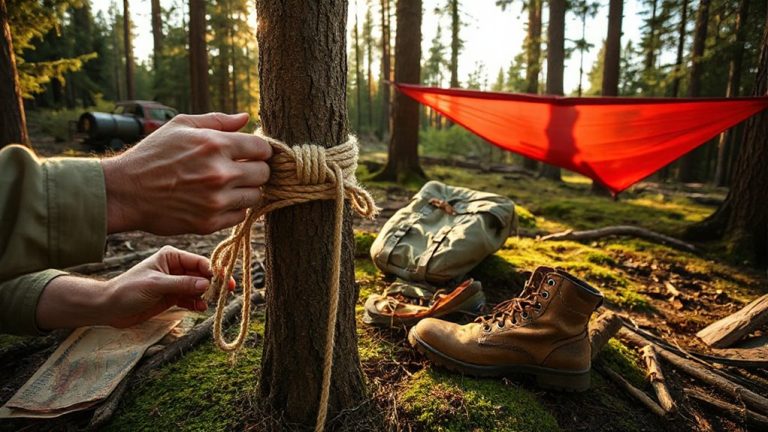
You’ll want to start with straight, mature cattail reeds-ideally 6 to 8 feet long-for your shelter frame, since they offer rigidity and natural taper that aids in lashing. Bundle them tightly at the top to form a ridgepole, anchoring both ends into the ground or secure them between two trees. Overlapping reeds side-by-side along the frame guarantees even load distribution and boosts structural integrity.
| Feature | Benefit |
|---|---|
| Natural taper | Easier lashing, secure joints |
| Hollow core | Lightweight yet sufficient strength |
| Mature reeds | Better resistance to bending |
Use green, freshly harvested reeds if immediate use is planned-they’ll shrink and tighten as they dry. Avoid cracked or brittle stalks. Cross-bracing with smaller reeds adds stability without excess weight, improving performance under wind or debris load.
Insulate Your Shelter With Cattail Fluff
A layer of cattail fluff spread over the reed frame adds effective insulation, trapping air in its fine, downy fibers to slow heat transfer. You’ll want several inches packed loosely to minimize thermal conductivity-its performance matches synthetic insulators in still, dry conditions. However, cattail fluff has high moisture retention, so it loses efficiency if damp. In wet environments, trap it between breathable natural layers to reduce condensation. It compresses easily, so don’t step on it during construction. Compared to dry leaves or pine needles, cattail fluff insulates better per inch but requires more careful handling. It’s light and abundant near wetlands, making it practical when weight and availability matter. But since it holds water, avoid direct ground contact. Use it where humidity is low or airflow is strong. Your shelter’s warmth depends on how well you manage these factors. Insulation only works when the material maintains trapped air, and cattail fluff does that-just keep it dry.
Waterproof With Natural Layers
While cattail fluff insulates well, it soaks up moisture like a sponge, so you’ll need reliable waterproofing to keep the interior dry. Start by layering reeds over the insulation to create a base that repels water. Use long, flexible reeds tightly bound to the frame to guarantee thatch density-the tighter the weave, the better it sheds rain. Over this, add overlapping layers of broad leaves, bark, or ferns, angling them downward so water runs off. Apply moderate layer compression as you build; too loose and water penetrates, too tight and airflow stops, risking condensation. Three to four inches of compressed thatch performs best in moderate rain. This system won’t handle heavy downpours indefinitely, but with proper slope and density, it keeps the core dry in most conditions. Test it by pouring water on a test patch-you shouldn’t see dampness below.
Reinforce Against Wind and Rain
Since wind can lift layered thatch and drive rain sideways through gaps, securing the outer covering is critical for maintaining shelter integrity. You’ll need to boost wind resistance by tightly weaving reeds across the frame and lashing them at intervals no wider than 6 inches. This keeps the structure anchored during gusts. Overlap cattail fluff bundles like shingles to improve rain runoff, letting water sheet off instead of seeping in. Angling the shelter’s roof at 45 degrees enhances runoff efficiency without overloading the frame. Add a front baffle of packed reeds to deflect wind and reduce side exposure. Test stability by applying firm hand pressure-any give means you need more lashings. These steps don’t eliminate vulnerability but reduce risk considerably. Wind resistance and rain runoff depend on consistency in layering, not material thickness. Skip loose spots. Recheck anchor points if conditions worsen. For added protection in heavy downpours, consider integrating a best tarp shelter as an outer shell to enhance waterproofing.
Stay Warm All Night: Key Tips
You’ve secured the structure against wind and rain, but staying warm all night depends on more than a solid shell. Focus on body heat retention by insulating yourself from the ground with a thick layer of dry debris-this prevents thermal loss through conduction. Use cattail fluff as a base layer under your back; its fine fibers trap air efficiently, offering reliable emergency warmth. Add reeds or leaves on top to reduce airflow through your bedding. Keep your shelter small to concentrate warmth, and seal gaps with soft debris to avoid drafts. Wear all dry layers, tuck in limbs, and use a survival blanket if available-it reflects 90% of radiated heat. Avoid sweating, since damp clothing accelerates heat loss. Monitor your extremities; cold hands or feet signal poor circulation. Adjust insulation until shivering stops. This setup supports core warmth, critical for sustained survival. For extended trips, consider bringing a compact self-inflating mattress to enhance ground insulation and comfort.
Why Cattails Work Best for Survival Shelters
A cattail bed’s insulating power comes down to its structure-those feathery seed heads trap air in tiny pockets, giving them a loft-to-weight ratio that outperforms most natural materials. You’ll find cattail fluff delivers strong thermal retention, holding warmth even when compressed under debris layers. Unlike leaves or grass, it resists clumping and maintains consistent insulation. Its fibers also offer notable moisture resistance, shedding light rain and slowing damp transfer from the ground. When packed into wall or roof sections, cattail material stays effective longer in wet conditions than moss or pine needles. Reeds add structural support while the fluff fills gaps, reducing airflow without sealing completely. You get a balance: enough breathability to prevent condensation, yet enough density to block wind. It’s not waterproof, but with a lean-to angle and wide eaves, cattails keep shelters dry enough. They’re renewable, easy to harvest, and compact when dry-ideal for long-term survival setups where weight and space matter.
On a final note
You’ve built a functional shelter using cattail reeds for structure and fluff for insulation. It traps heat better than leaf litter and sheds rain when layered thick. Wind resistance depends on frame stability and overlap density. It’s lighter than pine boughs but requires more prep time. In wetlands, cattails outperform most natural materials. Your shelter won’t last weeks, but it keeps you warm and dry long enough.