Evaluating Burn Scar Recovery Rates Before Reusing Old Campsite Footprints
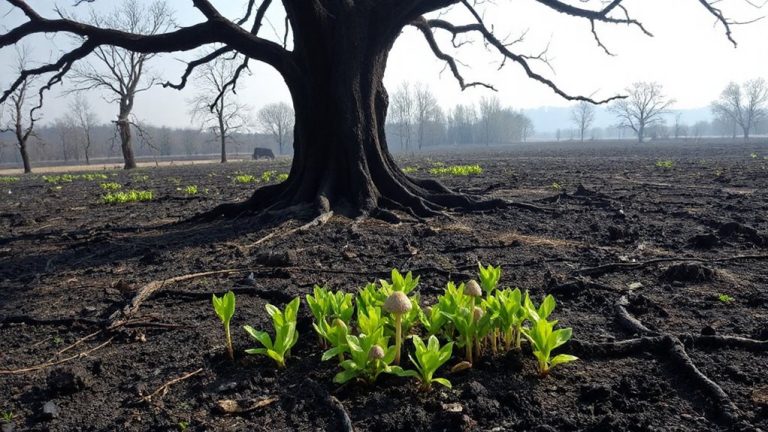
You can reuse a campfire scar only when the soil feels firm underfoot and at least 70% of the site has plant cover. Soft, crumbling soil or thin vegetation means the ground’s not stable yet-using it now worsens erosion and hinders regrowth. Recovery takes longer on slopes, in dry climates, or with poor soil. Firm ground, dense grasses, and intact roots mean it’s ready. Check nearby sites to see how fast similar areas heal.
Notable Insights
- Assess vegetation density: at least 70% ground cover is needed before considering campsite reuse.
- Perform a soil pinch test: crumbling or loose soil indicates instability and inadequate recovery.
- Conduct a heel test: soil should resist compression and not sink under light pressure.
- Evaluate regrowth quality: dense native plants and intact seedlings signal healthy recovery.
- Consider environmental factors: rainfall, shade, and seed proximity influence recovery speed.
Is Your Campsite Ready to Reuse?
How long has it been since your campsite burned? Two years? Three? Time matters, but it’s not the only factor. You need to check soil stability first-does the ground hold firm underfoot, or does it crumble, wash away easily? Unstable soil increases erosion risk and means recovery’s incomplete. Then assess vegetation density-ideally, grasses and small shrubs should cover at least 70% of the original footprint. Sparse or patchy growth leaves soil exposed and vulnerable. If either soil stability or vegetation density falls short, the site isn’t ready. Reusing too early hinders regrowth and degrades the land further. This isn’t about convenience-it’s about responsibility. A quick visual scan and a simple soil pinch test can tell you more than guessing based on years passed. Let real conditions, not timelines, guide your decision.
What Happens If You Reuse a Burn Scar Too Soon?
Even if the fire happened years ago, going back too soon can set recovery back dramatically. You’ll see thinning plant regrowth where boots and gear tear fragile shoots before they establish. This slows the natural return of ground cover, leaving soil exposed. Without enough plants to hold it, soil erosion increases, especially on slopes where rain washes away loose topsoil. You’re not just camping-you’re widening the scar. Repeated use before full recovery means compacted earth, reduced water absorption, and fewer nutrients for new growth. The footprint grows instead of healing. Waiting guarantees plant regrowth gains strength, root systems stabilize the ground, and erosion risks drop. Reusing too early undercuts those gains, extending recovery by years. Check for dense vegetation and firm, undisturbed soil before returning. Clear signs of regrowth and minimal bare patches mean it’s likely safe. Jump in sooner, and you’re part of the problem.
Why Do Some Burn Scars Heal Faster Than Others?
Why do some burn scars bounce back in a few years while others stall for decades? Your answer lies in local conditions, mainly soil composition and tree density. Burn scars with nutrient-rich soil and high tree density typically recover faster because seeds spread easily and roots stabilize the ground. In contrast, thin, rocky soil slows regrowth, leaving scars exposed. Tree density matters-areas with more surviving trees rebound quicker due to seed dispersal and shade.
| Recovery Sign | Absent in Slow-Healing Scars |
|---|---|
| New growth | Sparse or missing |
| Soil stability | Eroding, loose |
| Shade cover | Bare, fully exposed |
| Seed sources | Distant or absent |
| Root network | Fragmented or weak |
Poor soil composition and low tree density mean you’ll wait much longer before the land can handle use again.
How Climate Affects Fire Scar Recovery
If you’re evaluating recovery in a fire-scar Callback area, climate plays a decisive role-temperature and precipitation directly influence how quickly vegetation can reestablish. You’ll see faster regrowth in regions with consistent rainfall, as soil moisture supports seed germination and root development. In drier climates, recovery slows markedly due to limited water availability. Higher temperatures can accelerate decomposition of organic debris but may also increase evaporation, reducing effective soil moisture. Wind exposure further stresses recovering plants, drying surface soils and damaging young seedlings. Sheltered sites typically show better progress. Coastal areas with moderate temperatures and regular fog often outperform inland sites with extreme swings. Arid, high-elevation, or windy locations need more time. You can’t control climate, but recognizing its impact helps you assess whether a scar has had enough favorable conditions to support reuse.
How to Pick a Fully Recovered Campsite
How do you know when a fire-scarred campsite is ready for use? Check soil stability first-press your heel into the ground. If it sinks or crumbles, it’s not ready. Stable soil holds together and resists erosion, a necessity for safe tent placement and fire ring construction. Next, assess vegetation density. Look for even plant coverage with native grasses and seedlings returning across the site. Sparse or patchy growth means recovery isn’t complete. A fully recovered campsite has at least 70% ground cover, reducing invasive species takeover and protecting root networks. Don’t rely on appearance alone-kneel and inspect for exposed roots or loose ash layers beneath. These indicate ongoing degradation. Only use sites where both soil stability and vegetation density show consistent recovery. Reusing too soon delays healing. Wait until signs clearly say the land can handle it.
On a final note
You can reuse a campsite when vegetation covers at least 70% of the scar and soil feels firm, not loose or eroded. Rebuilding too soon risks long-term damage, especially in dry climates where recovery takes years longer. Flat areas with native grasses and shade typically heal faster. Always check local guidelines-some sites need 5–10 years. Your patience guarantees the land stays usable for future trips.