How to Transition From Daypack Mode to Full Evacuation Configuration Quickly
Scan for threats first-listen for danger, trust your gut, but verify. Add water fast: stash two liters or use a 1L/min filter that weighs 8 oz. Grab your emergency bivvy and Mylar blanket-they reflect 90% of body heat. Toss in calorie-dense rations, a whistle, $50 in small bills, and a multi-tool. Keep your pack under 20% of your body weight; swap gear to save ounces. Use a compass and map-they work without signal. A PLB reaches rescuers in 66 hours. You’re ready faster when you know what stays and what goes. There’s a smarter way to layer your gear based on real conditions.
Notable Insights
- Assess immediate threats using sight, sound, and smell to determine urgency for full evacuation setup.
- Quickly add water purification tools and emergency shelter items if not already in pack.
- Insert pre-packed bug-out essentials like food rations, cash, and trauma supplies into designated compartments.
- Ensure navigation tools-map, compass, and PLB-are accessible and activated if needed.
- Strip non-essential items to maintain pack weight under 20% of body weight for mobility.
Assess the Threat Quickly
How fast can you determine if the threat is real-and whether you should stay or go? In high-stress scenarios, your initial assessment directly impacts survival. You must scan for danger signs within seconds: unusual noises, smoke, aggressive behavior, or visible weapons. These cues help gauge the immediate threat level. A low threat level may allow time to gather gear; high means you move now. Hesitation increases risk. Use all senses-sight, sound, even smell-to confirm danger. Trust instincts, but verify. Misreading cues leads to wasted time or unnecessary exposure. Training under real-world conditions improves response speed and accuracy. A reliable flashlight or personal alarm won’t save you if you miss the signs. Prioritize situational awareness over gear checks. Your decision to stay or go hinges not on equipment, but on how quickly and correctly you interpret what’s in front of you.
Add Water, Shelter, and Warmth First
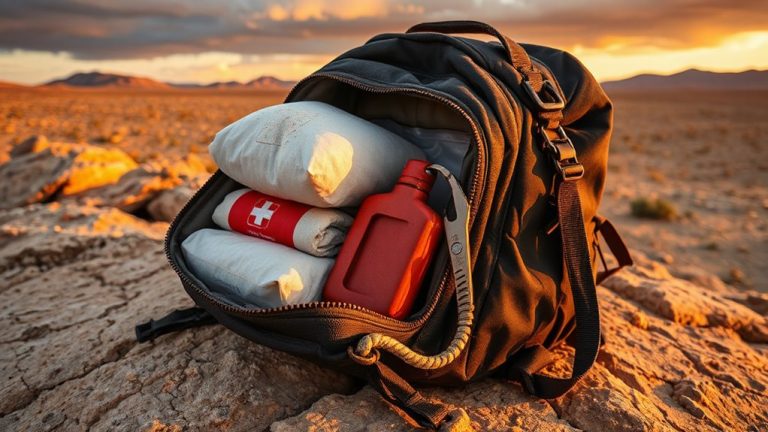
Once you’ve confirmed the threat and are clear of immediate danger, your focus shifts to the next priorities: water, shelter, and warmth. Dehydration impairs judgment within hours, so add at least two liters and a water purification method-filter-based systems remove bacteria and protozoa but not viruses; chemical tablets are lightweight but require 30+ minutes. For shelter, a compact emergency bivvy or tarp provides immediate protection. Pair it with emergency blankets-Mylar models reflect 90% of body heat but tear easily. Down or synthetic sleeping bags offer durability but add bulk. A high-quality emergency sleeping bag can provide both thermal retention and compact portability in critical situations.
| Item | Weight & Notes |
|---|---|
| Water purification filter | 8 oz, 1L/min flow, removes 99.99% of pathogens |
| Chemical purification tablets | 1 oz, 4-hour wait time, 50 doses per pack |
| Emergency blanket | 3 oz, reusable if not torn, minimal insulation alone |
Stock Your Pack With Bug-Out Essentials
While shelter and water keep you alive in the short term, your bug-out pack’s full value emerges when you equip it with essentials that cover mobility, signaling, and basic medical response. You need compact food rations that last five years and deliver 1,500–2,000 calories per day-meals ready-to-eat or dense energy bars work reliably. Include a water purification method, but pair it with 200–300 calories of shelf-stable rations to bridge gaps. Carry at least $50–$100 in emergency cash-small bills-stored in a waterproof bag; ATMs may fail, and digital payments could be down. A signaling whistle, dust mask, n95-rated filter, and a basic trauma dressing cover immediate risks. Don’t overlook a multi-tool or a fixed-blade knife; they serve multiple functions without bulk. These items don’t add long-term survival, but they address critical first 72-hour needs efficiently and predictably. For long-term food storage, consider using best freezer containers to preserve homemade stock or prepped meals before evacuation.
Keep It Light: Optimize for Speed
Packing all those bug-out essentials doesn’t mean you should carry every one you own. You need speed and endurance, not clutter. Stick to lightweight gear that performs under stress but won’t drag you down. Aim for minimal weight-your pack should stay under 20% of your body weight to maintain mobility. Test each item: if it’s redundant or rarely used, leave it. A titanium pot is lighter than steel, and a compact sleeping bag saves space without sacrificing warmth. Even small savings add up over distance. Water filters weigh less than carrying extra bottles, and multi-use tools replace several single-function items. Speed depends on efficiency, not volume. Every ounce counts when you’re moving fast. Cut the excess, keep essentials functional, and prioritize what lets you walk longer and faster. Lightweight gear isn’t optional-it’s tactical. For backpackers balancing load and durability, choosing the right best lightweight backpacking packs can make a critical difference in performance.
Navigate With Map, Compass, or Landmarks
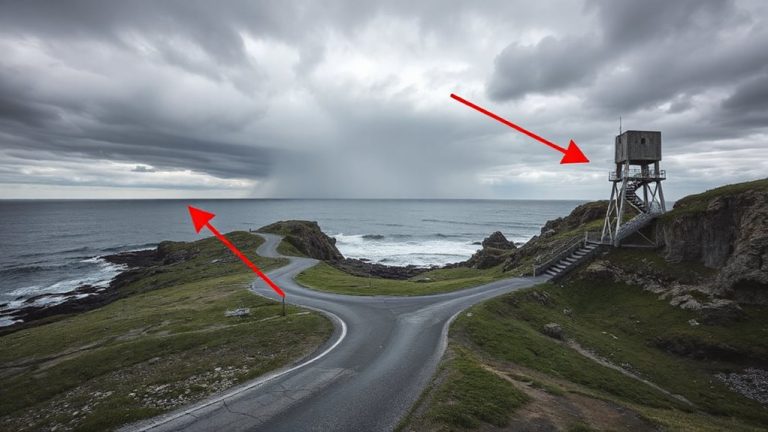
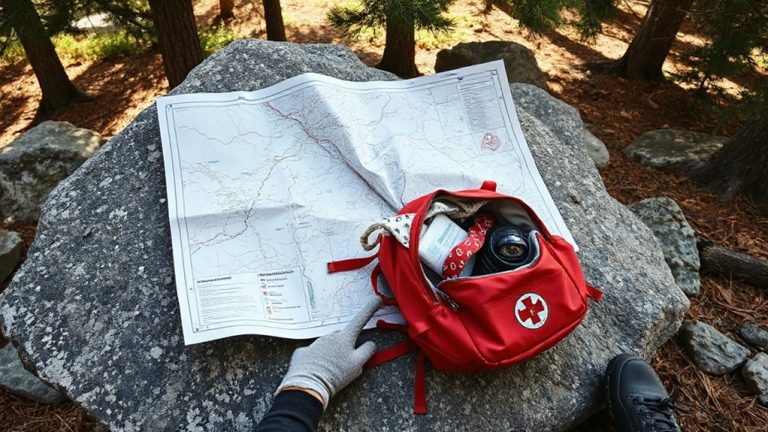
How do you stay on course when electronics fail? You rely on map reading, a reliable compass, and visible landmarks. These tools don’t need batteries and work in all conditions. Good route planning includes marking key waypoints and alternate paths before you move. Always carry a waterproof topographic map and know how to align it with terrain.
| Method | Accuracy | Requires |
|---|---|---|
| Map & Compass | High | Practice |
| Landmarks | Medium | Visibility |
| GPS Device | High | Battery |
| Stars | Low-Med | Clear Sky |
| Trail Markers | Low | Maintenance |
Use map reading to confirm your position every 15–20 minutes. Match terrain features like ridges or streams to the map. Combine route planning with periodic checks to avoid drift. A $20 baseplate compass outperforms a dead smartphone. Train now-when you need it, there’s no margin for error.
Signal for Help and Stay Aware
What if no one knows where you are when things go wrong? That’s why you need reliable signaling devices. Carry a whistle, signal mirror, and PLB or satellite messenger. These tools send emergency alerts even without cell service. A PLB, like the ACR ResQLink, has a 66-hour battery and transmits on 406 MHz, linking directly to search and rescue. Whistles require zero power and can be heard over 500 yards in calm conditions. Signal mirrors work up to 10 miles in daylight. Activate emergency alerts only when necessary-false alarms waste resources. Keep devices accessible, not buried in your pack. Test them monthly. Pair GPS-based tools with physical backups. You might have reception one mile and none the next. Awareness means knowing your location, weather, and battery life. Stay alert. Listen for rescue teams. Watch for response aircraft. Being seen and heard increases survival odds.
On a final note
You’ll move faster and stay safer when you prioritize essentials without overloading. Add water, insulation, and shelter first-they keep you alive longer than extra gear. A streamlined pack under 25 lbs lets you hike farther with less fatigue. Test your setup on short routes to find what works. Map, compass, and signaling tools cost little but boost survival odds measurably. Cut the non-critical; keep what performs.