Creating a Bug-Out Strategy That Includes Emergency Triage Supplies
You need a bug-out bag with triage supplies that meet military standards: pack a CAT GEN7 tourniquet, hemostatic gauze like QuikClot, nitrile gloves, and a SAM splint. Include chest seals and trauma dressings for major zones, all in a water-resistant pouch under 1.5 lbs. Organize for speed-top-access tourniquets, color-coded compartments, Molle mounting. Use START protocol to sort injuries fast. This setup cuts response time and balances weight with critical care capability-key when help is delayed. You’ll see how each choice improves survival odds under pressure.
Notable Insights
- Include a CAT GEN7 tourniquet, hemostatic gauze, and trauma dressings for rapid bleeding control in your bug-out bag.
- Pack at least one wound dressing for each major injury zone: chest, limbs, and neck.
- Use a lightweight SAM splint and medical tape to stabilize fractures during evacuation.
- Organize supplies by use order in a MOLLE-mounted, water-resistant kit for under 1.5 lbs.
- Train quarterly with START protocol drills to efficiently triage injuries when help is delayed.
What Triage Supplies to Pack in Your Bug-Out Bag
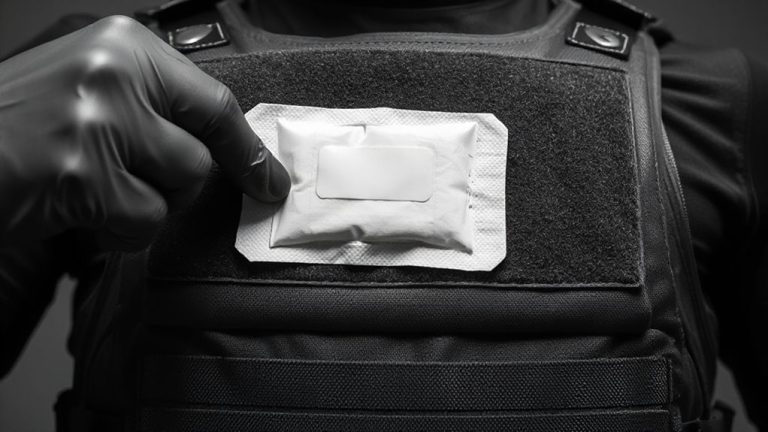
A solid triage kit in your bug-out bag starts with the basics: a tactical trauma dressing, a pair of nitrile gloves, and a tourniquet-specifically one that meets US military standards like the CAT GEN7. You’ll need at least one wound dressing per major injury zone-think chest, limbs, and neck-so pack accordingly. Include a hemostatic gauze like QuikClot or Celox for severe bleeding; these have proven effective in field tests. Add a rigid splint that’s lightweight and adjustable, because improper splint application worsens fractures. SAM splints work well-they mold to limbs and double as support for ribs or joints. Include tape, scissors, and a breathing barrier too. Don’t overlook size and weight: most kits under 1.5 lbs cover core needs without slowing you down. Everything should fit in a sealed, water-resistant pouch to protect contents. Test access time; if it takes more than 10 seconds to deploy the tourniquet, reorganize. Consider keeping a reliable IFAK refill kit on hand to quickly replace used or expired components.
Why Triage Is Critical When Bugging Out
When you’re on the move during an evacuation, seconds count and resources are limited, so knowing how to prioritize injuries makes the difference between effective care and wasted effort. You’ll face multiple casualties, but you can’t treat everyone at once. That’s where triage protocols come in-they let you quickly sort injuries by urgency, ensuring the most critical get attention first. Without them, you risk wasting supplies on minor wounds while someone with severe bleeding deteriorates. Effective injury assessment means checking breathing, circulation, and mental status in under 60 seconds per person. It’s not about perfection-it’s about speed and accuracy under pressure. Field-tested protocols like START guide decisions with clear categories: immediate, delayed, minor, or expectant. Use them, and you’ll allocate time and supplies where they matter most. Skip them, and chaos takes over. This isn’t theory-it’s survival math.
Organize Your Bag for Instant Medical Access
You’ve sorted the injured and know who needs help first-now make sure your gear delivers in seconds, not minutes. Quick access can mean the difference between control and crisis. Use a trauma-focused medical layout: place tourniquets, chest seals, and clotting gauze at the top or in external pockets. A dedicated IFAK (Individual First Aid Kit) with color-coded compartments reduces search time under stress. Molle-mounted kits attach directly to your pack for immediate reach. Don’t pack by category-pack by use order. Test the layout under timed drills; if it takes more than 10 seconds to grab a tourniquet, reorganize. Flat, low-profile bags work faster than deep, stuffed ones. You won’t fumble in low light if each item has a fixed spot. This isn’t about volume-it’s about speed, simplicity, and reliability when every second counts. Top-tier kits often include essential medical tools proven effective in high-stress combat environments.
How to Prioritize Injuries With No Help Coming
If you’re alone and injured people are depending on you, triage isn’t a theory-it’s a checklist you run through fast and without hesitation. Start by evaluating severity: check for breathing, bleeding, and consciousness. Your goal is to identify who can survive with immediate care and who can’t, even with help. You must manage shock early-it kills just as fast as wounds. Use simple tools: a tourniquet, gauze, thermal blanket. Prioritize airway, bleeding, and circulation. Don’t waste time on the unsalvageable or walking wounded first. Focus on those in critical but treatable condition. A well-organized tactical medical bag ensures you have immediate access to all essential supplies during high-pressure triage situations.
| Condition | Immediate Action | Why It Matters |
|---|---|---|
| Uncontrolled bleeding | Apply pressure or tourniquet | Prevents fatal blood loss |
| Not breathing | Open airway, rescue breathe | Restores oxygen flow |
| Pale, clammy skin | Elevate legs, keep warm | Helps manage shock |
| Stable, alert | Monitor, delay treatment | Lower risk of death |
| No pulse, not breathing | Begin CPR if possible | Last effort for revival |
Run These Triage Drills Before Disaster Strikes
Triage under pressure only works if you’ve run through the steps before-waiting until smoke fills the sky or the radio goes silent is too late. You need to run mass casualty drills at least quarterly to stay sharp. Use timed scenarios with family or team members to simulate real urgency. Assign roles: one acts as incident commander, others play victims with tagged injuries. Practice sorting patients by breath, perfusion, and mental status-START triage protocol every time. Include simulated wound scenarios using makeup, fake blood, and moulage to increase realism. Rotate roles so everyone experiences being injured and responder. Test your triage tags and emergency kits during these drills-note what fails or slows you down. A 10-minute drill now can save lives later. These rehearsals expose gaps in supplies and communication. No drama, just repetition and refinement. Real emergencies won’t allow hesitation.
On a final note
You need triage supplies that are compact, durable, and proven in real conditions. Pack essentials like tourniquets, hemostatic gauze, and chest seals-each with clear expiration dates and field-tested reliability. Organize them for immediate access, because seconds matter when help isn’t coming. Practice triage drills under stress to sharpen judgment. A well-stocked, accessible medical setup improves survival odds more than any gear hype claims.