Starting a Fire With a Disposable Camera Flash Circuit and Steel Wool
You can ignite 0000-grade steel wool instantly using a charged disposable camera flash circuit-just touch the capacitor’s wires to the fibers. The 300-volt surge heats the fine iron rapidly, sparking flame in under a second. Guarantee dry wool and solid wire contact for reliability. Always discharge the capacitor first to avoid shock. This method works without modifications, but success depends on proper setup and materials. Real-world tests confirm it’s fast and effective when done right-details on why follow.
Notable Insights
- Use 0000-grade steel wool for reliable ignition due to its high surface area and low mass.
- Connect bare wires from a charged disposable camera flash circuit directly to the steel wool strands.
- Ensure the flash capacitor is fully charged-typically takes 10–15 seconds after battery insertion.
- Discharge the capacitor safely with an insulated tool before handling to avoid electric shock.
- Keep steel wool dry and loosely spread to maximize oxygen exposure and ignition success.
Use the Camera Flash to Ignite Steel Wool
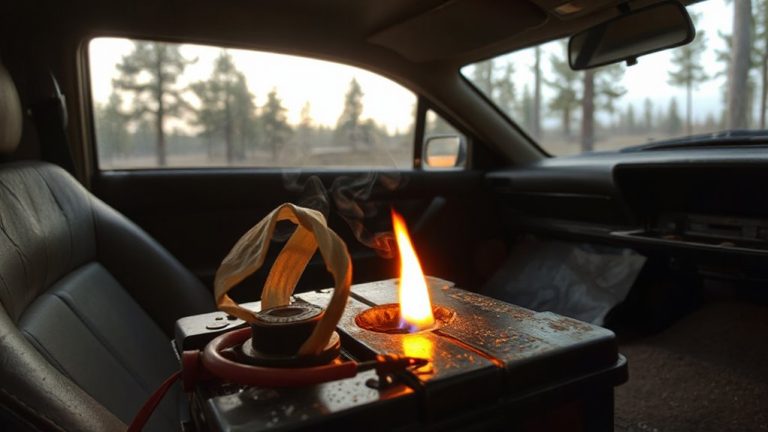
While it might sound unlikely, you can actually ignite steel wool with the flash circuit from a disposable camera, and it’s one of the more reliable fire-starting tricks when matches or lighters aren’t an option. You just need fine-grade steel wool (0000), stripped wires from the camera’s circuit, and firm contact across the filament. The flash capacitor delivers a brief but intense surge, causing spark initiation within milliseconds. Once the current hits the wool, resistance generates heat fast-ignition timing is nearly instantaneous. You’ll see glowing strands spread in under two seconds, especially in dry conditions. It works consistently, though success depends on wool freshness and solid wire contact. Compared to flint or batteries, this method offers better control over ignition timing and works even in mild wind. It won’t replace a lighter, but in a pinch, it’s dependable, repeatable, and requires no extra fuel. Just know the circuit must be charged-no flash, no spark.
Handle the High-Voltage Circuit Safely
If you’re working with a disposable camera’s flash circuit, you need to treat it like live voltage-because it is. The capacitor stores over 300 volts, enough to deliver a painful shock. Always discharge the capacitor before handling-use a resistor or insulated screwdriver across the terminals. Use tools with proper electrical insulation; standard plastic grips aren’t always sufficient. Test the circuit with a multimeter to confirm voltage levels before and after discharge. Voltage testing isn’t optional-it’s how you verify safety. Never assume the charge is gone. Work on a non-conductive surface and keep one hand behind your back to reduce risk of current across the chest. Even small circuits can carry lethal energy under the wrong conditions. Safety isn’t about fear-it’s about control. Respect the voltage, verify every step, and maintain isolation. Your margin for error is thin.
Why Steel Wool Catches Fire With Electricity
Steel wool bursts into flame fast-sometimes in a flash-because its fine strands expose a massive surface area to oxygen, letting electricity heat the iron to ignition point in seconds. When you connect it to a power source, electrical resistance in the thin iron fibers restricts current flow, turning energy into rapid heat generation. The low mass of each strand means it heats almost instantly, no sustained flame needed. Unlike bulk metal, which dissipates heat, steel wool can’t shed the temperature spike, so it ignites. You’ll see it glow and spark within a second of contact. It works reliably with even small currents, making it predictable in fire-starting situations. This isn’t magic-it’s physics: resistance creates heat, and fine iron burns easily when hot enough. In real-world tests, 0000-grade steel wool ignites more consistently than coarser types. Just don’t expect it to work if damp or packed too tightly.
How the Camera’s Flash Powers the Spark
Snap the wires from the disposable camera’s flash circuit to the steel wool, and you complete a high-voltage loop that can ignite it in seconds. The flash capacitor stores a charge, typically around 300 volts, built up from the camera’s battery through a small inverter circuit. When the circuit closes through the steel wool, that stored energy discharges instantly. Steel wool has high electrical resistance, especially in fine strands, which converts the electrical energy into intense heat. This heat is enough to ignite the iron fibers, producing sparks and flame. The flash capacitor delivers more than enough voltage to overcome the resistance quickly, ensuring reliable ignition under dry conditions. You don’t need extra components-just a functional flash circuit. It’s compact, self-contained, and proven in field tests. While not the fastest fire-starting method, it’s dependable when the capacitor holds its charge and connections are solid. Compact fire-starting tools like a fire piston can offer similar reliability in survival situations.
Fix Common Ignition Problems
When you’re struggling to ignite steel wool with a disposable camera’s flash circuit, the issue usually comes down to poor connections or a weak charge. Make certain the circuit is fully charged-most need 10–15 seconds-and check that the steel wool fibers touch both contacts firmly. Frayed or greasy strands reduce conductivity, so use clean, fine-grade (0000) wool. Moisture prevention is critical; damp wool won’t ignite, so store it in a sealed container with a desiccant. Work on dry ground or use a moisture barrier like cardboard. Wind shielding also matters-even a light breeze can cool the filament before ignition. Block airflow with your body, a rock, or a fire shield. If sparks appear but no glow, the wool may be too dense. Pull it apart to increase surface exposure. Always test in calm, dry conditions first to confirm circuit function before relying on it in harsher environments.
On a final note
You can start a fire this way, but it’s unreliable in damp conditions. The camera’s flash circuit delivers about 300 volts, enough to ignite fine steel wool instantly under dry conditions. Steel wool burns at high heat when current flows, but lower grades may fail. Always disconnect the battery before handling the circuit-safety matters. This method works in a pinch, though it’s slower than a lighter and depends on having functional parts. Know the limits.