Elevating Critical Utilities Like Electrical Panels Above Flood Levels
You should elevate your electrical panel above flood levels to prevent corrosion, short circuits, and costly replacements. Mount it at least 12 inches above base flood elevation-ideally 48 to 60 inches high for safety and access. Code compliance, permits, and inspections are required, and using a licensed electrician guarantees the job meets regulations. Raising outlets and switches helps too. Doing it right may reduce insurance premiums. There’s more to reflect on about long-term protection and cost trade-offs.
Notable Insights
- Elevating electrical panels above flood levels prevents water damage, corrosion, and electrical hazards.
- Panels should be mounted at least 12 inches above base flood elevation for code compliance.
- Recommended height is 48 to 60 inches from the floor for accessibility and protection.
- Permits and inspections are required to ensure compliance with local flood zone regulations.
- Hiring a licensed electrician ensures safe, code-compliant installation and maintains insurance validity.
Why Elevate Electrical Panels in Flood Zones?
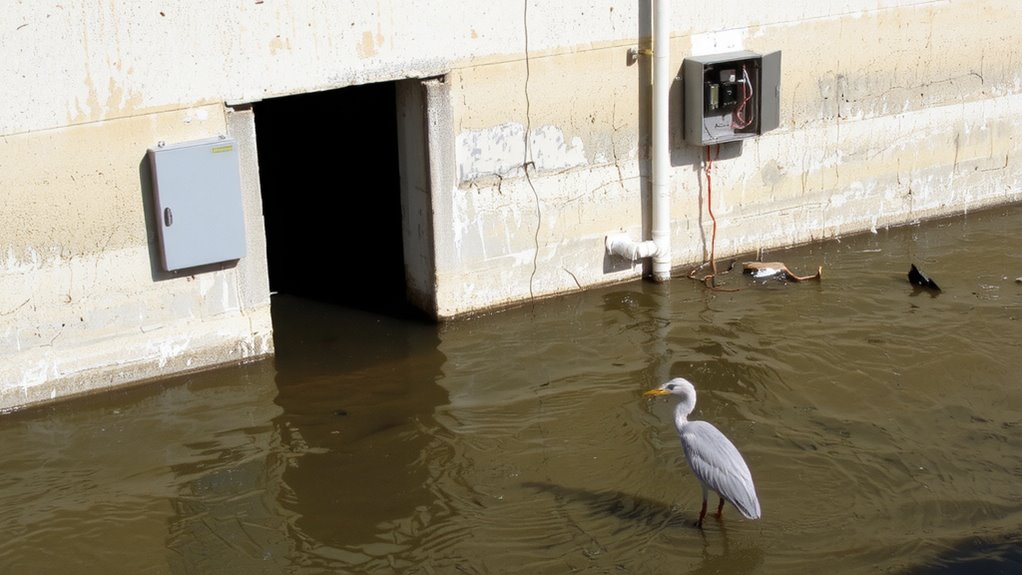
You’re better off elevating your electrical panel if you live in a flood-prone area-plain and simple. Floodwater can reach several inches to several feet, and if it hits your panel, you’re risking serious flood damage to critical components. Even shallow water can corrode connections, ruin breakers, and compromise system safety. Once submerged, panels often require full replacement-costly and avoidable. Raising the panel reduces the chance of short circuits, electrical fires, and long-term system failure during or after a flood. It’s not about exaggerating risk; it’s about minimizing downtime and hazard. Elevated panels also meet modern code requirements in many high-risk zones. You won’t eliminate all risks, but you’ll markedly improve resilience. Think of it as insurance through elevation-measured, practical, and rooted in real-world performance. Safety and function stay intact when water rises, and that’s what matters most.
How High Should an Electrical Panel Be Raised?
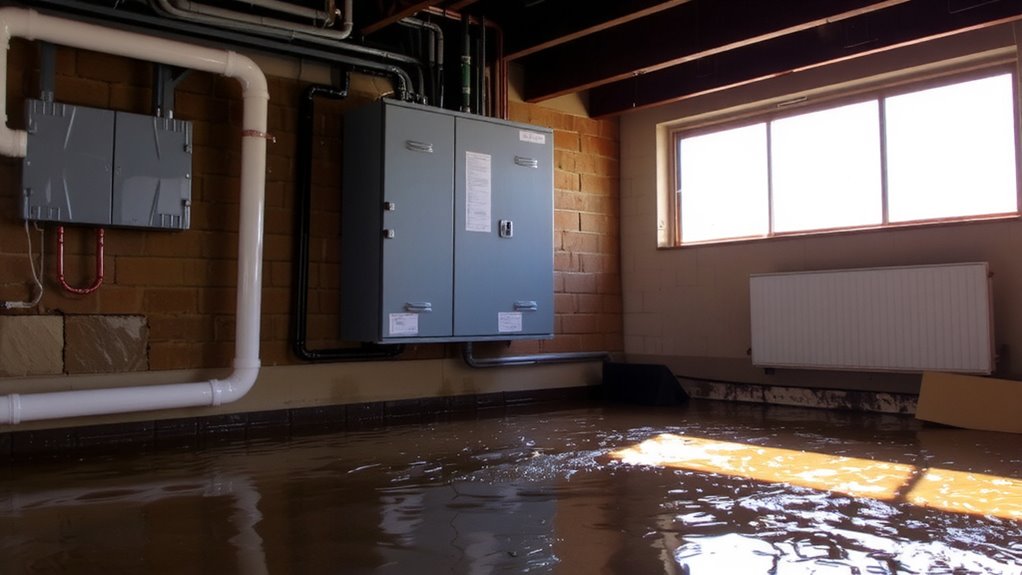
How high should you actually raise an electrical panel to stay safe in a flood? Aim for at least 12 inches above the base flood elevation, though higher is better if space allows. This height reduces flood damage risk and keeps components accessible. You’ll maintain electrical efficiency by preventing moisture intrusion, which can corrode connections and disrupt power flow. Raising the panel too high may affect panel aesthetics, especially in living areas, but functional safety outweighs appearance concerns. Mounting at 48 to 60 inches from the floor balances reachability and protection. This range supports code compliance and ease of maintenance. Avoid placing panels directly on exterior walls prone to water seepage. Use moisture-resistant enclosures to further protect internal components. Your priority is long-term reliability, not just looks. A well-positioned panel guarantees systems stay operational when you need them most.
Flood Code Requirements and Permitting for Panel Elevation
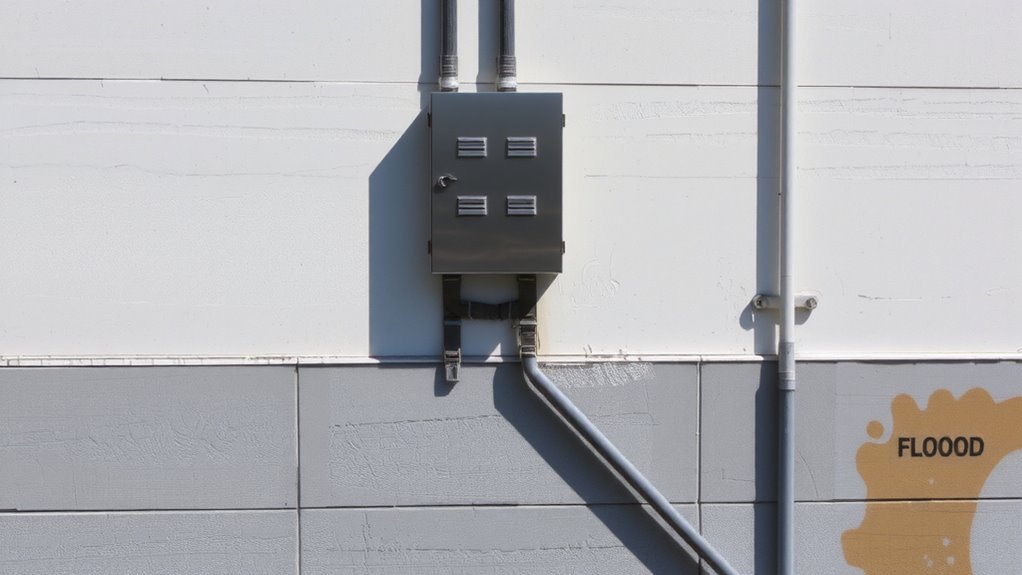
Why risk non-compliant installations when flood codes exist to protect your system? You need to follow local flood zone inspections and secure approvals before moving your panel. Skipping steps can lead to failed inspections or voided insurance claims. Always check your community’s base flood elevation (BFE) requirements-these dictate minimum panel height. Flood zone inspections verify compliance, and failing one delays everything. Electrical permitting timelines vary by jurisdiction but typically take 7–14 days. Plan ahead to avoid work stoppages.
| Requirement | Purpose |
|---|---|
| Flood zone inspections | Confirm installation meets BFE rules |
| Permitting approval | Legal authorization to proceed |
| Panel mounting height | Prevents water damage during floods |
| Electrical permitting timelines | Affect project start and completion |
Step-by-Step: How to Safely Elevate an Electrical Panel
Once permits are secured and flood code requirements met, the physical work of raising an electrical panel can begin. Turn off main power and verify it’s de-energized before touching any components. Remove the panel cover and carefully disconnect wiring, labeling each conduit for reconnection. Choose materials based on durability and code-corrosion-resistant metal or high-grade PVC is typical. Your material selection affects longevity, especially in humid or flood-prone areas. Mount the new backboard at or above the required elevation, using proper mounting techniques like lag bolts into studs or structural framing-you can’t rely on drywall anchors. Make sure the panel remains level and secure. Reattach wiring with attention to code-compliant bends and clearances. Finally, schedule an inspection before re-energizing. Improper execution risks safety and compliance, regardless of material quality.
Other Electrical Fixtures That Must Be Elevated
While the electrical panel is often the primary focus, you’ll also need to raise other electrical fixtures to meet flood safety standards and avoid costly damage. Light switches and outlets near the floor are vulnerable during flooding and must be elevated to at least 12 inches above the base flood elevation, per most codes. You can’t assume wall height alone guarantees safety-floodwater rises quickly and conducts electricity, making even minor inundation dangerous. Standard outlet placement at 12 inches isn’t enough in flood zones. Raising them to 18–24 inches reduces risk markedly. The same applies to light switches near exterior doors or in basements. Using flood-rated boxes and proper sealing helps, but elevation remains the most reliable protection. You’re not just complying with codes-you’re minimizing fire, shock, and system failure risks when water enters. Every inch counts, especially in frequent flood areas.
Cost to Raise an Electrical Panel: What Influences Price?
Raising electrical fixtures like outlets and switches helps reduce flood risks, but moving the electrical panel itself has a bigger impact-and a more significant cost. You’ll typically spend between $800 and $3,000, depending on several factors. Material quality affects durability and code compliance; higher-grade enclosures and wiring may cost more upfront but reduce long-term risks. Labor availability in your area plays a major role-shortages or high demand can drive up rates, especially after storms when many request similar work. Accessibility matters too: if your panel is in a tight space or requires rewiring circuits, labor time increases. Local permitting adds fees but guarantees safety and compliance. You may face extra charges if upgrading from older systems. While some tasks can be DIY, electrical panel work demands a licensed electrician for safety and code approval, influencing the final price. Plan accordingly.
Does Raising Your Panel Lower Insurance Costs?
How much could you save on insurance by moving your electrical panel out of the flood zone? Quite a bit, actually. Many insurers offer insurance discounts for flood risk reduction measures, and elevating your panel is one of the most effective. If your panel’s raised above the base flood elevation, you’re seen as lower risk. That often translates to lower premiums, especially in high-risk flood zones. It’s not guaranteed savings-policies vary-but flood risk reduction like this is a factor insurers consider. You may also qualify for FEMA-backed programs that reward mitigation. The exact discount depends on your location, insurer, and how high you raise the panel. It’s a one-time cost that can deliver long-term savings. Check with your provider to see what insurance discounts apply. You’ll need proof of elevation, like an elevation certificate. Simple, smart, and often cost-effective.
On a final note
You need to elevate your electrical panel in flood zones to avoid costly damage and meet code. Raising it at least 12 inches above base flood elevation is usually required. Permits and professional installation are necessary. Doing it right cuts insurance premiums slightly but won’t eliminate risk. Weigh the upfront cost-typically $1,000 to $3,000-against long-term protection. It’s not optional if you’re in a high-risk area.