Smoke Grenades for Urban Escape: Timing, Range & Legal Risks
You’ve got 15–20 seconds of cover with a 3-second burst from a white or gray smoke canister, ideal in tight alleys or at intersections where structures trap the cloud. Deploy smoke just before turning-timing cuts pursuit success. A 38mm model fits your pocket and lasts nearly a minute, but wind over 10 mph cuts effectiveness. Use wraparound eyewear and know the fines-up to $1,000-before moving through open areas or near transit zones. Urban layout and wind matter as much as the device.
Notable Insights
- Deploy 3-second smoke bursts to obscure vision within a 10-foot radius for rapid urban concealment.
- Use gray or white smoke canisters for better blending in concrete environments and improved visual obstruction.
- Release smoke 3 seconds before turning at intersections to maximize escape success and reposition unseen.
- Prioritize tight alleys or T-junctions where smoke pools quickly, reducing visibility to under two meters in seconds.
- Carry 38mm canisters for balance between portability, 40–60 second duration, and effectiveness in narrow spaces.
When Smoke Saves You in the City
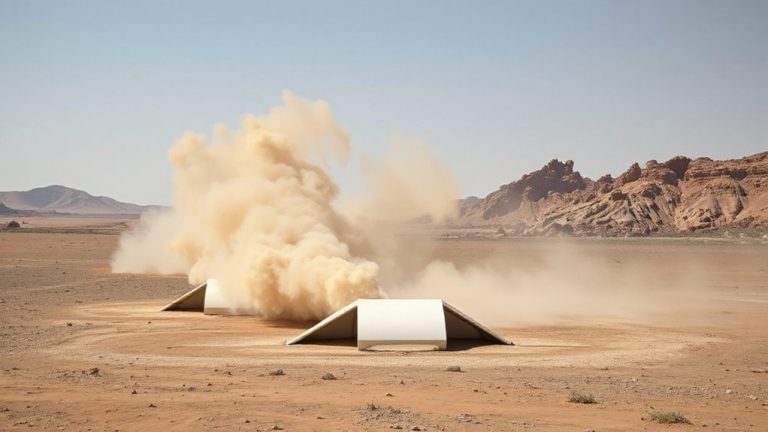
How often do you think about having a way out when things go south in the city? Smoke diversion tactics offer a practical solution when evasion is essential. A 3-second smoke burst can obscure vision within a 10-foot radius, giving you 15–20 seconds of effective concealment-time enough to reposition or escape. When combined with urban camouflage techniques-like blending into alley shadows or mimicking pedestrian flow-smoke increases survival odds by disrupting visual tracking. Some grenades emit colored smoke, which may draw attention; gray or white variants perform better in concrete environments. Wind speeds over 10 mph reduce effectiveness by dispersing smoke too quickly. Reliable models weigh under 12 oz and activate consistently in wet or dry conditions. While not foolproof, smoke devices are compact, legal in many areas, and buy essential time. Their real-world value lies in predictability, not spectacle.
Best Urban Spots to Deploy Smoke
Where should you use smoke in a city when seconds count? Tight alleys are ideal-deploy there for instant alley interference, cutting line-of-sight fast. The narrow space traps smoke quickly, reducing visibility to under two meters in 4–6 seconds with standard 35-second grenades. Intersections work if vehicles are present; they block airflow and extend cloud duration. Use sudden turns or T-junctions to your advantage, as smoke pools in dead ends. For vertical movement, rooftops offer strategic value-trigger smoke at access hatches to delay pursuit. Rooftop concealment is short-lived unless wind is low, so move fast. Parking garages are effective but echo sound, risking detection. Avoid open plazas-wind disperses smoke too fast. Urban canyons between tall buildings prolong coverage but limit exit paths. Choose corners with cover nearby. Each location trades concealment time for mobility-pick based on your next move, not just cover.
Time Your Smoke Right
Why do most smoke deployments fail under pressure? Because you wait too long or act too soon-losing the edge perfect timing gives. Strategic deployment means syncing smoke release with movement, not panic. You need coverage the instant pursuit locks on, not after they’ve already seen your exit. Deploy too early, and smoke dissipates before you’re clear. Too late, and they’ve already closed the gap.
| Scenario | Outcome |
|---|---|
| Smoke 3 sec before turn | High escape success |
| Smoke at visual contact | Moderate success |
| Smoke after being spotted | Low success |
| Smoke with no movement | Failure |
Perfect timing hinges on anticipation, not reaction. Pair smoke with directional shifts-ideal when barriers block line of sight. Strategic deployment isn’t about frequency; it’s about precision. Test drills in low-risk environments to calibrate your window.
Pick the Right Smoke Canister for Escape
A smoke canister that matches your escape plan matters more than raw output or brand name. You need to evaluate Smoke types based on visibility reduction and duration-colored smokes work poorly in urban settings, while white or gray smokes offer better visual obstruction. Some generate denser clouds but dissipate faster; others sustain coverage over time. Pick what suits your environment and escape window. Canister size determines portability and output. Larger canisters produce more smoke but are harder to carry and deploy quickly. A 38mm model fits easily in a pocket and lasts 40–60 seconds, ideal for short, tight escapes. A 60mm unit offers longer concealment but adds bulk. Match the Canister size to your route-narrow alleys need less output than open plazas. Weigh the trade-offs: dense smoke versus maneuverability, duration versus concealment. There’s no universal best-only what fits your scenario.
Avoiding Fire, Blindness, and Panic
You’ve picked the right smoke canister for your urban escape, but deployment comes with risks you can’t afford to ignore. Heat from the canister can ignite nearby flammable materials, so check surroundings for fire hazards before use. Don’t use near trash piles, curtains, or dry vegetation-tested models emit surface temperatures over 500°F during activation. Keep the device off the ground in windy conditions to avoid rolling into combustibles. You’ll also face momentary eye irritation from chemical particulates, especially in enclosed spaces. Models using zinc chloride cause more irritation than those with organic dyes. Wear wraparound eyewear to reduce exposure. Panic worsens both risks-stay calm, deploy quickly, and move perpendicular to the wind. Training in controlled settings reduces reaction time and improves control. Choose canisters with shorter ignition delays and consistent smoke output to limit exposure windows. Safety depends on awareness, not luck.
Legal Risks of Smoke in Public
What happens when your smoke grenade use draws police attention? You face immediate legal consequences and public liability. Deploying smoke in public spaces often violates local ordinances, even if no harm occurs. Authorities treat such acts as potential threats, leading to detention, fines, or criminal charges. Below is a breakdown of typical risks:
| Jurisdiction | Typical Fine | Possible Charge |
|---|---|---|
| City Streets | $250–$1,000 | Disorderly Conduct |
| Public Transit | $500+ | Interference with Services |
| Near Airports | $5,000 | Security Violation |
| Schools | Arrest | Threat-Related Offense |
| Crowded Events | $1,000–$2,500 | Public Endangerment |
Smoke devices aren’t toys. Your actions affect bystanders, emergency responses, and public safety. Public liability extends beyond fines-you could be sued if someone is injured. Legal consequences vary by location, but enforcement is consistent: unauthorized smoke deployment attracts serious scrutiny. Plan accordingly.
Real Urban Escape Tactics Using Smoke
Why rely on smoke for an urban escape? Because it creates instant visual barriers in high-visibility environments where cover is limited. You deploy a smoke grenade, and within three seconds, a 15-foot obscuration zone forms-enough to break line of sight. This isn’t about hiding forever; it’s about buying 10 to 15 seconds to reposition. Smoke signals aren’t just for distress-they can mislead pursuers if used off-route. Pair canned smoke with urban camouflage: dark, non-reflective clothing and predictable movement patterns to blend once you’re past the smoke screen. Handheld models like the Compact 40g grenade offer portability but last only 45 seconds. Canister types provide up to 90 seconds of cover but are bulkier. Wind reduces effectiveness by 30–50% unless you use dense, chemical-free fog variants. Test different models in alleyways and intersections to assess dispersion patterns. Rely on smoke as a tactical tool, not a guaranteed solution.
On a final note
You deploy smoke to break visual contact, not to hide forever. A 30-second concealment gives 15–20 meters of separation in most city layouts. Use colored, non-toxic civilian canisters-they’re legal in more areas and clear faster. Avoid industrial-grade smoke; it’s excessive and increases inhalation risks. Wind matters: above 10 mph disperses too fast, under 5 mph lingers too long. Choose compact, ignition-safe models. Your escape succeeds when movement, timing, and terrain align with smoke’s limited window.