Creating a Communication Protocol for When Cell Towers Are Down After a Disaster
You’ll need two-way radios to stay connected when cell towers fail; they work without power or network infrastructure. Stick to short transmissions, identify clearly, and scan channels to monitor activity. For long-range signaling, use a whistle (0.5-mile reach) or signal mirror (up to 10 miles in sunlight). Set up a runner network with written messages and predefined routes. Pair this with a family meeting plan and emergency kits. There’s more to optimizing each layer effectively.
Notable Insights
- Use two-way radios with pre-assigned channels and established etiquette for reliable short-range communication when cell networks fail.
- Designate trusted neighborhood runners to carry written messages along mapped routes with checkpoints for backup communication.
- Employ universal distress signals like three whistle blasts or mirror flashes to attract attention over long distances.
- Establish a family contact plan with multiple meeting points, clear roles, and physical copies of critical information.
- Equip response teams with high-decibel whistles, signal mirrors, and strobe flashlights to maximize visibility and detection.
Stay Connected Without Phones: Use Two-Way Radios
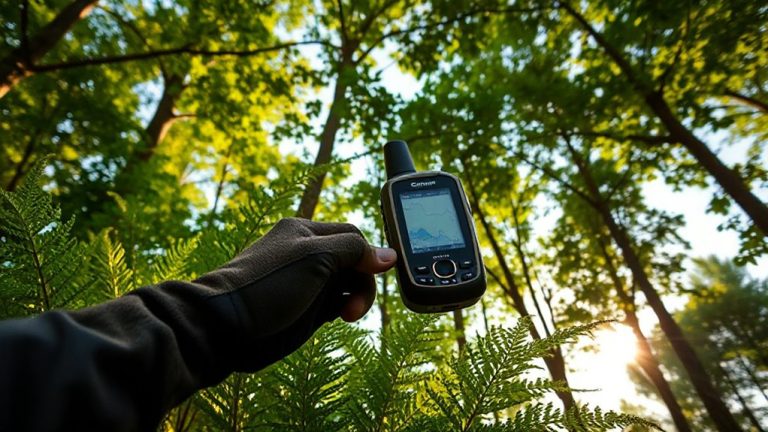
When the power’s out and cell towers are down, two-way radios stay reliable, giving you a working line of communication most smartphones can’t match. You’ll need to follow basic radio etiquette-keep transmissions short, listen before speaking, and identify your unit clearly to avoid confusion. This reduces interference and keeps channels open for urgent messages. Models with frequency scanning let you monitor multiple channels automatically, so you catch relevant traffic without manually tuning. It’s practical when public safety bands or neighbor networks use different frequencies. Fixed channels limit flexibility; scanning adds situational awareness. Battery life averages 8–12 hours on standard walkie-talkies, less with constant scanning. Rechargeable options with solar support extend usability. Range depends on terrain-expect 2 miles in cities, up to 10 in open areas. Radios won’t replace phones, but they perform where phones fail. Use them as a backup, not a substitute. Prioritize simplicity, durability, and tested range when choosing your gear. For reliable performance, consider the best two-way radios based on expert testing and user feedback.
Set Up a Neighborhood Runner Network
Even if electronic communication fails, you can still relay critical information by organizing a neighborhood runner network, a system that relies on trusted individuals to carry messages between households. You’ll need to establish a clear message relay protocol-written notes are more reliable than verbal ones, reducing errors. Choose runners based on fitness, reliability, and familiarity with the area. Route planning is essential: map the shortest, safest paths between key homes, identifying checkpoints and alternate routes in case of blockages. Assign runners specific zones to minimize overlap and confusion. Test the system during drills to measure delivery time and accuracy. While slow compared to radios, this method works when all else fails. It requires no power, just coordination. You’re trading speed for certainty, but in a prolonged outage, that balance makes sense.
Signal for Help Without Power
You’ve set up a runner network to keep neighbors informed when electronics fail, but what if you’re isolated and need to reach people beyond your street? Sound and light signals work when power doesn’t. Three whistle blasts or mirror flashes are universally recognized distress signs. A whistle carries farther than shouting and uses less energy. A signal mirror reflects sunlight up to 10 miles under clear conditions. Choose tools based on portability, reliability, and range. For reliable signaling, consider a high-decibel emergency whistle that meets safety standards for audible range.
| Method | Range (miles) | Conditions Needed |
|---|---|---|
| Whistle blasts | 0.5 | Audible environment |
| Mirror flashes | 10 | Direct sunlight |
| Orange cloth | 0.25 | Line of sight |
| Ground symbol | 1+ | Open terrain, aerial view |
Use combinations for redundancy. Mirror flashes fail at night; whistle blasts work anytime.
Build a Phone-Free Family Contact Plan
How would you reconnect if cell networks went down for days? You need a phone-free family contact plan that relies on clear, practiced actions. Start by identifying multiple Family meeting points-choose one near your home and another farther away, in case evacuation is necessary. Make certain everyone knows these locations and the routes to reach them. Assign roles: one person checks on neighbors, another retrieves the emergency supply kit. Store physical copies of important contacts and medical info in the kit. Practice the plan quarterly to refine timing and communication gaps. A whistle, flashlight, and written instructions in the kit improve coordination. This system doesn’t depend on signals or devices, reducing failure risk. While not instant, it’s reliable when electronics fail, making certain you meet efficiently under stress.
Use Simple Tools to Send Emergency Signals Locally
A whistle, mirror, or flashlight becomes your voice when radios fail and neighborhoods go silent. You can signal over 100 meters with a 120-decibel whistle-farther than shouting-and conserve energy. Use standardized whistle codes: three short blasts mean distress, one blast acknowledges, two means help is needed. A signal mirror reflects sunlight up to 10 miles, visible to aircraft or distant responders. Flashlights with strobe settings increase detection at night. For longer range, small fires producing smoke signals work, but only in safe, controlled conditions and open areas. White smoke stands out best against dark backgrounds, black against snow. These tools are lightweight, reliable, and require no power grid. They’re not fast, but they’re proven. You trade speed for dependability. Know their limits. Practice signals beforehand. In chaos, simplicity saves lives. A hand-crank flashlight provides a dependable power source when batteries are unavailable.
On a final note
You’ll need reliable tools and clear plans when cell networks fail. Two-way radios work without infrastructure, but range is limited-test them in your area. Run prepared individuals to deliver messages, though delays happen. Signal mirrors and whistles are lightweight and effective for short-range alerts. A written family plan beats confusion. No single solution covers all scenarios, so combine methods based on distance, terrain, and urgency. Practice guarantees they work when needed.