Prepping a Mobile Chicken Coop That Can Be Moved Quickly During Flood Threats
You need a lightweight, waterproof coop built from aluminum or treated pine with marine-grade plywood siding to withstand moisture and resist rot. Mount it on a 4×8-foot trailer with a Class III hitch for quick towing to higher ground. Use ratchet straps and storm anchors to secure it during transit. Pair with elevated feeders and waterers to prevent contamination. Test the setup in drills to guarantee a 12-minute evacuation time. This design balances durability, speed, and flood resilience-knowing the next steps keeps your flock safer when seconds count.
Notable Insights
- Build a lightweight, waterproof coop using aluminum or treated pine and marine-grade plywood for durability and easy transport.
- Mount the coop on a 4×8-foot trailer frame with a hitch for rapid relocation during flood threats.
- Secure the coop to the trailer with heavy-duty ratchet straps and weld reinforced hitch and mounting points for safety.
- Plan and test an evacuation route using flood maps, prioritizing quick access to high ground.
- Use elevated, detachable feed and water systems that are sealed and easy to maintain during emergency moves.
Build a Lightweight, Waterproof Mobile Chicken Coop
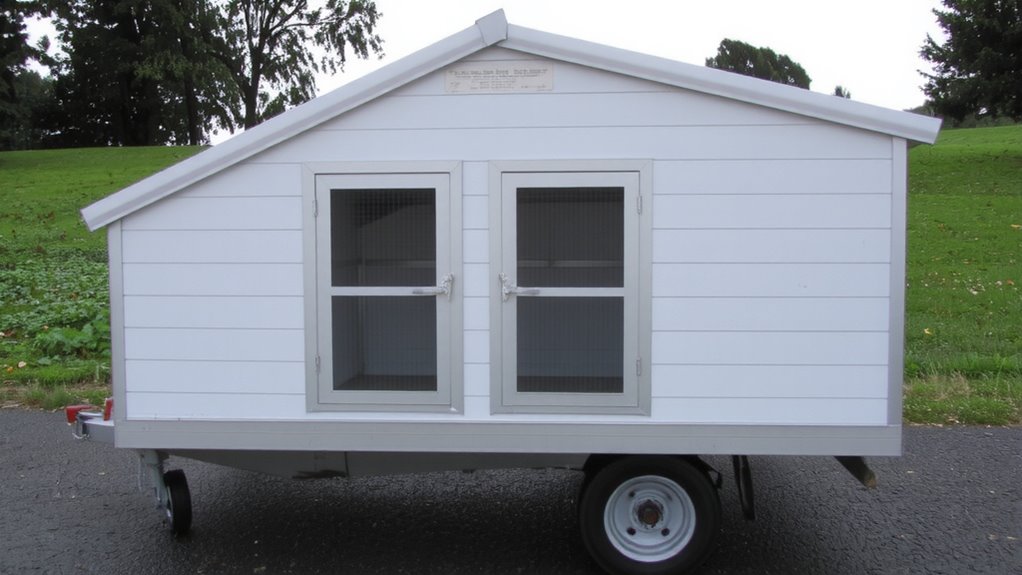
Durability matters when your chickens’ safety hinges on a structure that must withstand rain, mud, and frequent moves. You need a lightweight frame-aluminum or treated pine-covered in waterproof, rot-resistant siding like marine-grade plywood. This keeps weight low and longevity high. Install sloped roofing with metal flashing to shed water fast. Ventilation panels near the roofline let moisture escape without letting rain in, maintaining air quality even in wet weather. You’ll want removable bedding trays under nesting boxes for easy cleaning, and position those boxes off the ground to avoid damp. Use sealant around all joints and lift points to prevent leaks. Test the structure by hosing it down; if interior stays dry, it’s ready. While lighter coops move easier, they may sacrifice some insulation-balance portability with protection based on your climate and terrain.
Design a Trailer-Based Mobile Chicken Coop for Floods
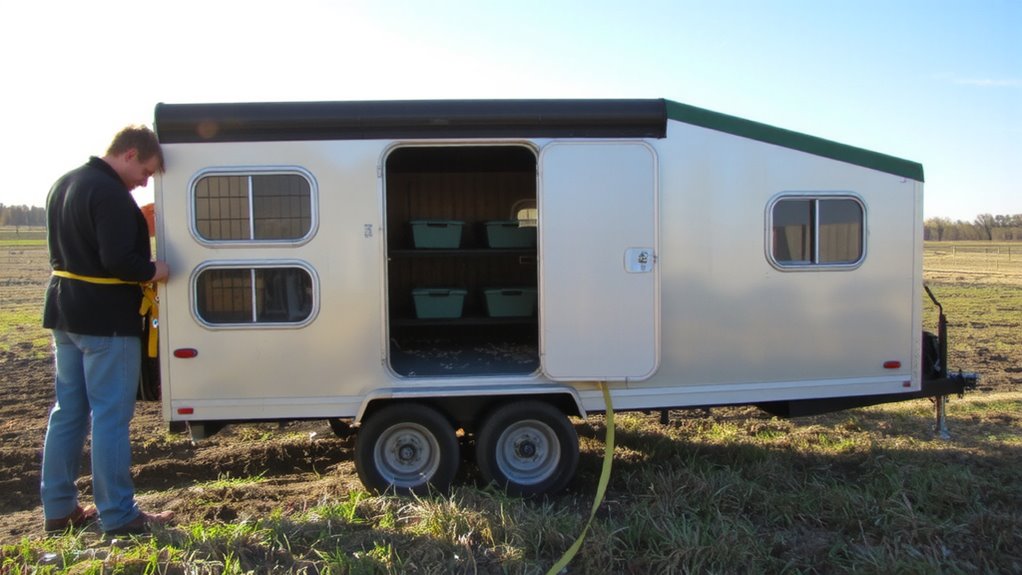
You’ve built a lightweight, waterproof coop-now it’s time to get it off the ground and onto wheels. Mounting the coop on a trailer frame allows quick relocation when floodwaters threaten. Use pressure-treated lumber or galvanized steel for the trailer bed to resist moisture and maintain durability over time. Install elevated flooring in the coop itself to protect chickens from damp ground and improve ventilation, reducing mold and disease risk. Choose a trailer with at least a 1,500-pound capacity to support the coop, chickens, and bedding. A compact size-around 4×8 feet-ensures maneuverability in tight spaces. Integrate a tractor attachment like a ball hitch or pintle hook so you can pull it swiftly without needing extra equipment. This setup balances mobility and stability, letting you respond to weather changes efficiently while keeping the structure functional and safe during transport.
Add Strong Tie-Downs and a Trailer Hitch
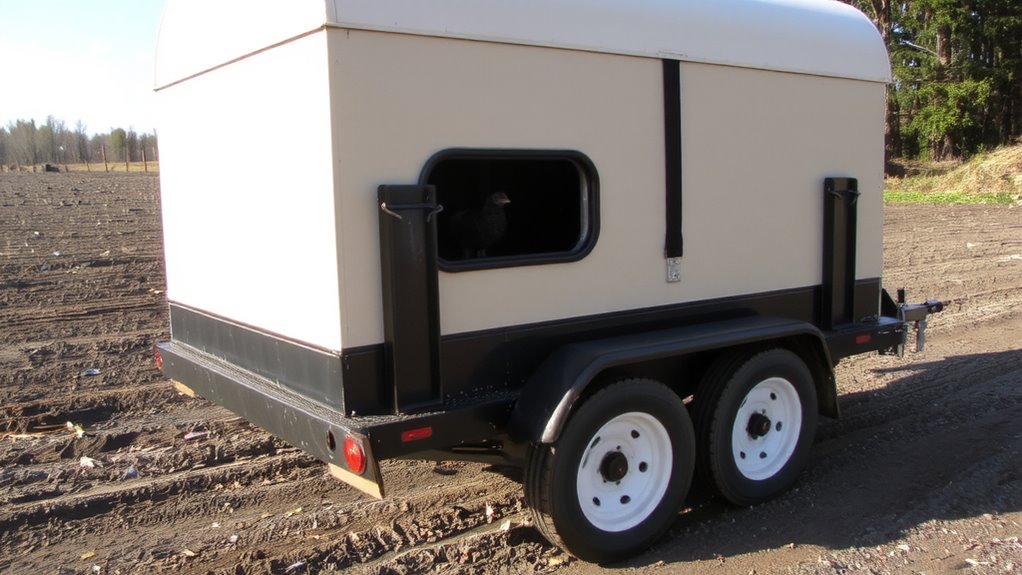
Since the coop will be towed over uneven terrain during emergencies, securing it properly starts with a reliable hitch and robust tie-downs. Use a Class III trailer hitch rated for at least 5,000 lbs to guarantee drag resistance during quick pulls. Secure the frame to the trailer with four 3,000-lb-rated ratchet straps, anchoring diagonally to prevent shifting. For added stability, install screw-in storm anchors at each corner-these hold up to 1,200 lbs in compacted soil and reduce lateral movement when the coop is parked. Pair them with marine-grade nylon tie-downs for minimal stretch and better shock absorption. Weld mounting points to the trailer frame instead of relying on wood screws, which can fail under stress. This setup balances strength and speed, letting you secure the coop in under five minutes. Proper tie-downs and a heavy-duty hitch don’t guarantee safety, but they substantially improve performance when every second counts.
Plan Your Flood Evacuation Route First
A solid hitch and tie-downs won’t help if you’re stuck trying to find a way out when floodwaters rise. Plan your evacuation route now, not during an emergency. Use flood mapping tools to identify low-risk zones and viable roads that won’t wash out. Pair this with real-time weather monitoring so you can act early, before roads become impassable. Test the route with your trailer attached to confirm clearance, weight limits, and turn radius. Delays cost time and safety. Consider deploying temporary flood barriers to protect your coop’s location during minor flooding events while preparing for evacuation.
| Route Option | Travel Time (mins) |
|---|---|
| Main Road | 12 |
| Back Trails | 18 |
| High Ground | 15 |
Choose the fastest, most reliable path. Rely on updated flood mapping and consistent weather monitoring to keep your chickens-and your plan-safe.
Use Quick-Access Feed and Water Systems
When floodwaters threaten, every second counts-having your chickens’ feed and water ready to grab means less time fumbling and more time evacuating safely. Use quick-access feeders with automatic refill systems that minimize labor and guarantee consistency, even under stress. These models stay full longer and reduce spillage during transport. Store water in durable, detachable containers with sealed tops; they’re easier to move and resist contamination. Install both systems with elevated placement to protect from damp ground and rodents-ideally 12 inches or more off the floor. Elevated units also improve hygiene and simplify cleaning. Test all components weekly for leaks or blockages. Choose hardware that operates smoothly under pressure. Avoid complex setups; focus on reliability. Quick-access doesn’t mean disposable-invest in sturdy materials that withstand frequent handling. Simple, secure, and functional is the priority. With smart setup, your flock stays fed and hydrated fast, no matter the conditions.
Run Mobile Coop Evacuation Drills
You’ve secured feed and water for fast loading, so now focus on moving the entire setup quickly when flood alerts hit. Run evacuation drills regularly to test how fast you can relocate the coop. Chicken behavior changes under stress-birds may resist exiting or panic, slowing loading. Frequent practice helps them acclimate, reducing resistance during real emergencies. Set a drill frequency of once per month during high-risk seasons; this guarantees you and the birds stay conditioned. Time each drill to track improvements. Note which latch jams or wheel sticks-small flaws become critical under pressure. A ten-minute evacuation target is realistic for most mobile coops. Include all team members so roles stay clear. Use the same route each time to build muscle memory. Adjust based on performance, terrain, and chicken behavior. Drills aren’t just practice-they reveal weaknesses before failure happens.
On a final note
You’ll move the coop fast if it’s light and watertight. A trailer base with a standard hitch lets you tow it quickly. Strong tie-downs prevent shifting during transport. Pre-plan your evacuation route to avoid delays. Quick-access feed and water systems save time. Run drills to test timing and logistics. This setup trades some winter insulation for mobility, but in flood zones, speed matters most.