The Role of Light Sources in Signaling: Choosing the Right Lantern or Flashlight Based on Scenario Needs
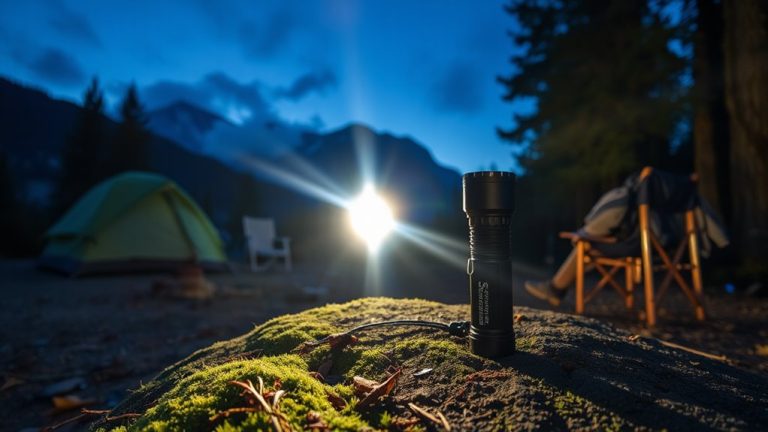
You need a lantern when 360-degree visibility matters-like signaling from a tent or shelter-thanks to its steady, ambient output and daylight-like color temperature. But for long-range signaling across open terrain, a flashlight wins with focused beams reaching 500+ meters, high candela, and efficient runtime. Weather reduces range, so choose based on conditions. Pick the tool that matches your scenario’s distance and environment, not just brightness. You’ll learn which features actually make a difference when seconds count.
Notable Insights
- Lanterns provide 360-degree visibility, making them ideal for close-range signaling in fog or dawn conditions.
- Flashlights project focused beams over long distances, crucial for signaling across open terrain like canyons or lakes.
- Choose flashlights with at least 500 meters beam distance and high candela for effective long-range emergency signaling.
- Weather conditions such as fog, rain, and snow significantly reduce signal range by scattering light.
- Use lanterns in stationary, shared, or indoor settings where hands-free, ambient light is more advantageous than directional beams.
What Makes a Lantern a Good Signal Tool?
While any bright light can technically signal for help, a lantern works best when it’s both powerful and steady. You need consistent beam dispersion to cover a wide area, making your position visible from multiple angles-critical if rescuers are searching laterally. A lantern with 360-degree output improves detection faster than focused beams in close-range scenarios. Color temperature matters too; lights near 5000K mimic daylight, cutting through fog or dawn haze more effectively than warmer tones. Cooler light draws the eye without appearing erratic. Look for models with stable stands or hanging hooks, so the light stays fixed without your hand. Battery life should exceed 10 hours on high to maintain reliability. Weight and size should balance portability with function-too small, and output suffers. Test the lantern’s durability in wind and moisture before relying on it. Choose steady brightness, broad dispersion, and ideal color temperature for dependable signaling. For reliable options, consider checking expert-tested emergency lantern recommendations.
When Flashlights Beat Lanterns for Distance
Why would you choose a flashlight over a lantern when every mile counts? Because flashlights deliver superior beam focus, projecting light farther with a concentrated spot that cuts through darkness. Lanterns spread light 360 degrees, which is great for area coverage but wastes output when signaling at distance. A flashlight’s directional beam reaches miles farther, making it more effective for long-range communication. Plus, its power efficiency means you get more runtime per charge or battery when aiming for range. You don’t need blinding brightness-just well-focused lumens directed where they matter. In open terrain or from high ground, that focused throw can be seen for miles. Lanterns simply can’t match that reach. For signaling across canyons, lakes, or snowfields, the flashlight’s design gives you a measurable advantage. When distance is critical, choose focus and efficiency-choose a flashlight. Top models like the Best Survival Flashlights combine durability, long throw, and reliable performance in extreme conditions.
Critical Flashlight Features for Emergency Signaling
If you’re relying on a flashlight to signal for help, beam distance and visibility matter more than raw brightness-focus on models with a tight hotspot and high candela ratings, since those determine how far your signal can be seen. Beam intensity guarantees your signal remains distinguishable at long range, cutting through darkness or over terrain. A flashlight with at least 500 meters of beam distance gives you a practical reach for emergency use. Don’t overlook battery life; you’ll need sustained output over hours, not just a brief burst. LEDs with efficient drivers deliver consistent beam intensity without rapid drop-off. Look for models running on common battery types for easier replacement. Some flashlights offer strobe or SOS modes, which increase detection chances without draining power excessively. Balance beam intensity with battery life to avoid burnout before rescue arrives. Test modes beforehand-reliability beats features when signaling for survival.
How Weather Affects Signal Visibility
When fog, rain, or snow rolls in, your signal’s effective range drops fast because moisture scatters light, blurring the beam and reducing visibility. High fog density and heavy rain intensity both cut through signal reach-sometimes by over 70%. A bright flashlight may still work at close range, but its effectiveness fades quickly in thick conditions.
| Condition | Signal Range Drop |
|---|---|
| Light fog | 30% |
| Heavy fog | 80% |
| Light rain | 4 Decoration% |
| Heavy rain | 60% |
| Snowfall | 50% |
You can’t control the weather, but you can adjust your signaling strategy. Dense fog demands slower, sweeping signals to increase detection chances. In heavy rain, aim low-light reflects off droplets. Always consider fog density and rain intensity when choosing signal timing and position. Real-world visibility loss isn’t theoretical-it’s measurable, immediate, and often decisive. A reliable handheld marine spotlight can significantly improve signal penetration in adverse marine conditions.
Lantern vs. Flashlight: Which to Use When
You’ve seen how weather cuts through signal range, but now it’s time to pick the right tool for the job-lantern or flashlight. A flashlight delivers high light intensity and tight beam focus, making it ideal for long-distance signaling or scanning terrain. Its concentrated output projects farther, helping rescue teams spot flashes up to several miles away under clear conditions. Lanterns, in contrast, provide 360-degree illumination with lower beam focus and moderate light intensity. They’re better for area visibility than signaling over distance. Flashlights sacrifice wide coverage for reach; lanterns trade reach for ambient light. Your choice depends on whether you need to be seen from afar or illuminate your immediate surroundings. There’s no universal best-only what fits your scenario. Each tool has measurable strengths grounded in output and beam design. Know the difference, and use it to your advantage.
Real-World Scenarios: Matching Your Light to the Situation
Why carry a flashlight that beams 500 meters if you’re huddled in a tent at night? For indoor navigation, a low-lumen lantern with 360-degree output is more practical-it lights the whole space without blinding you. If you’re into urban exploration, where dark hallways and uneven floors are common, a compact flashlight with 200–400 lumens and a focused beam helps you see obstacles without draining batteries. Flashlights with adjustable brightness let you switch between spotting distant details and close-up tasks. Lanterns with multiple brightness levels work better in shared spaces, minimizing glare. In tight quarters, size and beam control matter more than raw power. A lantern with a hanging hook aids hands-free use. For urban exploration, durability and beam distance help, but only if balanced with portability. Match the tool to the environment-there’s no universal best, only what’s right for your situation.
On a final note
You need visibility and reliability, not hype. A lantern spreads light well for camp signaling but lacks reach. A flashlight beams farther, especially with high lumens and strobe mode, cutting through dark or fog. Weather dampens both, but focused beams hold up better. Choose based on distance and environment: lanterns for close, sustained signals; flashlights for long-range or urgent calls. Match tool to task.