How to Use Natural Charcoal From Firewood Ashes for Emergency Water Filtration
You can’t use firewood ashes for water filtration-charcoal, not ash, is what works. Make charcoal by slowly burning untreated hardwood like oak in a low-oxygen fire, then crush it into small pieces. Layer the charcoal with sand and cloth in a bottle or tube, letting water drip through slowly-about 1–2 oz per minute. It removes chlorine, odors, and some chemicals but not bacteria or heavy metals. Always boil filtered water for at least 1 minute. Replace charcoal every few uses or when flow slows. Performance drops fast if materials are contaminated or compacted. Knowing the full process guarantees better results when every sip counts.
Notable Insights
- Use untreated hardwood charcoal, not ashes, as only charred wood has the porous structure needed for filtration.
- Crush charcoal into small, uniform pieces to maximize surface area and improve contaminant adsorption.
- Layer crushed charcoal between cloth, sand, or gravel in a clean vertical filter setup to trap debris and impurities.
- Avoid using firewood ashes, coal, or briquette remnants, as they contain harmful residues and lack filtering pores.
- Always boil filtered water for at least 1 minute to eliminate pathogens, since charcoal does not sterilize water.
How Charcoal Purifies Emergency Water
Charcoal works by trapping impurities in its porous structure as water passes through. You rely on this physical network to capture particles and debris, a process known as impurity trapping. The pores create a large surface area, which boosts chemical adsorption-the binding of contaminants like chlorine, volatile organic compounds, and some heavy metals to the charcoal’s surface. This isn’t a permanent fix, but it reduces odors, cloudiness, and some harmful substances in emergency water. Activated charcoal performs better due to higher porosity, but even natural charcoal from wood fires offers measurable improvement. Flow rate matters: too fast, and adsorption drops. You’ll get cleaner water, though not sterile. It won’t remove all pathogens or dissolved salts. Used correctly, it’s a practical short-term solution when filters aren’t available. Weigh the trade-offs-limited chemical removal versus accessibility-and act accordingly. For a more reliable option in crisis scenarios, consider using a dedicated best water filters for survival system designed to handle a broader range of contaminants.
Pick Safe Ashes for Your Filter
While not all ashes work for water filtration, the right kind can enhance your filter’s ability to remove certain impurities. You need clean, wood-based ashes from untreated hardwoods like oak or maple-these offer the best ash sourcing for filtration. Avoid ashes from treated lumber, painted wood, or trash fires; they contain chemicals that compromise material safety and can leach toxins into water. Never use coal or charcoal briquette ashes-they include binders and additives that aren’t safe. Stick to plain campfire or fireplace remains where you know exactly what burned. The ash should be completely cooled, fine, and powdery, with no visible debris. If you didn’t control the original fire, don’t trust the ash. Proper ash sourcing reduces risk and guarantees your filter performs as expected in real-world conditions.
Make Charcoal From Ashes in 3 Steps
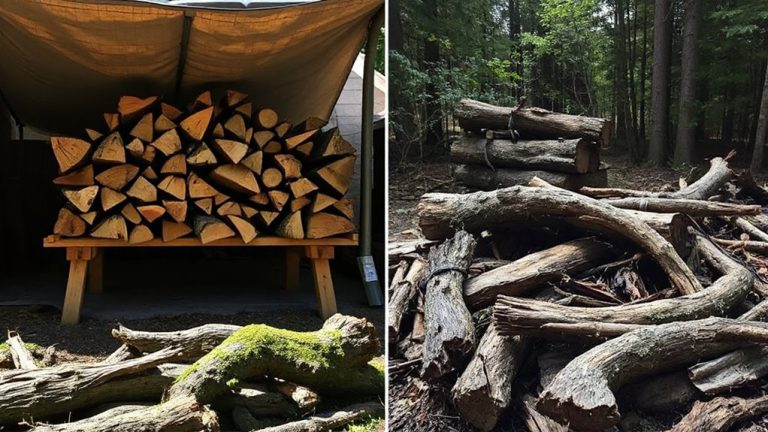
You can’t make charcoal from ashes-because ashes are what’s left *after* combustion, not a starting material. To create natural charcoal, start with raw wood through proper material sourcing: use hardwoods like oak or maple, which produce dense, long-burning charcoal. Step 1: Source dry, untreated logs-source identification matters, as softwoods or chemically treated wood create poor results. Step 2: Burn the wood slowly in a low-oxygen environment, such as a metal drum with limited airflow, allowing it to char rather than fully ignite. Step 3: Extinguish the smoldering wood once it turns black and lightweight, then let it cool completely. This process, called pyrolysis, converts wood into usable charcoal. The resulting material is porous and ideal for filtration. Proper technique guarantees consistent quality without additives or special tools.
Build a Simple Charcoal Water Filter
If you need clean drinking water in a pinch, a simple charcoal filter can remove impurities and improve taste. Start by assembling your filter assembly: pack crushed natural charcoal between layers of clean cloth or fine sand inside a hollow tube or bottle with a small hole at the base. The charcoal should be fine but not powdery to maintain an acceptable flow rate. Too fine, and water barely moves; too coarse, and filtration suffers. A 1-inch layer of medium-grade charcoal works reliably. Position the filter vertically so gravity pulls water through. Expect a flow rate of about 1–2 ounces per minute, depending on material density. This setup won’t purify water completely but reduces sediment, odor, and some contaminants. Re-filter when clarity or taste suggests performance drop. Replace charcoal after 2–3 uses or if flow stops. Simple, yes-but effective when resources are limited. For a more reliable long-term solution, consider including a commercial water filtration survival kit in your emergency supplies.
What Charcoal Can’T Remove From Water
Though charcoal filtration helps with taste and certain contaminants, it won’t remove everything that could make you sick. You’re still at risk from pathogens like bacteria and viruses, which pass right through. Charcoal also doesn’t remove chemical residues from pesticides, herbicides, or industrial runoff-those stay in the water unless you’ve got a more advanced system. Heavy metals like lead, mercury, or arsenic aren’t effectively captured by natural charcoal either. These toxins are dangerous even in small amounts and require specific media, like activated alumina or ion exchange resins, to filter out. So while your homemade filter improves water clarity and removes some organics, don’t rely on it for complete protection. If you’re in an area with known pollution or industrial contamination, understand that charcoal alone won’t neutralize chemical residues or heavy metals. For more reliable results in such scenarios, consider upgrading to one of the top water filters recommended for comprehensive contaminant removal.
When to Boil After Charcoal Filtering
Why go to the trouble of filtering water with charcoal if it still isn’t safe to drink? Because charcoal removes impurities and improves taste, but it doesn’t kill pathogens. You must boil water afterward to guarantee safety. Pathogens resistance varies-some bacteria and protozoa can survive chemical and physical filtration. Boiling is the most reliable method to destroy them. Bring water to a rolling boil for at least one minute; at elevations above 6,500 feet, extend the boiling duration to three minutes due to lower boiling points. This kills nearly all harmful microorganisms. Charcoal filtration alone isn’t enough in biologically contaminated water. Boiling compensates for the filter’s limitations. It’s a simple, proven step that addresses what charcoal can’t. Skip it, and you risk illness. Use both steps: filter first, then boil. That’s how you get water that’s both clean and safe.
Fix Slow or Dirty Charcoal Filters
You’ve boiled the water to kill pathogens-good. But if your charcoal filter is slow or dirty, it’s time to act. A reduced flow rate means clogging from sediment or excess ash. Clear it by backflushing with clean water or replacing the charcoal layer. Crushed charcoal works faster but clogs easier; larger chunks improve flow rate but may filter less thoroughly. If the water looks cloudy or tastes off, it’s a sign you need filter replacement. Don’t wait. Old charcoal loses effectiveness and can leach impurities. For best results, combine fresh, fully burned hardwood charcoal with sand or cloth layers to trap debris. Clean assembly matters-rinse all materials first. In emergencies, a slow filter isn’t just inconvenient-it limits water access. Monitor performance daily. When flow drops below 1 liter per hour, replace the charcoal. Simple maintenance keeps it reliable.
On a final note
You now have a basic way to filter water using charcoal from firewood ashes. It removes some impurities and odor, but not all pathogens. You still need to boil water afterward to kill bacteria and viruses. The filter can clog or slow over time, so clean or replace layers as needed. It’s not perfect, but it works in a pinch. Know its limits, use it right, and stay safe.