Assessing Risk of Carbon Monoxide Poisoning From Indoor Cooking
You’re at risk of carbon monoxide poisoning when using gas stoves or charcoal indoors, especially if your appliances are old or poorly maintained. Faulty burners, lack of ventilation, and extended cooking increase CO levels silently. Gas stoves produce CO even when working properly, and charcoal emits deadly amounts within minutes. Yellow flames or soot mean trouble. Install UL-listed CO detectors and use range hoods vented outside. Know the symptoms-headache, dizziness, nausea-because next steps could save your life.
Notable Insights
- Gas stoves produce carbon monoxide during combustion, especially when burners are dirty or misadjusted.
- Incomplete combustion from yellow or flickering flames increases CO emissions in the kitchen.
- Poor ventilation traps CO indoors, significantly raising exposure risk during prolonged cooking.
- Using charcoal indoors generates lethal CO levels within minutes and must be avoided.
- Install UL-listed CO detectors near kitchens and sleeping areas to detect odorless, dangerous buildup.
Causes of Carbon Monoxide in Kitchens
Carbon monoxide in your kitchen usually stems from incomplete combustion, and that’s most often tied to fuel-burning appliances like gas stoves, ovens, or portable cooktops. When these devices don’t burn fuel efficiently, they produce CO instead of harmless byproducts. Incomplete combustion happens if burners are misadjusted, clogged, or poorly maintained. You won’t see or smell the gas, so it accumulates silently. Ventilation failure makes this worse-without proper airflow, CO lingers instead of being expelled. Even a functioning range hood won’t help if it vents internally or lacks sufficient exhaust capacity. Older appliances are riskier, often lacking modern safety shutoffs. Testing shows units over ten years old are twice as likely to emit elevated CO. You can reduce exposure by checking flame color-blue is efficient; yellow or orange signals trouble. Regular maintenance and correct installation matter just as much as detection.
Risky Cooking Habits That Raise CO Levels
While you might think cooking is safe as long as the stove lights, certain everyday habits can quietly boost carbon monoxide levels in your kitchen. Improper ventilation is a key risk-you might keep windows shut or neglect range hoods, trapping CO indoors. Without airflow, even small emissions accumulate over time. Prolonged cooking, especially simmering for hours, increases exposure risk, particularly in small or enclosed spaces. You may not notice symptoms until levels become dangerous. Using stovetop burners instead of ovens for extended periods adds to the problem, as burners produce more CO when left on inefficiently. Cooking with pots that don’t match burner size can also lead to incomplete combustion. These habits don’t cause immediate harm, but consistently practicing them raises baseline CO levels. You can reduce risk by running exhaust fans, opening windows, and limiting long cook sessions.
Gas Stoves and CO Emissions
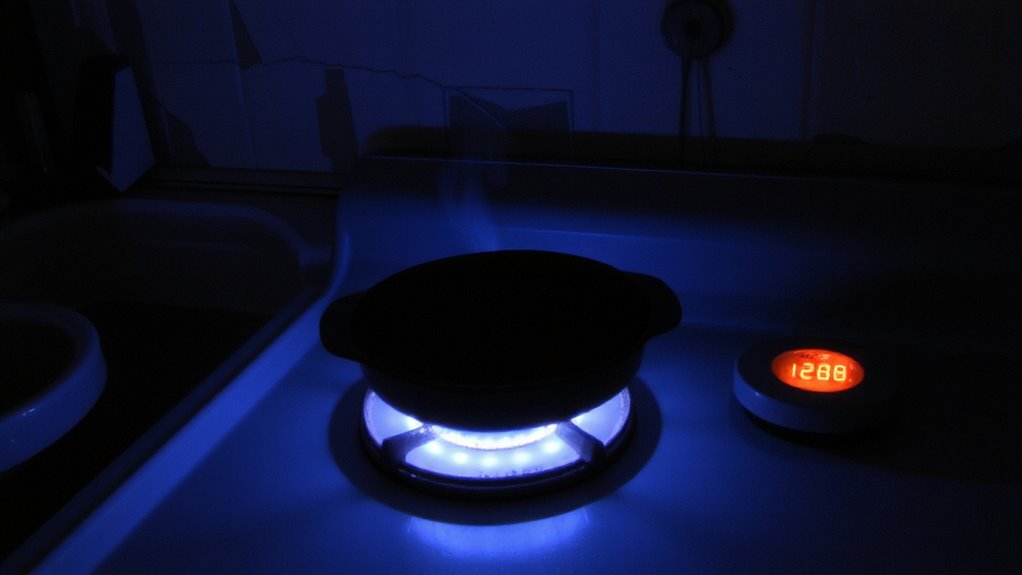
Since gas stoves burn fuel directly in your kitchen, they produce carbon monoxide as a normal byproduct, and how much builds up depends on usage, maintenance, and ventilation. You should check the flame color regularly-blue means efficient combustion, while yellow or orange signals incomplete burning and higher CO output. Poor burner maintenance, like clogged ports or grimy components, worsens this risk by disrupting airflow and fuel mix. Clean burners weekly and inspect monthly to keep combustion efficient. Even well-maintained stoves generate CO, so never rely on visual checks alone. Use a UL-listed CO detector near the kitchen and sleeping areas. Venting matters: run the range hood externally when cooking, especially during long or high-heat sessions. Without proper ventilation, even brief use can elevate CO levels. You can’t see or smell CO, so consistent habits-like monitoring flame color and practicing regular burner maintenance-reduce risk measurably. For emergency situations where indoor cooking may be necessary, consider using a well-ventilated emergency stove designed for safe operation.
Never Use Charcoal Indoors: Here’s Why
You might keep your gas stove well maintained and monitor the flame color, but don’t make the mistake of thinking other fuel sources are safe indoors. Charcoal combustion produces high levels of carbon monoxide, even when the fire seems controlled. Without proper indoor ventilation, the gas accumulates quickly, reaching dangerous concentrations in minutes. You can’t see or smell it, so you won’t notice until symptoms begin. Grills and hibachis aren’t designed for indoor use-ever. Their burn patterns and fuel density mean they release far more CO than stoves or heaters rated for indoor spaces. Using one indoors, even near a window, doesn’t guarantee safety. Indoor ventilation systems aren’t sufficient to handle the CO load from charcoal. Real-world tests show CO levels spike beyond lethal limits within 30 minutes. There’s no safe exception. If you use charcoal, do it outside, away from doors and windows. No exceptions, no compromises.
Symptoms of Carbon Monoxide Exposure
Silence is the first warning sign-carbon monoxide has no smell, no color, and no sound, so you won’t detect it until symptoms hit. If you’re exposed, you’ll likely notice headache nausea first, followed by dizziness confusion as levels rise. These symptoms are easy to mistake for the flu, but they clear quickly when you leave the area. Knowing the timeline helps you respond before it’s too late.
| Symptom Onset | Common Signs |
|---|---|
| Mild exposure | Headache, nausea |
| Moderate exposure | Dizziness, confusion |
| High exposure | Loss of coordination |
| Prolonged exposure | Unconsciousness |
You can’t rely on your senses to detect CO, so recognizing early signs is critical. Headache nausea often appears within an hour in low concentrations. Dizziness confusion sets in faster if ventilation is poor. The table outlines what to expect as exposure increases. Act at the first sign-move to fresh air immediately.
Detecting and Reducing CO in Your Kitchen
How do you know if your kitchen is leaking a silent killer? You can’t see or smell carbon monoxide, so reliance on CO detectors is non-negotiable. Place one near your cooking area and test it monthly-units with digital read在玩家中 show real-time CO levels, helping detect creeping exposure. Battery backups guarantee function during outages. For reducing risk, ventilation systems are critical. Range hoods vented to the outside remove CO and other combustion byproducts at the source. Guarantee your hood moves at least 100 cubic feet per minute (CFM) if you cook frequently. Recirculating hoods don’t reduce CO-they only filter odors. Ductless models offer minimal protection. Combine working CO detectors with properly installed ventilation systems for basic but effective defense. No exceptions. Proper setup beats guesswork every time.
Safe Cooking With Gas and Fuel Appliances
Gas stoves and ovens produce carbon monoxide during operation, making safe practices non-negotiable. You must guarantee proper ventilation every time you cook-open windows or use exhaust fans that vent outdoors. Check that your kitchen has at least 50 square feet of space with adequate air exchange to reduce CO buildup. Regular appliance maintenance isn’t optional; inspect burners, pilots, and flues annually to confirm they’re clean and functioning correctly. Faulty units waste fuel and lower fuel efficiency, increasing both emissions and costs. A well-maintained gas stove uses up to 20% less fuel than neglected models. Never use outdoor fuel appliances like grills or generators indoors-they lack safety controls and produce dangerous CO levels quickly. Look for appliances with automatic shut-off features and certified safety ratings. Test CO detectors monthly and replace them every five years. Safe cooking means consistent habits and reliable equipment. For emergency situations, consider using a top-rated emergency stove that is designed for safe, controlled indoor use with proper ventilation.
On a final note
You face real risk if you ignore carbon monoxide in the kitchen. Gas stoves and indoor charcoal use produce deadly CO without proper ventilation. Symptoms like headaches or dizziness signal exposure early, but only a detector gives reliable warning. Install one near the kitchen; it’s non-negotiable. Regular maintenance and avoiding unsafe fuel practices reduce risk. Survival hinges on vigilance, not luck-test appliances, ventilate, and act.