Using Freeze-Drying to Preserve the Nutritional Value of Foraged Berries
You preserve up to 90% of nutrients by freeze-drying foraged berries, far more than canning or jamming, since low temperatures avoid heat damage. Berries like blueberries and blackberries hold shape and nutrients best. The process removes moisture quickly under vacuum, stopping spoilage without sugar or preservatives. Store them in airtight containers with oxygen absorbers, and they’ll last years. They rehydrate well for smoothies, meals, or snacks. You’ll see exactly how to do it right, step by step.
Notable Insights
- Freeze-drying preserves up to 90% of nutrients by avoiding high heat and minimizing oxidation.
- Sublimation under vacuum retains vitamins, antioxidants, and delicate phytonutrients in foraged berries.
- Berries like blueberries and blackberries maintain shape, flavor, and nutritional integrity after freeze-drying.
- Properly stored freeze-dried berries can last up to 25 years without spoilage or nutrient loss.
- Rehydrated freeze-dried berries retain freshness, color, and original nutritional value for long-term use.
Why Freeze-Dry Foraged Berries Instead of Canning or Jamming
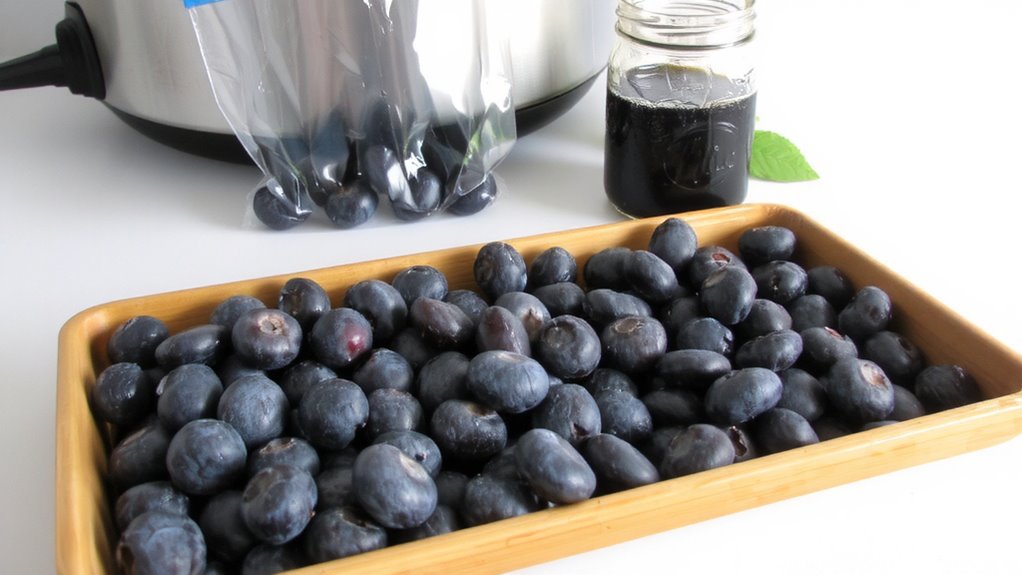
While canning and jam-making have long preserved berries, freeze-drying offers a simpler, more reliable method for keeping foraged berries safe and nutritious over time-without added sugar or risk of spoilage from improper sealing. You avoid the hassle of sterilizing jars and monitoring for mold, since freeze-dried berries have a stable shelf life of 25 years when stored properly. Canning often degrades nutrients due to high heat, while freeze-drying maintains integrity with minimal thermal exposure. Though freeze-drying requires a higher initial investment and greater energy consumption during the process, it runs unattended and preserves more of the berry’s original form. Once complete, the low moisture content eliminates refrigeration needs, reducing long-term energy use. Unlike jams, which lose texture and depend on sugar for shelf stability, freeze-dried berries rehydrate well and retain shape. For long-term storage with consistent results, freeze-drying outperforms traditional methods where shelf life and efficiency matter most. A dedicated survival food toolkit can include compact freeze-dried berry supplies for sustained nutrition in emergency scenarios.
How Freeze-Drying Preserves Nutrients and Flavor
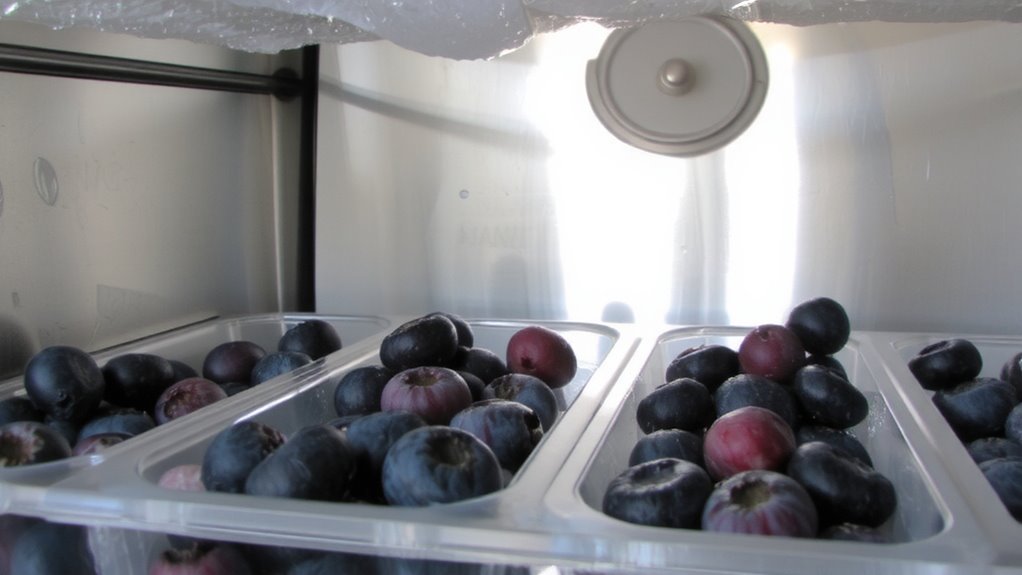
Freeze-drying locks in nutrients and flavor by removing moisture quickly after harvest, halting microbial activity and enzymatic breakdown without cooking the berries. You retain up to 90% of vitamins and antioxidants, far better than canning, which often degrades heat-sensitive compounds. This method excels in nutrient retention because it skips high heat, preserving delicate phytonutrients intact. Flavor locking happens as water sublimates under vacuum, leaving the cellular structure largely undamaged. Rehydrated berries taste nearly fresh, unlike sun-dried ones that caramelize or ferment. You’ll notice the color stays vibrant, a visible sign of preserved quality. While freezing also maintains nutrients, it requires constant power and takes up more space. Freeze-dried berries are lightweight, shelf-stable for 25+ years, and don’t need refrigeration. There’s a trade-off in initial equipment cost, but for long-term storage, it’s efficient. You get reliable results batch after batch.
Best Foraged Berries to Freeze-Dry Successfully
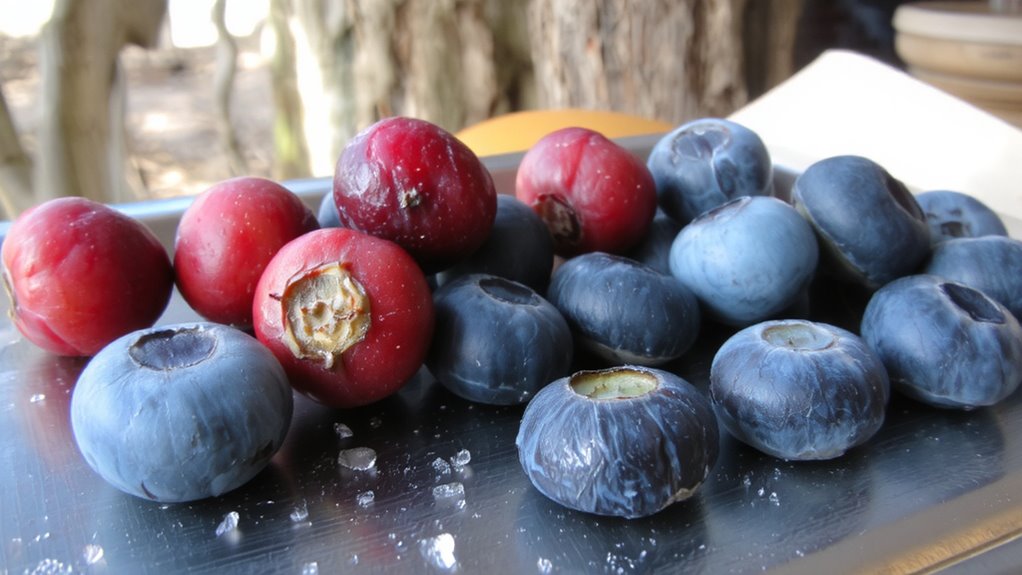
Wild berries like blueberries, blackberries, raspberries, and serviceberries handle freeze-drying best due to their firm texture and balanced sugar-acid profile. Your success hinges on careful berry selection and strict quality control. Avoid overripe or damaged fruit, as they collapse during drying and rehydrate poorly. These varieties retain shape, color, and nutrients when processed promptly after harvest. For long-term storage, pack freeze-dried berries in Mylar bags with oxygen absorbers to maintain freshness and prevent moisture exposure.
| Berry Type | Success Rating (1-5) |
|---|---|
| Blueberry | 5 |
| Blackberry | 4 |
| Raspberry | 4 |
| Serviceberry | 4 |
| Strawberry | 3 |
You’ll get the best results with berries that are plump, fully ripe, and free of mold. Each type responds differently, but consistent prep guarantees stability. Freeze-drying works reliably with these hardy options, giving you lightweight, long-lasting nutrition with minimal nutrient loss.
Prepare and Load Berries for Optimal Results
You’ve picked the right berries-firm, ripe, and mold-free-so now it’s time to get them ready for the freeze-dryer. Start with pre washing techniques: rinse gently in cool water to remove debris without soaking, then air-dry thoroughly on a clean towel-excess moisture slows processing. Inspect each berry again; discard any bruised or soft ones. Trim stems only if necessary, as excessive handling increases damage risk. Spread them in a single layer on the trays, ensuring proper tray spacing-no touching. Overcrowding traps moisture and creates uneven drying. Use the full tray surface efficiently, but leave at least 1/8 inch between berries for air circulation. For smaller batches, stagger loading across trays to maintain balanced airflow. Uniform size leads to consistent results, so sort if needed. This prep reduces cycle time and boosts preservation. Proper setup matters as much as the machine itself. Your effort here directly affects shelf life and nutrient retention.
How the Freeze-Drying Process Works Step by Step
Think of freeze-drying as a careful removal of moisture through cold and vacuum, not heat and evaporation. You start by freezing your berries to below -40°F, locking their structure in place. Then, the machine applies vacuum pressure, dropping the surrounding air pressure to allow ice to sublimate directly into vapor. This phase skips liquid altogether, preserving texture and nutrients. Throughout, temperature control is critical-too warm, and the berries cook; too cold, and sublimation stalls. The process typically runs 20–40 hours, depending on load and berry size. Your unit must maintain steady vacuum pressure and precise temperature control to finish efficiently. Moisture content drops from around 85% to 2–3%, making the berries lightweight and shelf-stable. You’ll know it’s done when no condensation forms inside the chamber. There’s no guessing-you rely on time, readings, and results. It’s methodical, but it works.
Store Freeze-Dried Foraged Berries for Months
Airtight storage is essential if you want freeze-dried foraged berries to last beyond a few weeks. Moisture is the main threat to storage longevity, so you need containers that seal tightly and block humidity. Glass jars with rubber gaskets work well, but heavy-duty vacuum-sealed bags are lighter and take up less space. Container selection directly affects how long your berries retain texture and nutrients-poor choices lead to early spoilage. Metal tins with tight lids also perform reliably, but avoid plastic containers unless they’re specifically designed for long-term food storage. For optimal protection against oxygen and moisture, consider using best Mylar bags in combination with oxygen absorbers. Store in a cool, dark place, ideally below 70°F. Temperature fluctuations reduce shelf life, even in ideal containers. With proper sealing and stable conditions, you can expect 12 to 24 months of storage longevity. Light exposure degrades color and some vitamins over time, so opaque or dark-stored containers are preferable. Label each batch with the date to track freshness and rotation.
Use Freeze-Dried Berries in Snacks, Smoothies, and Meals
Once your freeze-dried foraged berries are properly stored, they’re ready to use in a range of everyday applications. You can toss them into trail mix enhancements for added flavor and nutrition-lightweight, non-perishable, and energy-dense, they perform well in outdoor conditions. Rehydrate them in smoothies, where they blend easily and retain most of their original nutrients. Their concentrated form means a little goes a long way in both taste and caloric value. Use them in cooked meals like oatmeal or grain dishes, where they soften quickly when exposed to heat or liquid. For baking, incorporate them into berry infused desserts such as muffins or energy bars; they distribute evenly and avoid sogginess. Unlike fresh berries, freeze-dried versions won’t spoil or require refrigeration, making them practical for long-term planning. Their shelf stability and versatility support consistent use across snacks, meals, and emergency rations without compromising nutritional quality.
On a final note
You preserve foraged berries well by freeze-drying-nutrients and flavor stay intact better than with canning or jamming. It takes more time and equipment than dehydrating, but the results last longer and rehydrate fully. You’ll save berries for up to two years if stored airtight and cool. Use them in smoothies, oatmeal, or snacks. The process works reliably, but energy use and cost are trade-offs worth accepting for long-term nutrition.