Assessing Risk of Food Cross-Contamination in Emergency Kitchens
You’re at higher risk of cross-contamination in emergency kitchens because tight spaces mix raw and ready-to-eat foods, shared tools spread bacteria, and power outages compromise refrigeration. Countertops become multi-use zones, handwashing access is limited, and improper storage allows drips onto clean food. Without color-coded boards or allergen zoning, mistakes escalate quickly. Effective sanitizers must act in 30 seconds, and staff need clear, consistent training-reducing risk by up to 70% when done right. Solutions improve safety fast.
Notable Insights
- Limited space and multi-use surfaces increase contact between raw and ready-to-eat foods, raising cross-contamination risks.
- Power outages compromise refrigeration, allowing perishable foods to enter the temperature danger zone rapidly.
- Shared utensils and cutting boards transfer pathogens between raw ingredients and cooked or ready-to-eat items.
- Inadequate handwashing access and poor staff hygiene practices reduce compliance with sanitation protocols.
- Lack of allergen zoning and improper food labeling heighten risks of cross-contact and allergic reactions.
Why Emergency Kitchens Are at Risk for Cross-Contamination
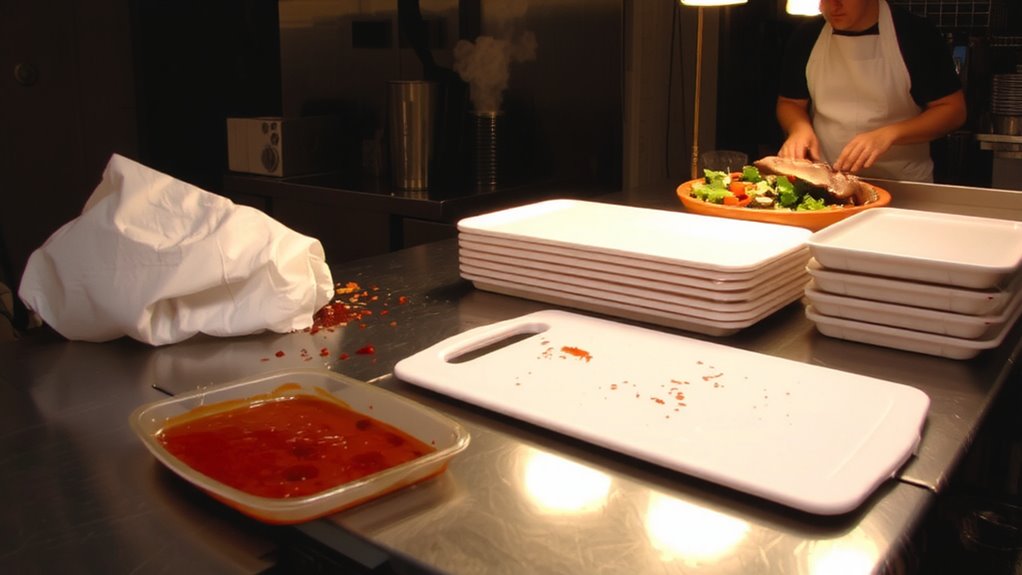
While you might expect food safety risks to be lower in temporary setups, emergency kitchens often face conditions that increase the likelihood of cross-contamination. You’re working in limited space, where raw and ready-to-eat foods can easily come into contact without proper separation. Countertops double as storage, prep, and serving areas, reducing hygiene margins. Power outages are common, disrupting refrigeration and allowing perishables to enter the danger zone within hours. Without consistent temperature control, pathogens multiply quickly. Handwashing sinks may be shared or inaccessible, further raising risk. Equipment is often repurposed or minimal, so sanitizing between tasks becomes harder. You can’t rely on permanent infrastructure, and delays in supply deliveries mean improvisation, which compromises protocols. These factors combine to create an environment where contamination spreads easily, even with careful intent. Your ability to maintain safety depends heavily on planning, training, and real-time adaptability under stress.
Where Cross-Contamination Happens in Crisis Food Operations
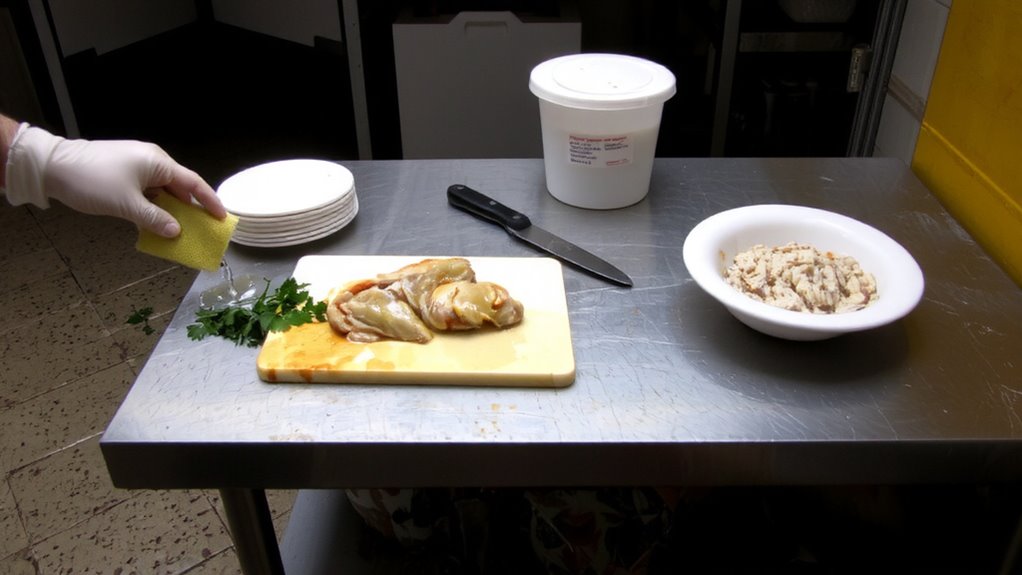
Food becomes unsafe where surfaces, hands, and tools meet without proper separation. In crisis food operations, you’ll often see this at prep stations where raw and ready-to-eat items are handled too close together. Improper labeling means allergens or raw proteins can be mistaken for safe items, increasing risk fast. You’re likely using shared utensils-same spoon for multiple bins, same knives for cutting different foods-without knowing it’s spreading harmful bacteria. Workspaces get crowded, and when cutting boards or trays aren’t color-coded or cleaned between tasks, cross-contamination follows. Hands touch raw meat, then packaged goods, then serving trays. Even well-meaning volunteers skip handwashing under pressure. Storage zones blur lines too-raw ingredients stacked above fresh produce invites drip contamination. You can’t assume clean means safe. These common gaps-improper labeling, shared utensils, unmarked zones-turn efficiency into hazard. Spot them early, correct fast.
How to Separate Foods and Avoid Allergen Spread
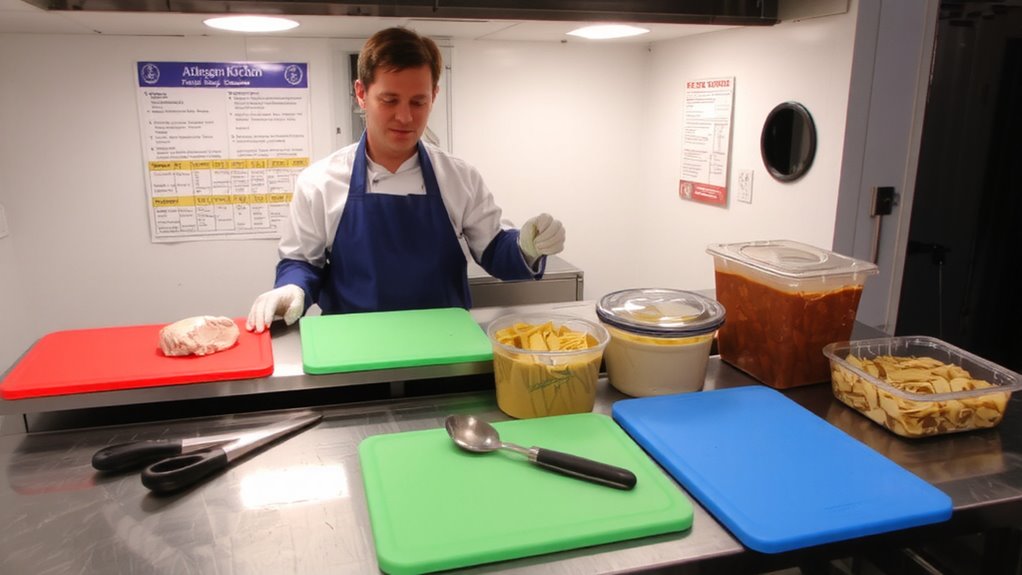
A clear system for separating foods keeps your kitchen from becoming a hazard zone. You need allergen zoning to physically divide areas where common allergens are handled from those preparing allergen-free meals. Mark zones clearly and enforce strict traffic flow to prevent cross-contact. Use dedicated utensils for each zone-never share cutting boards, knives, or spoons between allergen-free and allergen-handling areas. Color-coding helps staff identify which tools belong where. Store allergen-containing ingredients separately, sealed and labeled. Train everyone to recognize the risk of even trace amounts spreading. This system isn’t foolproof, but it reduces error when followed consistently. Allergen zoning and dedicated utensils are basic controls, not extras. Skip them, and you increase the chance of a reaction. Implement them, and you create a safer, more reliable process.
Handle, Cook, and Store Food Without Spreading Germs
If you’re not washing your hands and sanitizing surfaces before and after handling raw items, you’re likely spreading harmful bacteria like salmonella or E. coli. Always use separate cutting boards and utensils for raw meat and ready-to-eat foods. Cook meats to safe internal temperatures-chicken to 165°F, ground beef to 160°F-and verify with a food thermometer. Store raw meats below cooked and ready-to-eat items in the fridge to prevent drips. Your food sourcing matters: inspect deliveries for spoilage and maintain cold chain integrity. Discard damaged packaging or expired goods immediately. Use covered, leak-proof containers for waste disposal and empty them frequently to reduce germ spread. Label all stored food with prep times and dates. Rotate stock using the first-in, first-out method. Cross-contamination risks drop markedly when handling, cooking, and storage follow clear, consistent procedures. Proper practices protect vulnerable populations when resources are limited.
Sanitize Quickly and Effectively in High-Use Kitchens
While speed matters in high-use kitchens, skipping steps in sanitizing puts everyone at risk-especially when turnover is constant and surfaces stay wet with food debris. You need rapid disinfection that actually works, not just promises. Wipe surfaces with a sanitizer proven to kill 99.9% of pathogens in 30 seconds-time you don’t have to waste. High surface turnover means you can’t afford methods that require long dwell times or multiple steps. Two-compartment sinks slow you down; a pre-mixed, ready-to-use spray reduces contact time and effort. Cloth towels spread germs-use disposable paper. Temperature matters: sanitizers lose effectiveness below 75°F. Check concentration regularly; too weak won’t kill, too strong leaves harmful residue. Balance speed and safety: fast doesn’t mean reckless. Real-world tests show proper rapid disinfection cuts contamination by over 70% during peak service. Your workflow depends on it.
Train Staff and Volunteers to Prevent Contamination
Every minute spent training staff and volunteers pays off in fewer contamination incidents. You must prioritize personal hygiene-train everyone to wash hands correctly, wear gloves, and avoid working when ill. These actions reduce pathogen spread by up to 70% in high-pressure environments. Communication protocols guarantee consistent messaging during rapid shifts; clarify roles, report spills immediately, and confirm cleaning completion. Miscommunication increases cross-contamination risk, especially during shift changes. Use clear signage and verbal check-ins to reinforce procedures. Training isn’t a one-time task-it needs regular refreshers to maintain compliance. Drills simulate real emergencies, testing both hygiene adherence and communication efficiency. Volunteers without food-handling experience need extra guidance, so pair them with trained leads. Simple mistakes, like using the same glove for raw and ready-to-eat foods, can undermine sanitation efforts. Effective training minimizes those errors, guaranteeing safety stays consistent even under stress.
On a final note
You can reduce cross-contamination in emergency kitchens by separating raw and ready-to-eat foods, using color-coded cutting boards, and enforcing handwashing. Staff and volunteers must follow clear procedures for storing, cooking, and sanitizing. Simple, consistent practices-like cooking to safe temperatures and cleaning surfaces every 30 minutes-matter more than equipment upgrades. Real-world use shows that training beats high-end tools when preventing outbreaks. You stay safer when routines are repeatable and measurable.