Assessing Risk of Food Waste in Emergency Supply Rotation
You’re wasting emergency food by storing it in hot, humid places like garages, where heat and moisture ruin packaging and shorten shelf life. Dates like “best by” don’t always mean unsafe-most shelf-stable foods last years if stored properly. Rotate stock using the first-in, first-out rule so older items don’t expire unseen. Donate unopened, safe items nearing their date instead of trashing them. A cool, dark pantry below 70°F keeps food viable longer-stick to it, and you’ll get better results from your supplies. There’s a smarter way to manage every part of your storage and rotation system.
Notable Insights
- Improper storage conditions like heat, humidity, and light accelerate food degradation and increase waste risk in emergency supplies.
- Without proper rotation, older items get buried and expire, leading to unnoticed spoilage and reduced preparedness.
- Confusion over “best by” and “use by” labels often causes premature disposal of still-safe shelf-stable foods.
- Maintaining cool, dry, dark storage environments below 70°F preserves food quality and extends shelf life significantly.
- Regular inventory rotation and donation of unopened, near-expiration items reduce waste and maintain supply freshness.
Top Reasons Emergency Food Gets Wasted
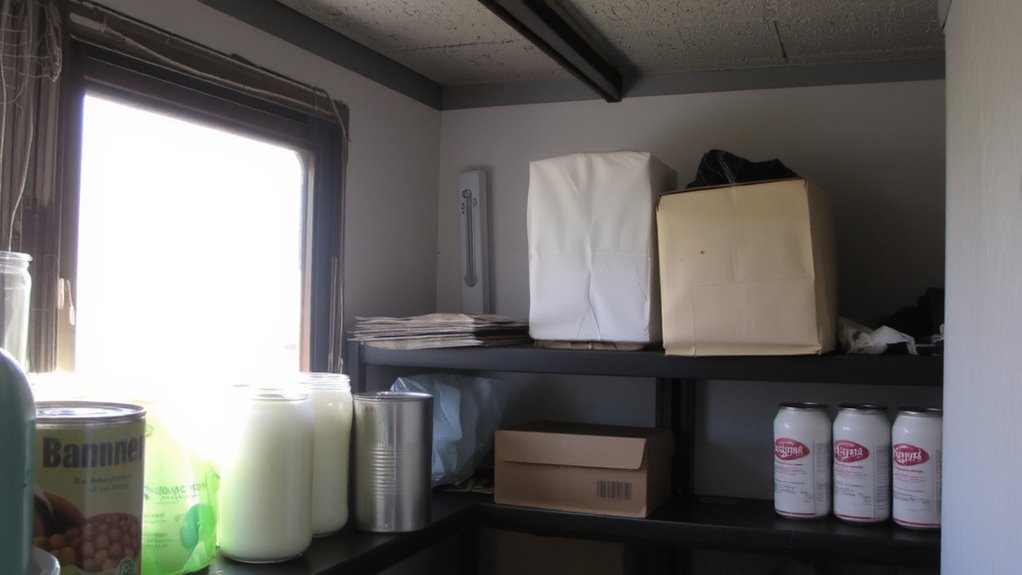
Shelf life exhaustion, improper storage, and mismanaged rotation top the list of reasons emergency food ends up in the trash. You overlook improper storage at your peril-heat, humidity, and light degrade packaging and contents alike, shortening shelf life even before expiration dates. If you keep supplies in a garage or basement without climate control, you’re increasing contamination risks from pests, mold, and moisture. Vacuum-sealed meals or freeze-dried rations swell or leak when exposed to temperature swings, making them unsafe. Poor rotation practices compound the issue: you stack new items in front, forgetting older ones behind. Those buried cans or pouches expire unseen. Monitoring storage conditions and organizing stock with clear labels reduces waste. You can’t control supply chain delays, but you can manage how you store and cycle what you have. Practicality demands you treat storage as part of the shelf life equation-not an afterthought. Choosing the right options starts with reviewing a trusted list of best emergency food picks to ensure long-term reliability and quality.
When Expired Isn’t Unsafe: Managing Date Labels
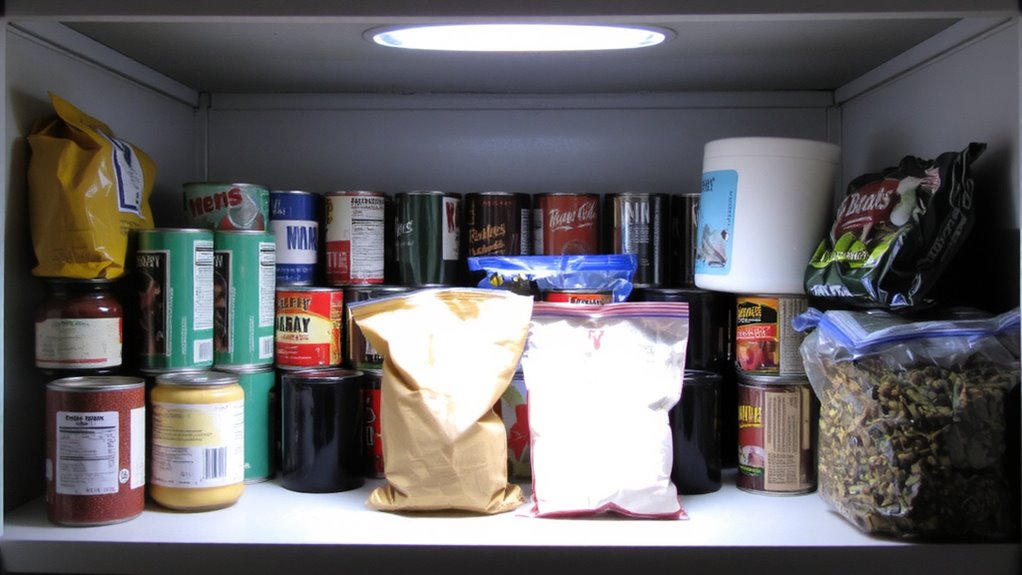
How often do you toss food just because the label says it’s past its prime? More than you should, likely-thanks to expiration myths and label confusion. “Best by,” “sell by,” and “use by” don’t all mean unsafe. Most indicate peak quality, not spoilage. You’re not risking illness by eating pasta six months past its date. Shelf-stable items like canned goods or dried beans often last years if stored properly. Don’t rely on the date alone-use sight, smell, and texture. If it looks and smells fine, it’s likely safe. Label confusion drives unnecessary waste, especially in emergency supplies meant to last. You’re better off learning how long foods actually last than blindly trusting printed dates. Cut waste by knowing the facts, not following expiration myths. Your emergency kit can stay stocked longer when you make smarter calls.
Store Right to Keep Food Safe Longer
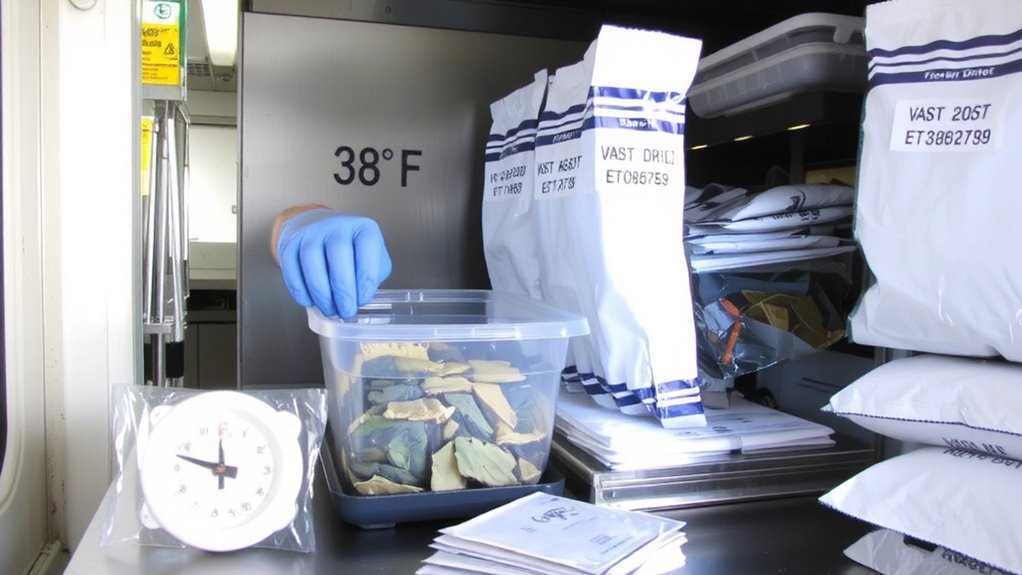
Even if you’re not facing a crisis, storing food correctly means it’ll last longer and stay safe. Proper temperature control and packaging integrity are essential. Heat, moisture, and light degrade food over time. Keep dry goods in a cool, dark place below 70°F to slow spoilage. For perishables, your fridge should be at or below 40°F, and your freezer at 0°F. Damaged or opened packaging risks contamination and moisture loss. Re-seal with tight lids or vacuum seals when possible. Choosing the right Top Survival Food Picks can further extend shelf life and reduce waste during long-term storage.
| Factor | Risk if Ignored |
|---|---|
| Temperature above 70°F | Faster nutrient loss, spoilage |
| Fluctuating temps | Condensation, mold growth |
| Light exposure | Vitamin degradation |
| Poor packaging integrity | Pest infestation, moisture |
| High humidity | Clumping, microbial growth |
You won’t eliminate decay, but you can delay it with consistent conditions and secure packaging.
Use the First-In, First-Out Rule for Rotation
When you rotate your food storage using the first-in, first-out (FIFO) method, older items stay in front and newly acquired ones go behind, so you use the oldest supplies first. This approach supports effective shelf organization, ensuring nothing gets buried or forgotten. Proper inventory tracking helps you monitor expiration dates and consumption patterns, reducing the risk of waste. You’ll know exactly what you have and when it needs to be used. Without FIFO, even well-stored food can expire before it’s needed. The system works reliably with dry goods, canned items, and freeze-dried supplies-common in emergency stockpiles. It requires minimal tools: a marker, labels, and consistency. While it takes slight effort upfront, the payoff is longer-lasting usability and fewer surprises. FIFO isn’t perfect if tracking is neglected, but paired with clear labeling, it’s one of the most practical methods to maintain supply freshness and reduce waste over time. Consider incorporating Top MRE Picks into your rotation plan to ensure nutritious, ready-to-eat options are always current and accessible.
Donate or Repurpose Unused Emergency Food
Why let usable emergency food go to waste when it could serve a purpose? You can redirect unopened, non-perishable items to donation programs that support food-insecure communities. Many organizations accept shelf-stable goods nearing expiration if they’re still safe to consume. Check labels for dates and storage conditions-donate only what meets safety standards. Alternatively, consider creative reuse: repurpose grains, canned vegetables, or proteins into everyday meals instead of letting them expire in storage. This reduces waste and stretches your food budget. Rotating supplies with donation or reuse in mind keeps emergency stock fresh and functional. Don’t assume surplus is useless. With proper handling, unused emergency food offers practical value beyond its original intent. Evaluate each item’s condition, then choose the most efficient next step-donation or home use. Neither option excuses waste.
On a final note
You can cut food waste in emergency supplies by tracking dates, storing properly, and rotating stock. Expired doesn’t always mean spoiled-check texture, smell, and appearance. Use first-in, first-out to keep items fresh. Donating usable surplus reduces waste and helps others. Repurposing near-date food into meals makes sense. These steps save money, guarantee safety, and maintain readiness without relying on guesswork or hype. Practical habits beat assumptions.