Improving Grip Strength Specifically for Weapon Retention Scenarios
You need crush, pinch, and support grip strength to keep your weapon during a grab. Crush grip secures the handle under force, pinch grip locks the magazine, and support grip adds stabilizing pressure. Train with resistance bands, towel pull-ups, and plate pinches to build real retention strength. Isometric holds boost endurance when fatigue sets in. Simulate sudden tugs in live drills to adapt to unpredictable angles-consistency under stress beats raw power. You’ll see how small adjustments make a lasting difference.
Notable Insights
- Develop crush grip strength to maintain weapon control during sudden disarming attempts.
- Train pinch grip to secure magazines and resist overhead weapon grabs effectively.
- Use resistance bands with holsters to simulate realistic, dynamic weapon retention scenarios.
- Perform plate pinch holds and towel pull-ups to build retention-specific grip endurance.
- Integrate partner drills with unpredictable angles to enhance neuromuscular adaptation under stress.
Identify the 3 Critical Grip Types for Weapon Retention
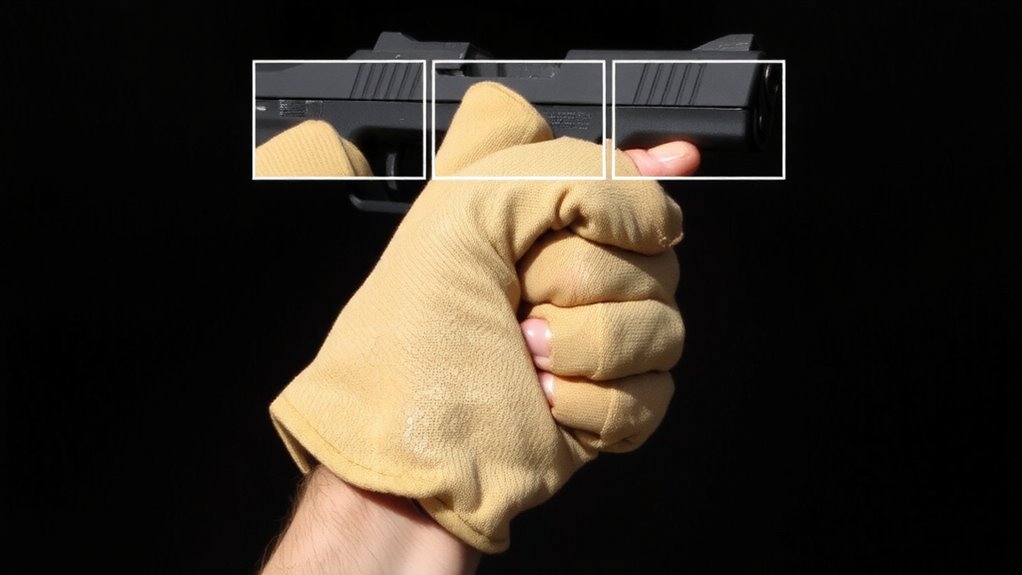
You’ll need to master three core grip types if you want to keep your weapon secure under stress: the crush grip, the pinch grip, and the support grip. The crush grip-the force your fingers apply around the handle-is critical for maintaining control during struggle; stronger crush strength directly improves retention. The pinch grip, involving thumb and fingers pressing opposite each other, helps secure magazines or resist weapon grabs from above. It’s weaker than crush strength but still essential in high-leverage moments. The support grip stabilizes with the non-dominant hand, adding pressure and control. Training all three guarantees no single point of failure. Most people overestimate their grip endurance under stress. Standard grip trainers improve crush strength, while plate pinches specifically target the pinch grip. Real retention depends on balanced development across all three-not just raw power.
Simulate Real Weapon Grab Resistance
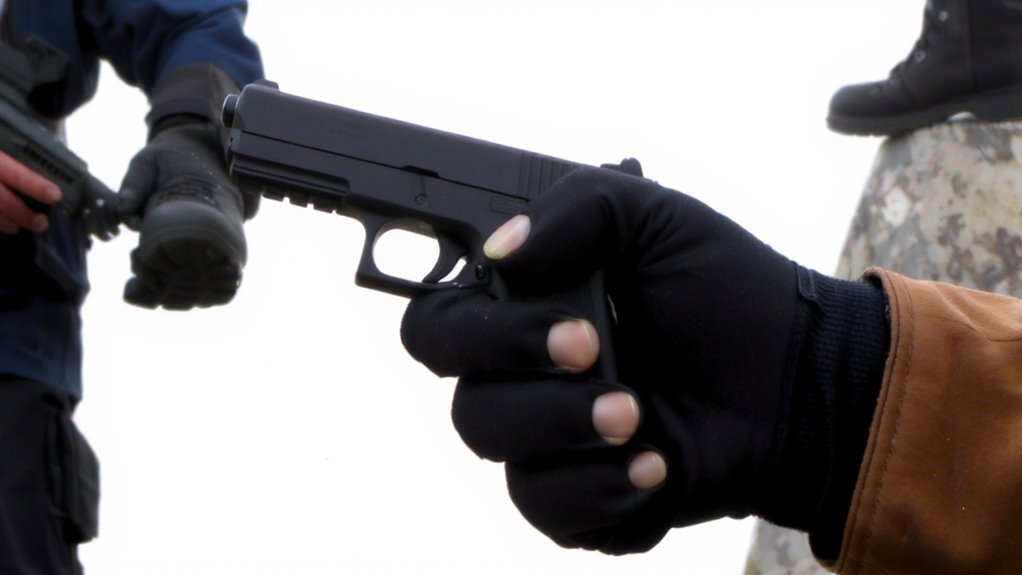
Mastering the three grip types sets the foundation, but strength alone won’t stop a determined奪取. You need realistic resistance to condition your hands for actual grabs. Static holds won’t replicate the sudden force of a threat trying to take your weapon. Incorporate grip variability by using training tools that mimic dynamic tug-and-pull scenarios. Resistance bands anchored to holsters or partner drills with controlled aggression build functional strength. Stress adaptation occurs only when you train under conditions that simulate real confrontation-add movement, time pressure, and unpredictable angles. Your grip must respond automatically, not just powerfully. Use weighted drag exercises or timed retention drills under fatigue to force neuromuscular adaptation. Realistic simulation beats high-rep squeezing. The goal isn’t endurance alone-it’s reliable performance when startled, stressed, or off-balance. Train the grip to hold under chaos, not just in calm.
Do These 5 Retention-Specific Grip Exercises
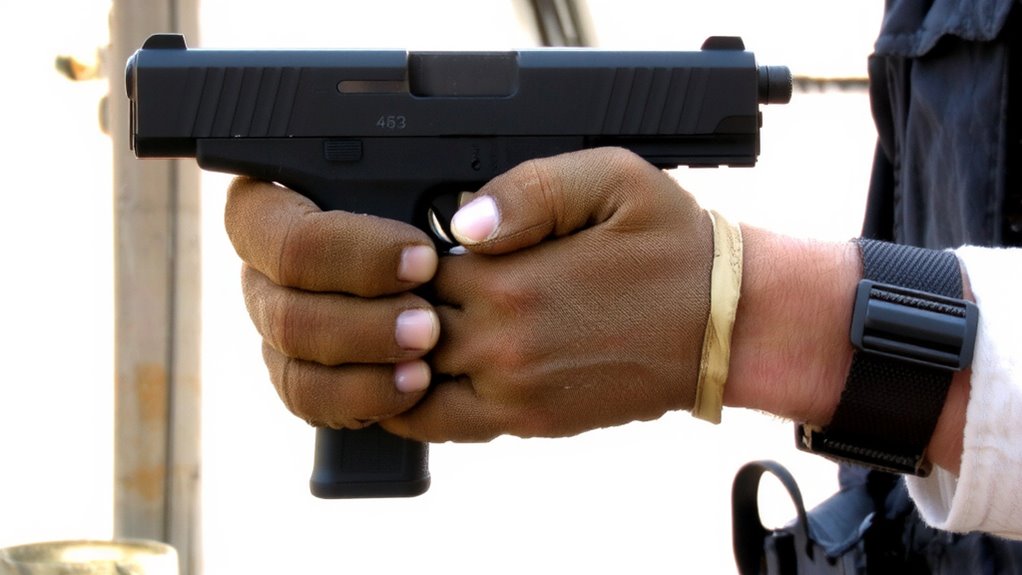
Five grip exercises consistently prove effective in retention training based on stress test performance and biomechanical feedback. You build functional strength when you pair each movement with tactical breathing and mental visualization, simulating real resistance under duress. These drills target the precise muscle groups engaged during weapon retention, enhancing both response speed and grip integrity.
| Exercise | Purpose |
|---|---|
| Plate Pinch Holds | Builds pinch strength for weapon control |
| Fat Grip Dead Hangs | Increases forearm endurance under load |
| Towel Pull-Ups | Enhances grip security during dynamic motion |
| Hand Squeeze with Imagery | Reinforces neural pathways using mental visualization |
| Isometric Wrist Clench | Improves joint stability during sudden force |
Train these moves 3 times weekly. Use tactical breathing during holds to maintain calm focus. The exercises transfer directly to retention scenarios, tested under realistic resistance and motion stress. No gimmicks-just measurable gains in control.
Train Grip Endurance Against Disarming Force
When force is applied to your weapon, grip endurance determines whether you keep it or lose it. You need sustained strength to resist disarming attempts, not just peak power. Grip fatigue sets in quickly during prolonged struggles, reducing control and increasing failure risk. Training with isometric resistance builds the muscular stamina required to maintain hold under stress. Hold a gripper or towel-wrapped bar for 30–60 seconds, focusing on full tension without movement. Repeat 3–4 sets per hand, 2–3 times weekly. This method targets the static strength used in retention, improving endurance without bulky equipment. Progress gradually to avoid overuse injury. Realistic scenarios demand your grip holds longer than typical workouts prepare you for, so prioritize duration and consistency. Isometric training delivers measurable improvements in grip endurance with minimal time investment.
Add Grip Drills to Live Retention Scenarios
You’ve built grip endurance with isometric training, but holding a towel-wrapped bar won’t replicate the chaos of someone trying to take your weapon. Now, integrate grip drills into live retention scenarios to close the gap between strength and function. Use dynamic shifts-sudden changes in direction and pressure-to mimic real disarming attempts. These movements force your hand to adapt mid-effort, building reflexive tension. Pair them with partners using padded training weapons to guarantee safe, repeatable reps. Tactile feedback is critical; textured holsters, sweat, or gloves alter grip demand, so train under those conditions. You’ll feel slippage before it happens, letting you adjust in real time. This isn’t about max strength-it’s about sustained, responsive control when your weapon’s under stress. Drill consistency beats intensity here. Adapt fast, hold firm, survive.
On a final note
You need crush, pinch, and support grip strength to keep your weapon under stress. These three types directly resist common disarming attempts. The five exercises listed build the specific strength required, tested under realistic resistance. Training endurance guarantees grip holds beyond the initial surprise of a grab. Adding drills to live scenarios confirms effectiveness. Strength without application fails; both are mandatory. No substitute exists for tested, real-world performance.