Boiling Water in a Birch Bark Container Over Open Flame
You can boil water in a birch bark container over an open flame if you harvest it sustainably from mature trees and leave the cambium intact. Use a clay-coated, multi-layered design to prevent burning-the moisture in the clay and bark keeps the vessel from igniting. Keep the flame steady and avoid thermal shock. It works well under controlled conditions, but success depends on maintenance and technique. There are also reliable alternatives if conditions aren’t right.
Notable Insights
- Birch bark containers can safely boil water over fire due to natural insulation and moisture retention properties.
- Apply a moist clay coating to the exterior to prevent ignition and improve heat resistance.
- Use small, dry sticks to maintain a steady, moderate flame for even heating.
- Ensure the container has water before placing on heat to avoid combustion.
- Rotate or shift the container periodically to distribute heat and prevent localized charring.
Harvest Birch Bark Without Harming the Tree
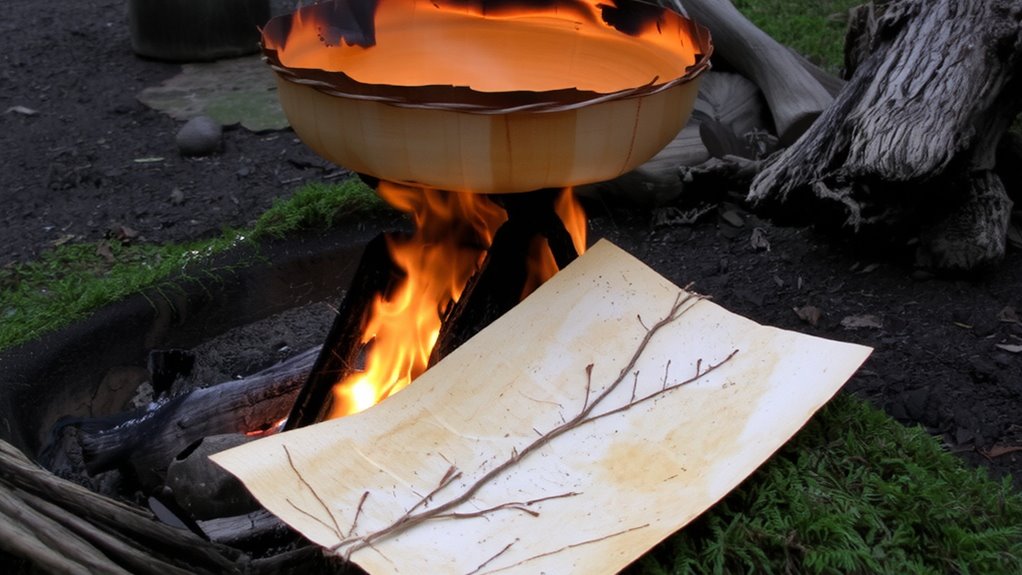
A single mature birch tree can yield enough bark for multiple containers, but only if you harvest it correctly. You take bark from live trees only when necessary, and never from the entire circumference-girdling kills the tree. Instead, cut a vertical strip no wider than a third of the trunk’s diameter, allowing the tree to heal. Sustainable harvesting means taking only what’s needed and leaving the rest intact. You should choose trees at least 15 inches in diameter; they recover best. Ethical foraging requires respect-harvest in areas where collection is permitted and avoid rare or stressed stands. Use a clean knife to make precise cuts, minimizing damage. Late spring, when sap flows, makes peeling easier with less effort. Harvesting at the right time and way guarantees regrowth and long-term availability. Overharvesting depletes resources fast-moderation supports future use. This isn’t just tradition; it’s practical ecology.
Build a Fireproof Birch Bark Container
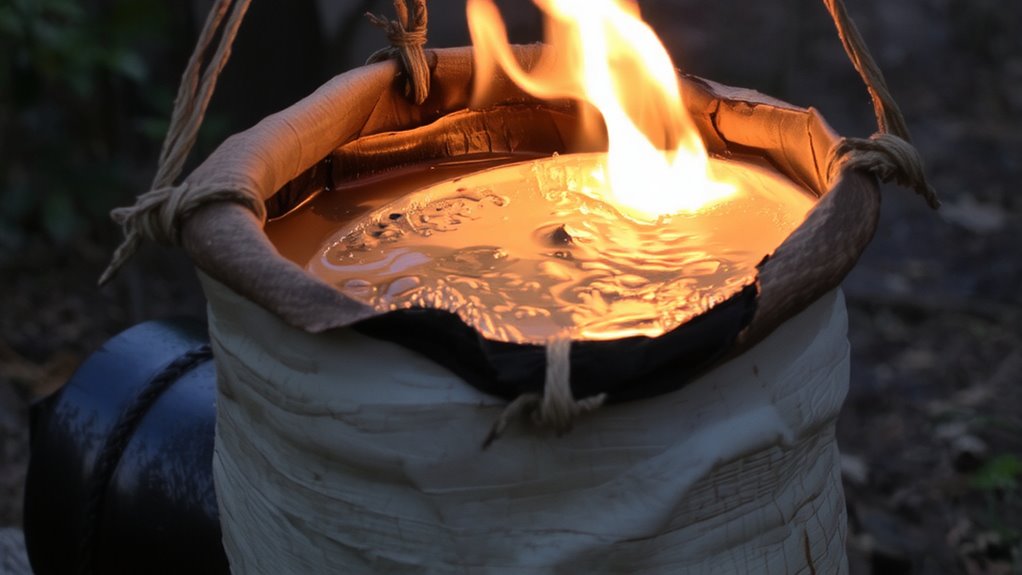
While birch bark is naturally heat-resistant, it’ll burn through quickly if exposed directly to flame, so you need to design the container with insulation in mind. To guarantee durability, layer the bark with moist clay on the outside-this enhances birch bark insulation and slows charring. Fold the bark smoothly, avoiding punctures that compromise water retention. Secure seams with green wood pins, not modern adhesives, to maintain natural function.
| Feature | Benefit | Trade-off |
|---|---|---|
| Clay exterior | Improves heat resistance | Adds initial weight |
| Folded seams | Maintains water retention | Requires precise shaping |
| Multi-layer bark | Boosts birch bark insulation | Longer prep time |
This design balances function and simplicity, using only natural materials that perform reliably under direct heat.
Boil Water Safely Over an Open Flame
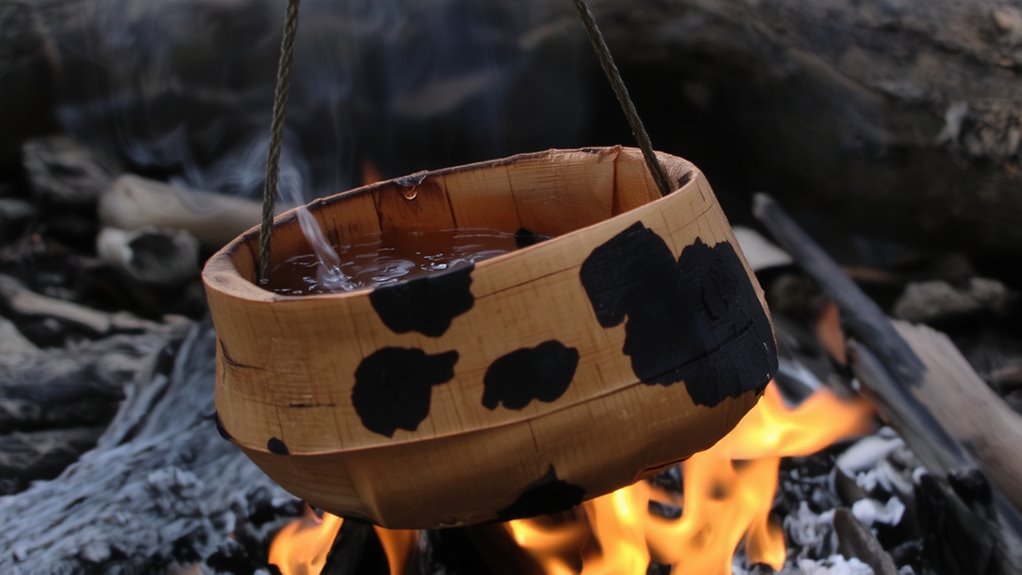
Heat’s your ally when the container’s built right-your clay-coated birch bark vessel won’t ignite, because the moisture in the clay absorbs thermal transfer and keeps the bark just below its charring point. You need steady flame control; too high and you risk uneven heating, too low and the water temperature rises too slowly, prolonging exposure to potential contaminants. Keep the fire moderate, using small, dry sticks that burn clean and predictable. Position the vessel so the flame licks the sides evenly, not just the center. Water temperature should reach a rolling boil for at least one minute to guarantee safety. Avoid sudden shifts in heat-thermal shock can stress the bark. Refill with caution, as adding cold water too fast may crack the clay layer. With consistent flame control and attention to water temperature, the method works reliably, though it demands focus. It’s low-tech, effective, and proven-no special tools, just careful execution and observation.
How Birch Bark Resists Fire Without Burning
Since birch bark contains natural oils and resists moisture, it doesn’t catch fire easily when used properly over a flame. You’re relying on its thermal insulation to protect the outer layers while water inside absorbs heat. The bark chars slightly on the underside, but the structure holds as long as it stays wet. Moisture retention in the bark’s layers slows combustion, acting as a built-in safety margin. Heat transfers through the material gradually, giving the water time to warm without exposing dry spots to direct flame. You’ll notice it works best when the container is never empty and flame contact stays controlled. It won’t withstand prolonged exposure to high heat if water levels drop. This isn’t magic-it’s physics. The combination of thermal insulation and moisture retention creates a narrow but reliable window for boiling. You use it because it’s effective, not because it’s indestructible.
When a Birch Bark Pot Won’t Work (Try These Natural Alternatives)
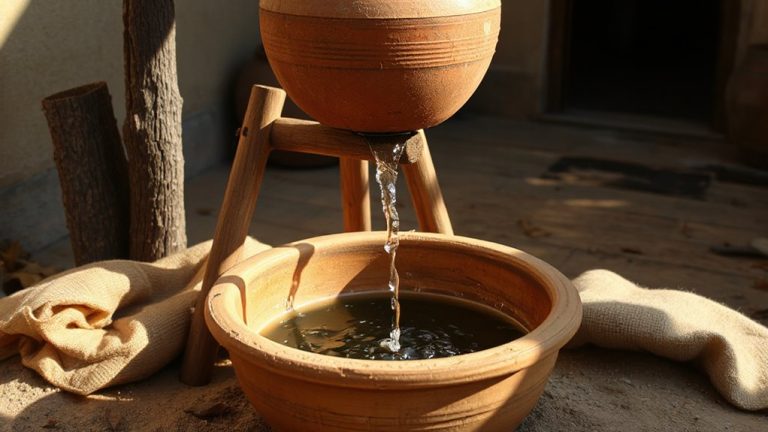
Birch bark works for boiling water when kept wet and used over moderate flames, but it fails when the container runs low or the fire flares too high-especially in dry or windy conditions where moisture evaporates faster than it can be replaced. When that happens, you need reliable alternatives. Try a tightly woven basket with a moss lining; the moss holds water and insulates the vessel, reducing direct flame exposure. It won’t last indefinitely, but it buys time. Better yet, use stone boiling. Heat fist-sized, dry river stones in the fire for 10–15 minutes until glowing, then transfer them with green wood tongs into a water-filled container made of rawhide, clay, or even hollowed wood. The stones transfer heat efficiently, bringing water to a boil without risking combustion. Stone boiling works when bark fails, though it takes longer and requires careful stone selection to avoid cracking from moisture. It’s slower than direct heating, but predictable and dependable in harsh conditions.
On a final note
You can boil water in a birch bark container over a flame because the water inside keeps the bark cool enough to resist burning. The bark’s natural resins help it withstand heat, but it only works when fully filled and monitored. If the water drops too low, the container burns. In real use, it’s reliable for short boils but risky for long-term simmering. Clay or stone pots handle prolonged heat better.