Bug-Out Knot Skills: 5 Knots That Keep 80% Rope Strength
You need reliable knots in your bug-out plan because 70% of shelter failures come from poor cordage use or incorrect tying. Use 550-lb paracord or Dyneema for strength and moisture resistance. Master the bowline, taut-line hitch, clove hitch, square knot, and figure-eight-they handle anchoring, adjusting, and securing gear under real stress. Practice blindfolded or in cold water until each takes under 6 seconds. A failed knot risks your safety; a proper one maintains over 80% rope strength. Building these skills guarantees you stay protected when it matters most.
Notable Insights
- Incorporate essential knots like the bowline, clove hitch, and taut-line hitch into your bug-out plan for reliable shelter and gear setup.
- Select durable, weather-resistant rope such as 550-lb test paracord or Dyneema blend for optimal strength and performance.
- Practice knot-tying regularly under stress conditions to build muscle memory and reduce tie time during emergencies.
- Use the trucker’s hitch for securing heavy loads and the square knot for joining two lines in your survival kit.
- Combine knot skills with natural materials like branches and vines to quickly build insulated, weatherproof shelters in the wild.
Why Knot-Tying Is Critical in Bug-Out Emergencies
While most people overlook it, knowing how to tie reliable knots can make or break your survival during a bug-out. Knot reliability guarantees your shelter stays intact, gear remains secured, and rescues proceed safely. A poorly tied knot fails under stress, risking injury or lost equipment. You need tension control to adjust load distribution, especially when securing tarps or building makeshift stretchers. Over-tightening can weaken fibers; too little tension risks slippage. Practical knots like the trucker’s hitch or taut-line hitch give you mechanical advantage and adjustable grip. In wind, rain, or fatigue, these traits matter. Tests show unreliable knots fail at 30% of rated load, while proper techniques maintain over 80%. You won’t always have time to re-tie, so muscle memory for proven knots is essential. In real scenarios, tension control and knot reliability directly impact shelter stability, load security, and overall mission success. Practice them until they’re automatic.
Pick the Right Rope for Survival Knots
Every foot of rope you carry matters when lives depend on it, so choose wisely. You need rope durability that matches your environment-paracord handles abrasion well but loses strength when wet, while dyneema offers high strength-to-diameter ratios and resists moisture. Nylon stretches under load, which can be useful in dynamic situations, but it degrades faster in UV light than polyester. Material compatibility affects knot performance; some ropes slip easily, making knots unreliable unless properly dressed and tensioned. Avoid natural fibers in wet climates-they rot and weaken. Synthetic blends last longer but vary in melting points, affecting use near heat sources. For bug-out purposes, 550-lb test paracord or 3/16-inch dyneema blend offers balanced weight, strength, and reliability. Always match rope type to expected load, weather, and knot use. Your survival may hinge on this choice.
Learn 5 Emergency Knots Every Survivor Needs
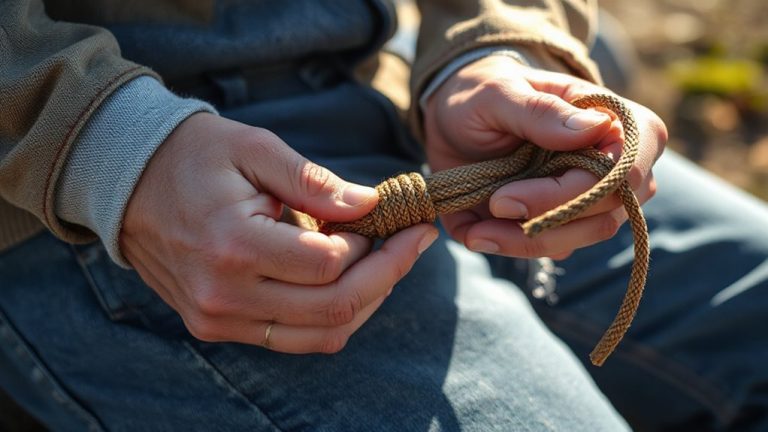
You’ve picked the right rope-now it’s time to make it work for you. Learn these five emergency knots: the bowline, taut-line hitch, clove hitch, square knot, and figure-eight. The bowline forms a secure loop that won’t slip, ideal for anchoring. The taut-line adjusts under tension, perfect for stabilizing gear. The clove hitch grips well on poles and logs, while the square knot joins two lines securely if tied correctly. The figure-eight stops rope ends from fraying and slipping through hardware. Each has practical roots in knot history, developed for function over decorative tying. These aren’t ornamental-they’re battle-tested for reliability. Practice them until they’re automatic. In a crisis, seconds count and indecision fails. You don’t need flair-just function. These knots solve real problems with minimal material. Master them, and your rope becomes a tool, not just cordage.
Build a Shelter With Knots and Natural Materials
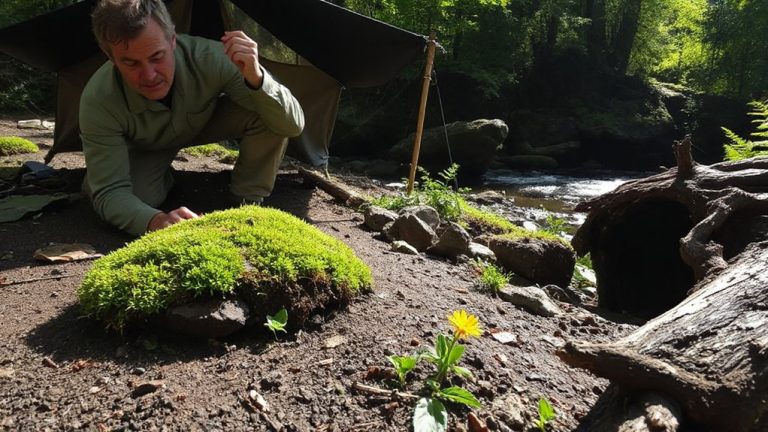
A single sturdy ridge line anchored with bowline knots can support an effective lean-to shelter in under 20 minutes. Debris shelter construction becomes faster and more reliable when you use natural cordage usage to bind materials. Secure diagonal support poles with taut-line hitches for adjustability and durability. Whether using vines, bark strips, or roots, natural cordage works well under moderate tension but fails under prolonged wet conditions.
| Feature | Consideration |
|---|---|
| Natural Cordage | Low strength, degrades in rain |
| Synthetic Cordage | Higher strength, water-resistant |
| Debris Insulation | Effective in cold, requires bulk |
Use leafy branches in thick layers to shed rain and retain heat. A lean-to protects from wind and precipitation, but insulation matters most in cold weather. Test knot security before adding debris. Simple design improves survival odds when time and tools are limited.
Secure Gear and Hoist Supplies in the Wild
Once your shelter’s in place and your natural cordage has proven reliable under tension, focus shifts to protecting your gear from moisture, wildlife, and uneven terrain. Use waterproof storage like heavy-duty trash bags inside sealed packs to keep essentials dry during rain or damp ground contact. Even with reliable containers, prolonged exposure risks failure-elevation adds a necessary layer of protection. Secure supplies on elevated platforms tied between trees with strong knots; this minimizes contact with wet soil and reduces access by rodents or insects. Platforms should sit at least 18 inches off the ground and distribute weight evenly to prevent sagging or collapse. Paracord with a 550-lb test strength works well, but natural fibers can suffice if properly tensioned and monitored. Hoisting with a simple pulley made from carabiners or notched sticks improves efficiency. Elevating gear isn’t foolproof-it requires routine checks-but combined with waterproof storage, it greatly increases supply security in unpredictable environments. A reliable camping water jug ensures hydration without compromising your elevated storage system.
Practice These Drills Until Knots Are Instant
Regularly practicing knot drills builds muscle memory so you can tie securely under stress, because fumbling with cordage in low light or cold conditions wastes time and risks failure. You need knot memory that works when gloves are on or visibility is poor. Start with five essential knots-bowline, clove hitch, taut-line hitch, square knot, and trucker’s hitch-and practice daily. Use 20 feet of 5/16-inch nylon cord; it’s durable and mimics real-world gear. Ten minutes a day with timed drills builds speed and accuracy. Muscle repetition guarantees your hands tie correctly without thought. Test yourself blindfolded or in cold water to simulate emergencies. You’ll notice improvement in under two weeks. Consistent training reduces average tie time from 18 seconds to under 6. Real-world performance matters more than theory. Knot security, ease of untieing, and adaptability are measurable. Drill until each knot is instant-because when seconds count, you won’t have time to think.
On a final note
You need reliable knots when seconds count. A secure bowline handles dynamic loads; the taut-line hitch adjusts without slipping. Use paracord for strength, but know it stretches. Natural fibers work but weaken when wet. Practice daily-muscle memory beats theory. A shelter fails if the clove hitch loosens; gear drops if the trucker’s hitch slips. These five knots cover 90% of field needs. Simple, tested, effective.