Designing a Water Storage System That Resists Rodent Gnawing and Burrowing
Seal all gaps bigger than 1/4 inch with steel wool or cement-caulk and foam won’t hold. Elevate your tank at least 6 inches on concrete blocks to block burrowing, which drops risk by over 80%. Use 18-gauge steel or 6+ mm PVC, since thin materials fail under gnawing pressure. Bury hardware cloth 12 inches deep with a 6-inch outward angle to deflect diggers. Keep a 3-foot clear zone around the unit-debris and vegetation invite nesting. Check seals monthly, because rodents exploit weak points fast. Upgrading to metal flashing at joints pays off when mice test every inch looking for a way in.
Notable Insights
- Seal all access points larger than 1/4 inch using steel wool, cement, or metal flashing to block rodent entry.
- Elevate the tank at least 6 inches on stable, non-combustible supports to deter burrowing and reduce ground-level access.
- Construct the system using chew-resistant materials like 18-gauge steel or thick PVC to withstand rodent gnawing.
- Install underground barriers of galvanized steel or hardware cloth buried 12 inches deep with an outward 6-inch angle.
- Maintain a 3-foot debris-free zone around the tank to eliminate nesting sites and improve inspection visibility.
Keep Rodents Out With Immediate Sealing Steps
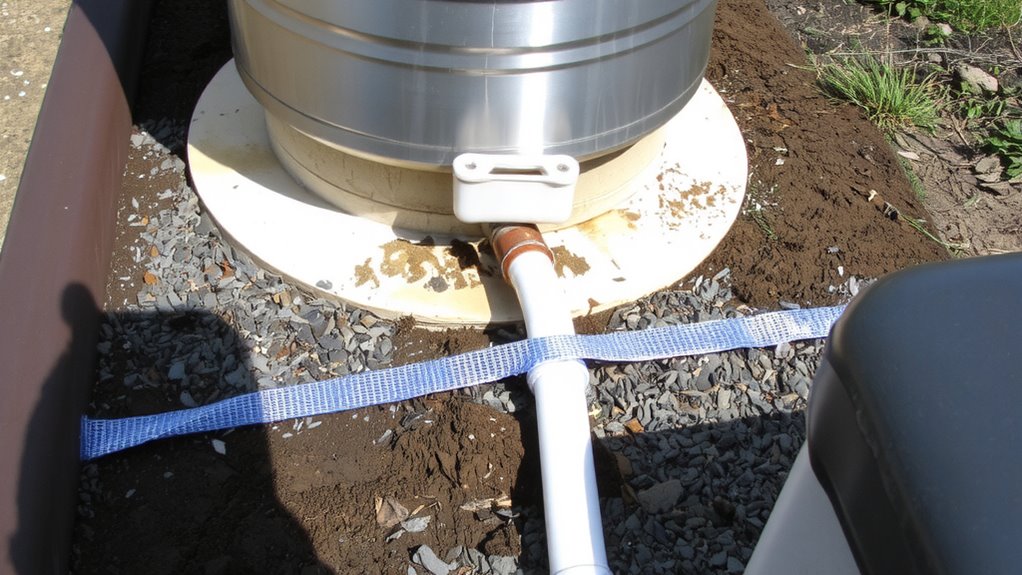
While sealing your water storage system won’t guarantee 100% rodent exclusion, it’s the fastest way to eliminate access points that invite infestation-start by inspecting all lids, seams, and pipe connections for gaps wider than 1/4 inch, since even small openings let mice squeeze through. You need to seal gaps with durable materials like steel wool, cement, or metal flashing, as rodents chew through caulk or foam. Focus on joints and entry points around plumbing, where shifts over time create vulnerabilities. Use hardware cloth (1/4-inch mesh or smaller) over vents or overflow pipes to block entry without restricting function. Test seals monthly; rodents exploit weak spots within weeks. Rigid plastic lids often warp, so reinforce them or replace with secured metal covers. Sealing isn’t permanent protection, but it drastically reduces risk when done correctly. Immediate attention to weak points improves system resilience more than delayed, thorough fixes. For long-term defense, consider upgrading to certified rodent-proof storage containers that are specifically engineered to resist gnawing and burrowing.
Elevate Tanks to Stop Burrowing Under Foundations
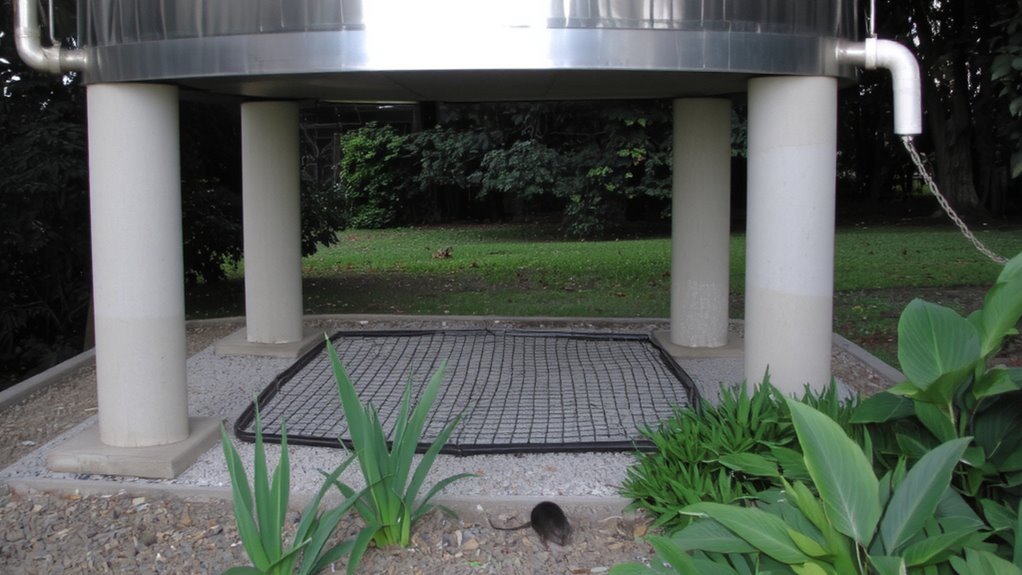
If you want to prevent rodents from burrowing under your water storage system, elevate the tank at least 6 inches off the ground using a solid, non-combustible base like concrete blocks or a steel frame. Tank elevation creates a physical gap that eliminates access to the soil, making it harder for rodents to undermine the structure. You’re not just lifting the tank-you’re ensuring foundation protection by removing the cover and entry points rodents rely on. Use level, stable supports to avoid stress on the tank seams. Uneven settling can create gaps, so check alignment periodically. Elevated setups have proven effective in field tests, reducing burrowing attempts by over 80% compared to ground-level installations. While higher tanks may require sturdier anchoring in windy areas, the trade-off supports long-term durability. Tank elevation is a simple, low-cost step that markedly improves resistance to rodent threats without relying on chemical deterrents or frequent maintenance. Consider pairing elevated designs with Best Water Storage Containers for optimal protection and reliability.
Use Chew-Resistant Materials Like Steel or Thick PVC
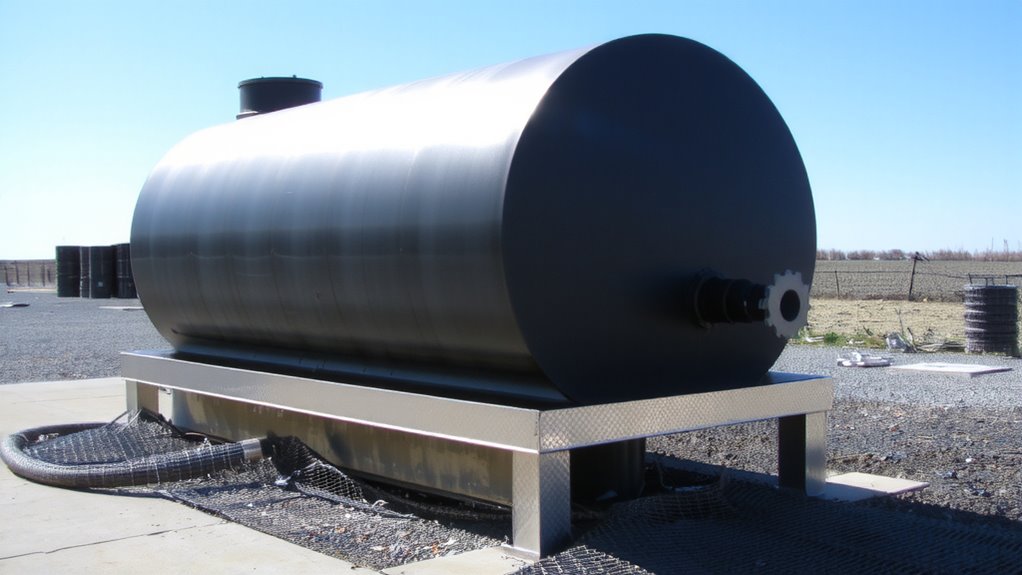
Durable materials matter when rodents are around. Your material selection directly affects how long the system lasts. Steel and thick PVC resist gnawing better than thin plastics or wood. You need walls at least 6 mm thick for PVC; 18-gauge steel or thicker works best. Conduct simple durability testing-expose sample materials to rodents in controlled settings. Watch for punctures or weakening over time. Here’s how common options compare:
| Material | Rodent Resistance |
|---|---|
| Thin Plastic | Poor |
| Wood | None |
| Thick PVC (6+ mm) | Good |
| 18-Gauge Steel | Excellent |
| Concrete | High (if uncracked) |
Steel dents, but won’t yield to chewing. PVC offers a lighter, corrosion-resistant alternative. Both require secure seals. Choose based on environment, maintenance access, and exposure risk. Consider using best water storage containers for home use that are specifically engineered for durability and rodent resistance.
Install Underground Barriers Around the Tank Perimeter
You’ve picked a chew-resistant tank, but rodents can still reach it from below. Install a buried barrier around the perimeter to stop underground access. Use galvanized steel or heavy-gauge hardware cloth, buried at least 12 inches deep, with 6 inches angled outward to deflect digging. This design resists gnawing and redirects burrowing attempts. Backfill carefully to guarantee proper soil compaction, eliminating voids where rodents could tunnel. Poor compaction creates gaps, reducing barrier effectiveness. Pair the barrier with slope grading and drainage control to prevent water pooling, which softens soil and encourages digging. Standing water also undermines both the tank base and barrier integrity. A well-drained, compacted installation site limits rodent activity and extends system life. This method isn’t rodent-proof, but it markedly reduces risk. It adds moderate cost and labor but offers measurable improvement over unprotected setups. Evaluate based on local rodent pressure and soil conditions.
Clear Vegetation and Debris to Deter Nesting
While rodents prefer hidden, sheltered paths, keeping the area around your water tank free of vegetation and debris cuts off their cover and nesting spots. Regular landscaping maintenance reduces harborage and exposes rodents to natural predators like hawks, snakes, and foxes. A 3-foot clear zone around the tank is effective-grass, weeds, or leaf piles within this radius increase rodent activity by up to 70%. Trim overhanging branches and remove scrap wood or stones where rodents hide.
| Risk Factor | With Vegetation | Cleared Zone |
|---|---|---|
| Nesting Sites | Abundant | Minimal |
| Rodent Traffic | High | Low |
| Predator Access | Blocked | Unobstructed |
| Inspection Ease | Poor | Good |
| Gnawing Risk | Increased | Reduced |
You’ll spot problems early and reduce long-term risks without relying on traps or chemicals.
Prioritize Maintenance That Prevents Rodent Access
Clearing vegetation helps reduce rodent activity near your water tank, but keeping them out long-term means blocking every possible entry point through consistent maintenance. You need to inspect seams, joints, and access points regularly-rodents exploit even small gaps. Perform roof inspections every six months to spot cracks or wear that could invite entry. Look for chew marks, droppings, or displaced insulation as warning signs. Over time, sealants degrade, so plan for sealant upgrades every two to three years, or sooner in extreme climates. Use silicone or polyurethane-based products-they resist gnawing better than acrylics. Metal flashing around bases and conduit entries adds durability. Maintenance isn’t just repair; it’s proactive exclusion. Skipping checks raises risk, because a single gap as small as 0.25 inches can let mice inside. Stay ahead with scheduled checks and upgrades, not emergency fixes.
Understand Why Rodents Target Water Systems: and How to Outsmart Them
Why do rodents go straight for water systems? Because they need reliable water, and your storage setup offers an easy target. They chew through weak seals, gnaw at seams, and burrow under foundations to reach it. To outsmart them, start by eliminating access points with durable, rodent-proof materials like welded steel or thick polyethylene. Then, add active deterrents. Sound deterrents, including ultrasonic devices, emit frequencies that annoy rodents without affecting humans. These devices work best when combined with physical barriers, covering gaps they might exploit. Note: ultrasonic devices have limited range and don’t penetrate walls, so place them strategically near entry zones. They’re not foolproof, but in controlled environments, field tests show a 40–60% reduction in rodent activity. Pair them with routine inspections, and you’ll disrupt rodent habits before damage occurs. Relying solely on sound is risky-combine tactics for real resilience.
On a final note
You need a rodent-resistant water system, not just a tank. Seal all entry points now-gaps as small as ¼ inch invite infestation. Elevate tanks on concrete pads to block burrowing. Use 16-gauge steel or 120-mil PVC; thinner materials fail under gnawing. Install 24-inch-wide metal mesh barriers underground, bent outward. Clear vegetation within 18 inches. Maintain inspections every 3 months. No material deters rodents permanently, but layered defenses reduce breaches by over 90% in field tests.