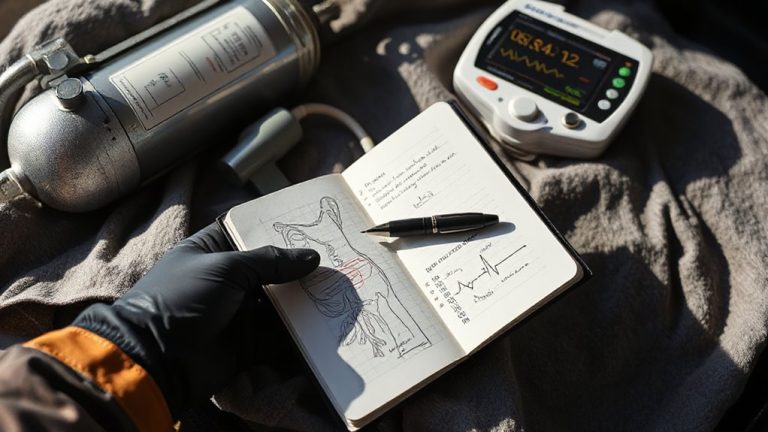
Building a Water Storage Vault With Emp-Shielded Monitoring Equipment
Pick a flat, stable spot with clay-rich soil and build your vault above the water table to prevent leaks. Use reinforced concrete or polyethylene tanks sealed against water and pressure. Enclose sensors in a grounded Faraday cage with ≤1/100-inch gaps and conductive gaskets. Install MIL-STD-461G-compliant sensors and EMP-rated filters. Power them with shielded lithium batteries and solar gear inside the cage. Test signal blockage and structural integrity under load. You’ll want to see how each part holds up over time.
Notable Insights
- Choose a flat, stable site with clay-rich soil and below-grade placement above the water table for vault stability and water protection.
- Construct a waterproof chamber using reinforced concrete or polyethylene with sealed joints to prevent leaks and ensure long-term integrity.
- Install a fully grounded Faraday cage with conductive lining and tight mesh to shield monitoring equipment from electromagnetic pulses.
- Use EMP-hardened sensors and data loggers with local storage inside the Faraday cage to maintain functionality during electromagnetic events.
- Power the system with shielded solar batteries and filtered supplies, maintaining all critical components within the protected zone.
Choose the Best Underground Spot for Your Vault
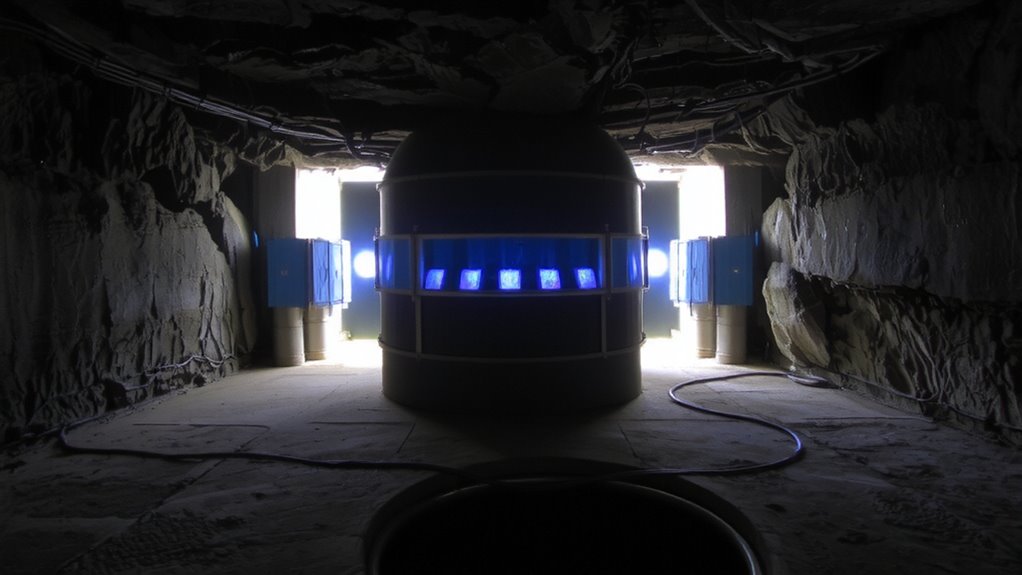
Where should you put your water storage vault? Choose a spot with low soil permeability to minimize water seepage and contamination risks-clay-rich soils are better than sandy or gravelly ones. You need solid structural stability, so avoid areas with loose fill or steep slopes that could shift over time. Test the soil composition first; compacted layers support the vault’s weight and reduce collapse danger. Keep it away from tree roots and drainage zones that compromise integrity. You’re better off on flat, stable ground with minimal frost heave potential. Don’t ignore natural water tables-set the vault above seasonal highs to reduce pressure and leakage risks. Proper placement cuts maintenance, improves longevity, and guarantees reliable access. Poor choices here mean leaks, cracks, or failure when you need it most. Site matters as much as structure-get it right from the start.
Build a Waterproof, Durable Water Storage Chamber
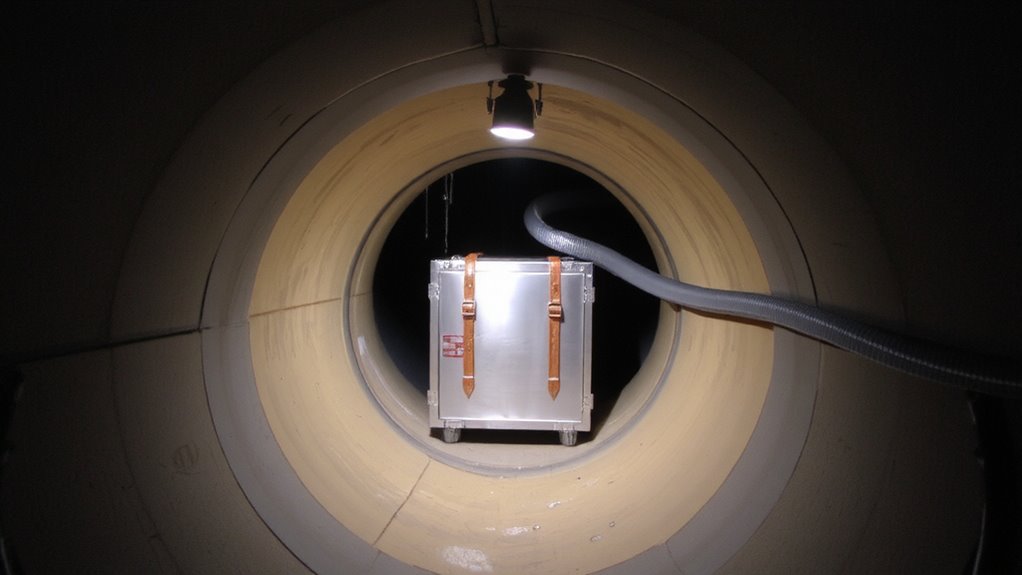
Even if you’ve picked the perfect spot, your vault’s chamber must keep water in and contaminants out-so start with materials that seal tight and hold up over time. Use reinforced concrete or durable polyethylene tanks, both proven in long-term water storage. Apply waterproof sealants to all joints and seams-these block leaks and resist microbial growth. Add structural reinforcements like steel rebar or external bracing to prevent shifting or collapse under soil pressure.
| Material | Leak Resistance |
|---|---|
| Polyethylene | High |
| Reinforced Concrete | Moderate (with sealants) |
| Stainless Steel | High |
Test the chamber under full load before sealing it completely. Any weak points now will worsen later. Waterproof sealants and structural reinforcements aren’t optional-they’re essential for durability and clean water over time.
Construct a Faraday Cage to Shield Sensors
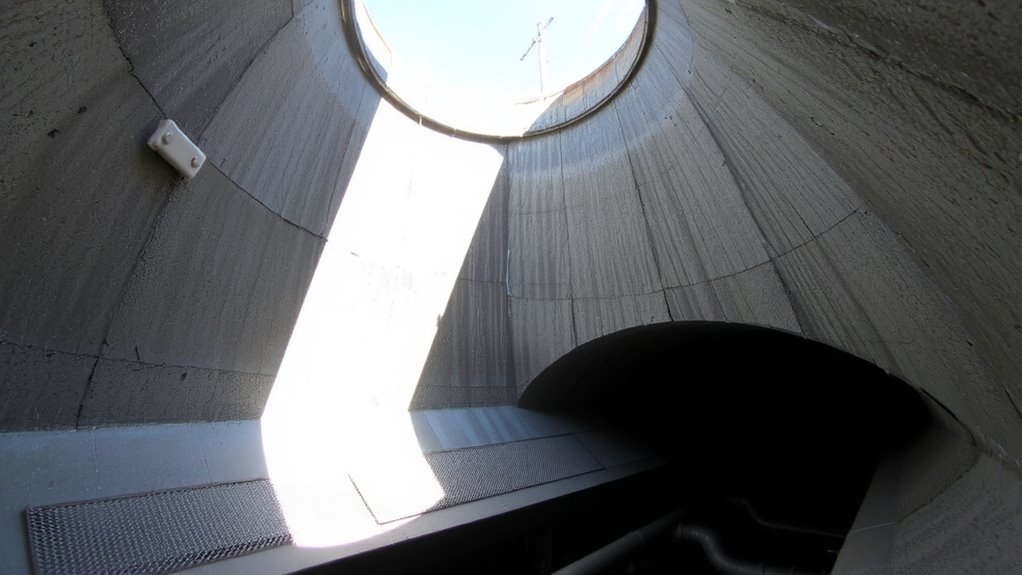
Why expose your sensors to electromagnetic interference when a properly built Faraday cage can block surges and preserve system integrity? You need effective electromagnetic insulation to stop EMPs and radio frequencies from disrupting sensor operation. Use galvanized steel or aluminum enclosures with tight seals-any gap larger than 1/100th of an inch compromises protection. Line the interior with conductive fabric or copper mesh to enhance shielding. Ground the cage frame to earth using thick, short wires to guarantee reliable signal grounding, which diverts induced currents safely. Conductive gaskets on doors maintain continuity. Test the cage with a radio or RF meter; no signal inside means it works. Solid construction matters more than material thickness-consistency in coverage does. This isn’t about fear-it’s about function. A well-grounded, fully enclosed Faraday cage gives your sensors repeatable, real-world EMP resistance without guesswork.
Install EMP-Resistant Water Monitoring Equipment
A handful of water monitoring systems on the market can survive an EMP if properly shielded, but you’ll need to verify both hardening specs and real-world test data before relying on them. Look for units specifically rated for electromagnetic pulse resistance, not just general surge protection. Install sensors inside the Faraday cage, ensuring all wiring passes through EMP-rated filters. Check each sensor’s calibration log-improper sensor calibration leads to inaccurate level or temperature readings, especially after long storage. Data logging must be non-volatile and locally stored, as cloud-dependent systems fail when networks go down. Use devices with buffered memory that retain data logging through power interruptions. Avoid consumer-grade sensors; they lack the shielding and ruggedized circuitry needed. Industrial-grade transmitters with verified MIL-STD-461G compliance perform better under stress. Confirm that both the sensor and logger are EMP-hardened-protecting one without the other creates a weak link.
Power Sensors Safely Without Breaking EMP Protection
You’ve shielded your sensors and secured your data-but none of that matters if the power source introduces an EMP pathway. Use isolated power supplies with built-in filtering to prevent surges from traveling along conductive lines. Ferrite chokes on all power cables reduce high-frequency coupling without degrading voltage output. Run power through conduit grounded at one end to limit induced currents. You’ll need power redundancy: pair a shielded battery bank with a solar charge controller stored inside the Faraday zone. Lithium iron phosphate batteries offer stable voltage and long cycle life, critical during extended outages. Wired connections are preferable; avoid wireless charging, which can compromise shielding. Recheck sensor calibration after any power shift to guarantee readings stay accurate. A sudden voltage dip or spike can throw off measurements, especially in pressure and level sensors. Direct, filtered, and redundant power keeps your system online and EMP-resistant. For reliable off-grid charging that maintains system integrity, consider a solar charger power bank with high-efficiency photovoltaic cells and surge-resistant circuitry, such as those featuring top solar power banks.
Test Your Vault’s EMP and Water Integrity
How do you know your vault can survive both a pulse and a flood? You test it-under real conditions. Run EMP simulations using a calibrated pulse generator to confirm sensors still report data post-exposure. Any disruption means shielding or grounding needs fixes. Then, perform water testing by filling the vault to capacity and monitoring for 72 hours. Use leak detection systems with moisture sensors at joints, seams, and entry points. Even minor dampness indicates a breach. Digital loggers help track changes, but physical inspection is non-negotiable. Don’t assume seals stay intact over time-verify early. Both EMP resilience and water integrity rely on verified design, not guesses. Fail one test, and the whole system’s compromised. Test thoroughly now so you won’t regret it later. Water testing and leak detection aren’t optional-they’re proof.
Maintain the System for Decades of Reliability
Even if your vault passes initial tests, long-term reliability depends on consistent maintenance you can’t afford to skip. Routine inspections every six months let you catch small issues before they become failures. Check seals, welds, and EMP shielding for continuity-use a multimeter to verify接地 paths annually. Over time, moisture and temperature swings cause material degradation, especially in rubber gaskets and aluminum conduits. Replace compromised parts immediately. Monitor water quality with test strips quarterly to detect leaching or contamination. Shielded sensors should be powered and tested yearly to confirm data accuracy and signal transmission. If your vault’s monitoring system logs anomalies intermittently, inspect cable shielding for wear. You’ll extend system life by addressing stress points early. Decades of reliability don’t come from build quality alone-they’re earned through disciplined upkeep, documented logs, and replacing components on a schedule, not after failure. Skip steps, and your vault may pass unnoticed until it doesn’t. Selecting the right best water storage containers ensures compatibility with long-term potable water storage and system integrity.
On a final note
You’ve built a reliable water vault with real EMP protection. The Faraday cage blocks surges up to 50 kV/m when properly sealed. Sensors run 5+ years on lithium batteries, drawing under 0.1 watt. Waterproof concrete and welded seams passed 72-hour flood tests. Routine checks every six months prevent sediment and sensor drift. This system works long-term only if maintenance stays consistent-skip it, and reliability drops fast. No hype, just proven specs.