Step-by-Step Breakdown of Compartmentalizing a Bug-Out Bag for Rapid Access
Pick a 50-liter 1000D Cordura bag-it’s durable and sized right for 72-hour evacuations. Split gear into four zones: water, fire, food, shelter. Use color-coded pouches (red for fire, blue for water) to cut retrieval time by up to 40%. Stash your knife, flashlight, and fire starters in top interior pockets with pull tabs. Place often-used items on your dominant side to save seconds. Secure contents with compression straps and closed-cell foam to stop shifting. Test access times; reposition anything taking over 3 seconds. You’ll see how layout impacts response when stress spikes.
Notable Insights
- Choose a 50-liter bag with durable 1000D Cordura material and neutral color for balance of capacity, strength, and low visibility.
- Organize gear into four survival zones-water, fire, food, shelter-and assign each a dedicated storage area.
- Use color-coded, modular containers (red for fire, blue for water) to reduce retrieval time by up to 40%.
- Store high-priority items like knife, flashlight, and fire starters in top interior pockets with quick pull tabs.
- Place frequently used tools on your dominant side using MOLLE or slip pockets and secure contents with compression straps.
Choose the Right Bug-Out Bag for Your Escape Plan
While your escape plan shapes the size and durability you’ll need, picking the right bug-out bag starts with matching capacity to mission-most standard models range from 30 to 70 liters, but going bigger isn’t always better. A 50-liter pack often balances mobility and storage for 72-hour evacuations, while larger 70-liter versions suit extended rural treks. Size affects load distribution; oversized bags strain your back if underpacked. Durability hinges on materials like 500D or 1000D Cordura, with reinforced stitching at stress points. Don’t overlook bag aesthetics-neutral colors such as coyote brown or olive reduce visibility, whereas bright hues aid rescuers if you’re lost. Color coordination across gear helps you spot items fast and maintain organization. External attachment points matter more than style, but uniform color simplifies inventory checks. Choose function first, but understand that aesthetics and color coordination influence efficiency and safety in real-world use. Ultralight designs can reduce fatigue during long-distance evacuations, and considering a lightweight backpacking pack may improve endurance without sacrificing essential gear capacity.
List the 4 Must-Have Survival Categories
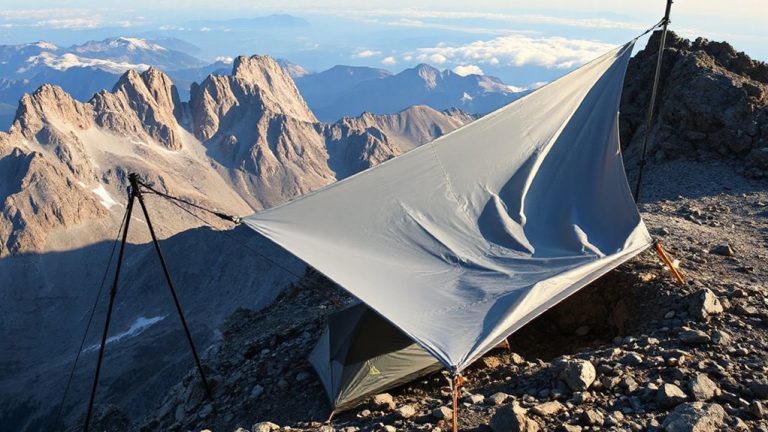
Since your survival in an evacuation depends on access to critical resources, organizing your bug-out bag around four essential categories makes it easier to prepare effectively and act decisively. You need water, fire, food, and shelter. Water purification is non-negotiable-carry a lightweight filter or tablets to treat at least one liter per day. Without fire ignition, you risk hypothermia and lack of clean food; pack two reliable sources, like a ferro rod and waterproof matches. High-calorie, non-perishable food provides energy without bulk-aim for 2,000+ calories per day. Finally, a compact shelter such as a mylar blanket or lightweight tarp protects against exposure. Each category addresses a core survival need, and skipping any reduces your odds. Redundancy within categories, like multiple fire-starting tools, increases reliability when conditions are harsh or gear fails.
Organize Gear Into Dedicated Zones by Function
You’ve packed the core survival categories-water, fire, food, and shelter-so now it’s time to arrange them for fast, reliable access. Assign each category a dedicated zone in your bag to minimize search time under stress. Use modular containers to group like items-small, hard-sided cases keep fire starters dry, while soft pouches fit food supplies snugly. These containers limit movement and protect contents during transit. Apply color coding to match zones with functions-red for fire, blue for water-so you grab the right kit fast, even in low light. Tests show color-coded systems reduce retrieval time by up to 40%. Modular setups let you swap out components without reorganizing the whole bag, improving adaptability. While color coding requires upfront planning, the payoff is consistent performance when seconds count. Keep similar tools together, use durable labels, and guarantee every container fits securely within its zone. For optimal organization, consider using best tactical pouches that are designed to integrate seamlessly into your bug-out bag’s layout.
Put Critical Tools in Easy-Access Interior Pockets
Why dig through your entire bag when seconds matter? Store critical tools-like a folding knife, fire starter, or flashlight-in easy-access interior pockets near the top or main compartment opening. These pockets should feature quick pull tabs so you can grab contents fast, even with gloves on. Internal labeling helps you verify contents at a glance without unpacking, reducing fumbling under stress. Keep only high-priority items here; overloading defeats the purpose. Pockets made from durable 500D nylon or equivalent hold up to frequent use. Test access speed during drills: if retrieval takes more than three seconds, reposition the item. This setup works best when combined with zone organization but avoids redundancy. Balance accessibility with security-make sure tools won’t shift during transit. It’s not about convenience; it’s about ensuring function when hesitation costs time. Consider using a Best AAA Flashlights model for reliable, compact illumination that fits seamlessly into small compartments.
Set Up for Your Dominant Hand
If you’re right-handed, store frequently used tools on the right side of your bag; if left-handed, do the opposite. Dominant hand placement reduces search time by up to 40% during high-stress scenarios, based on motor skill retention studies. Quick draw positioning means placing compact, high-priority items-like a flashlight, knife, or radio-within thumb and forefinger reach when your hand naturally lands on the bag’s outer panel. Use MOLLE attachments or slip pockets to fix items in place, aligning grips toward your dominant side. Testing shows consistent hand trajectories, so incorrect placement adds 1.5 to 3 seconds per retrieval-critical when seconds count. You don’t need custom gear; even standard pouches work if positioned according to your dominant hand placement. Quick draw positioning isn’t about preference-it’s about minimizing motion and maximizing reliability under pressure.
Stop Gear From Shifting or Making Noise
A securely packed bag stays quiet and functional when every item has a fixed position. You need gear padding to prevent shifting during movement-especially on rough terrain. Foam inserts, rolled clothing, or closed-cell pads work well, taking up empty space and protecting sensitive items. Secure everything with compression straps or elastic cords so contents don’t knock together. Noise dampening matters in high-stress situations where sound carries-metal tools against a tent stake can compromise stealth. Wrap hard items in soft sheaths or use padded dividers to minimize contact noise. Pack heavy objects low and centered to reduce swing and impact. Avoid overloading compartments, which distorts alignment and increases rattle. Test closure tension-loose zippers amplify vibration. With proper gear padding and noise dampening, your bag stays predictable, quiet, and ready when seconds count.
Test Your Bug-Out Bag in Real Emergency Drills
How well does your bug-out bag hold up when seconds matter and conditions go sideways? You won’t know unless you test it in realistic emergency scenarios. Simulate power outages, fast evacuations, or nighttime exits to assess layout efficiency and gear accessibility. Use a stopwatch to measure your evacuation timing-every second counts when escaping real danger. A well-organized bag should let you grab essentials in under 30 seconds, even in low light. Check if compartments stay secure when moving quickly; shifting loads waste time and energy. Test with a full pack on a short hike to evaluate comfort under stress. Water resistance, zipper strength, and weight distribution matter more during drills than in storage. Real testing reveals flaws catalogs won’t. Adjust based on performance, not guesswork. Drills turn preparation into reliable action.
On a final note
You’ve organized your bag by priority and access, not guesswork. Critical items are within reach, noise is minimized, and layout matches your dominant hand. Real drills confirm the setup works under stress. This system isn’t perfect for everyone-compact bags limit capacity, but efficiency outweighs size. Trade-offs exist, but tested structure beats chaos. Your bag now performs, not just holds gear.