Building a Multi-Channel Government Alert System Using SMS, Radio, and Sirens
You need SMS, radio, and sirens because each works when the others can’t. SMS delivers alerts in under 30 seconds to basic phones, even without internet. Radio covers 50–100 miles and runs during blackouts. Sirens warn within 1–3 miles, cutting through noise with directional sound. Together, they boost coverage over 70% and cut response delays in half. Use CAP protocols and test weekly to guarantee 90% SMS delivery, 95% siren activation. You’ll see how integration turns alerts into action.
Notable Insights
- Integrate SMS, radio, and sirens into a unified system using CAP for cross-platform compatibility and simultaneous alerting.
- Use SMS gateways that operate on cellular signaling networks to ensure delivery without internet or smartphones.
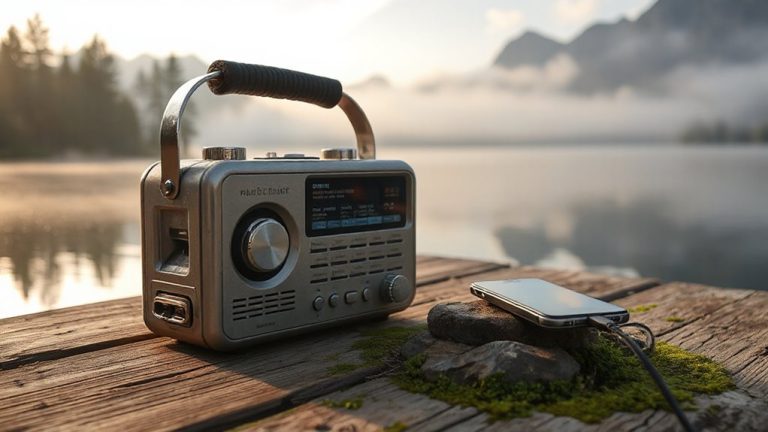
- Deploy FM/AM radio broadcasts for wide rural coverage, functioning during power outages with battery-powered receivers.
- Install outdoor sirens with monthly testing to ensure 1–3 mile auditory reach and clarity in high-noise environments.
- Establish centralized control with weekly SMS, monthly siren, and biweekly radio tests to maintain 90%+ reliability.
Why Multi-Channel Alert Systems Save Lives
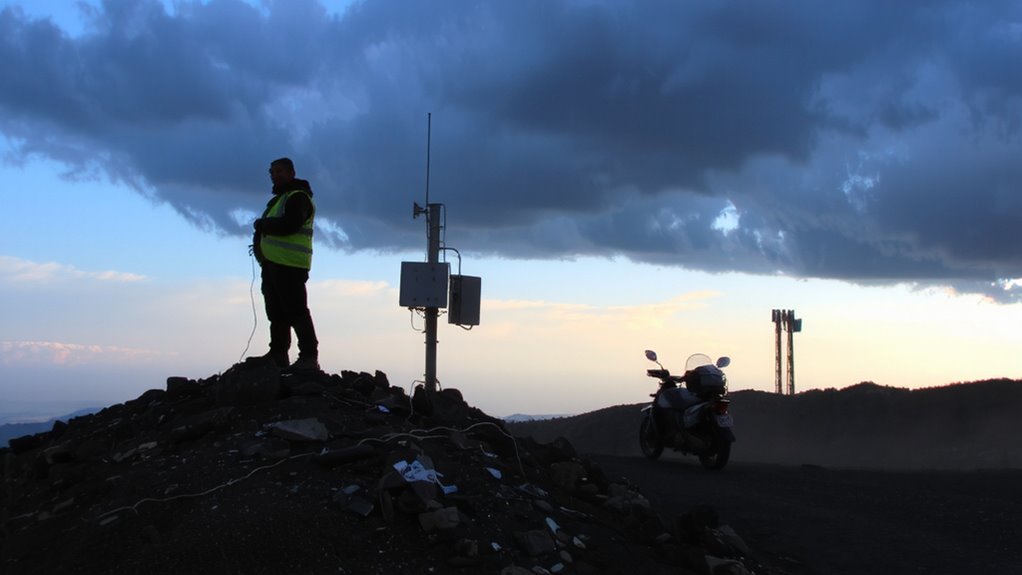
Timely warnings aren’t a luxury-they’re a necessity when disaster strikes. You need a system that reaches everyone, fast. Multi-channel alert systems use SMS, radio, and sirens so if one fails, others deliver. That’s system redundancy-critical when cell towers go down or power fails. A single channel can’t guarantee coverage, but layered methods increase reach by over 70%. People act faster when alerts come through familiar channels, boosting response rates. This builds community trust-residents know alerts are consistent and reliable. Testing shows multi-channel systems cut response delays by half compared to single methods. You’ll see fewer missed warnings and better coordination during evacuations. There’s no perfect channel, but combining them closes gaps. You don’t need hype-just results. More access points mean more lives saved. It’s practical, proven, and essential for real-world emergencies where every second counts. Your system must adapt-because people’s survival depends on it. A reliable NOAA weather radios ensures continuous access to official emergency broadcasts even during internet or cellular outages.
Send Emergency Alerts via SMS: Even Without Internet
An SMS-based alert system works even when the internet’s down, relying on cellular voice networks that stay active during outages. You can send messages over these offline networks using SMS gateways, which connect directly to carrier signaling paths, not data. That means alerts go through even if phones can’t browse or stream. Most modern phones display SMS automatically, requiring no app or login. During power failures, backup batteries keep cell towers running for hours, maintaining coverage. SMS delivery success rates exceed 90% in tested emergency scenarios, with alerts arriving in under 30 seconds. You don’t need smartphones-basic models work. However, network congestion can delay delivery if too many users transmit at once. SMS gateways help by prioritizing alert traffic. While not instant under all conditions, SMS offers reliable reach when other channels fail. You should use it as a baseline layer, not your only method.
Use Radio Broadcasts to Reach Wide Audiences Fast
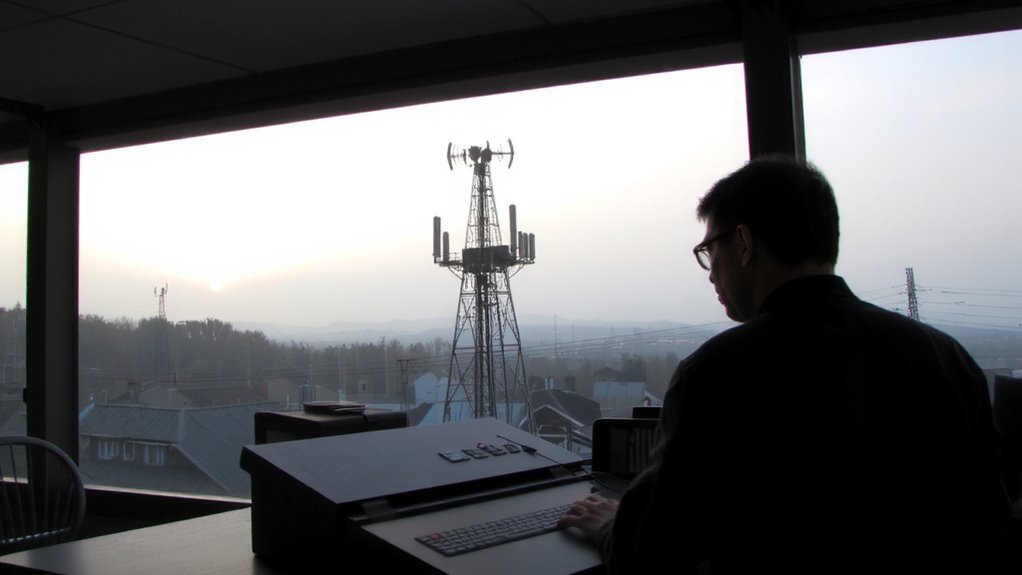
You’ve already seen how SMS alerts work when the internet’s down, but radio broadcasts take reach even further-covering entire regions instantly without relying on cellular networks at all. You can transmit alerts over long distances because FM and AM signals travel far, especially in rural or mountainous areas where signal strength varies. Unlike cell towers, radio stations operate on established broadcast range thresholds, typically reaching 50–100 miles depending on transmitter power and terrain. Low signal strength doesn’t block radio reception the way it blocks SMS delivery. Battery-powered radios work during blackouts, ensuring warnings get through. You don’t need smartphones or data plans, just a working radio. This makes broadcast range far more predictable and inclusive than mobile networks. While not instantaneous like digital pings, radio reaches thousands at once with minimal infrastructure loss. It’s reliable when other systems strain. You’ll get consistent coverage across wide zones, making it ideal for fast, broad public warnings. A critical component for emergency readiness is choosing the right device, such as a best bug-out bag radio that combines durability, multi-band reception, and emergency power options.
Activate Outdoor Sirens for Immediate Local Warnings
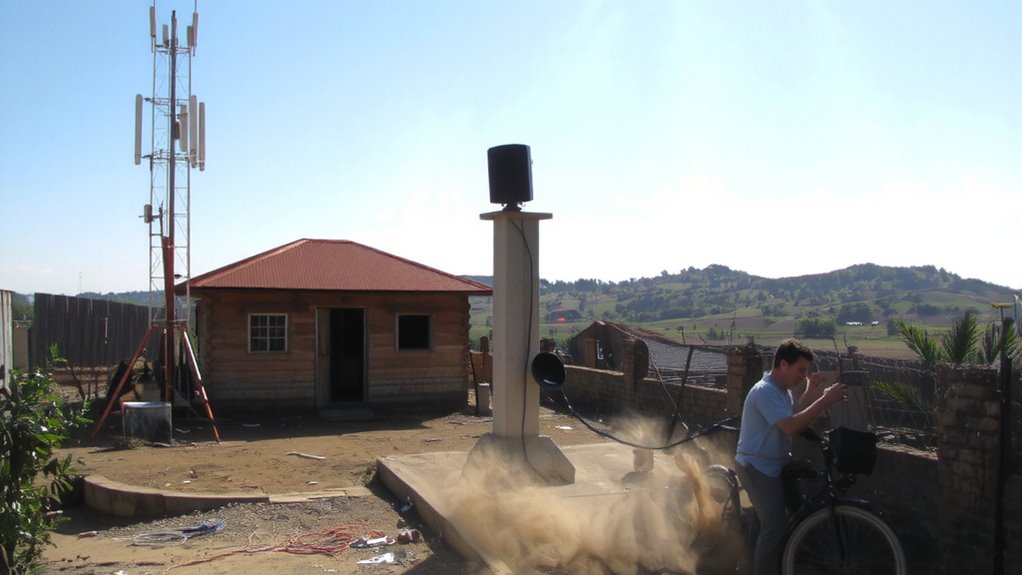
When every second counts during emergencies, outdoor sirens deliver unmistakable warnings within a localized radius, typically 1 to 3 miles depending on siren power and urban layout. You rely on them because they cut through noise and distractions with penetrating sound. Audio clarity matters-distorted or muffled tones can confuse rather than inform, especially in high-wind or densely built areas. You need models that produce consistent pitch and volume across conditions. Siren maintenance is critical; debris, corrosion, or power failures can disable units when they’re most needed. Test each siren monthly and inspect wiring, mounts, and speakers quarterly. Pair mechanical durability with routine checks to guarantee reliability. Directional output and variable tone patterns help you communicate urgency without verbal messages. While sirens won’t replace detailed alerts, they give you immediate, attention-grabbing notification. Invest in robust construction and accessible service points. You’ll extend operational life and keep response times sharp.
Integrate All Three Channels Into One Reliable System
Sirens grab attention fast, but they don’t tell you what to do-just that something’s wrong. You need system integration to link sirens with SMS and radio so alerts are consistent and timely. Without cross platform compatibility, messages might delay or fail, leaving people uninformed. A centralized control hub lets you trigger all three channels simultaneously from one interface, reducing response time. Use open protocols like CAP (Common Alerting Protocol) to guarantee devices from different vendors work together. SMS delivers specifics, radio reaches remote areas without smartphones, and sirens cover outdoor zones where signals may not. Each channel has limits, but together they compensate for individual weaknesses. Integration isn’t just technical-it’s operational, requiring clear protocols and trained staff. Build redundancy into data links and power supplies so the system stays online during outages. Done right, you get a unified system that’s more reliable than any single method.
Test and Maintain Your Emergency Alert System Regularly
Regularly testing your emergency alert system guarantees each component-sirens, SMS, and radio-triggers as expected and reaches the intended audience without delay. You must conduct system audits and response drills to verify performance under realistic conditions. These tests identify weak links, like signal delays or coverage gaps, so you can fix them before real emergencies occur. Maintenance isn’t optional; it guarantees reliability when lives are on the line.
| Channel | Test Frequency | Success Metric |
|---|---|---|
| Sirens | Monthly | 95% activation rate |
| SMS | Weekly | 90% delivery within 2 min |
| Radio | Biweekly | Clear audio, full reach |
Schedule audits quarterly and full-scale response drills twice a year. Update logs immediately after each test. Real-world conditions vary, so adjust timing and methods based on results. Consistency beats intensity-small, frequent checks prevent system failure.
On a final note
You need all three channels-SMS, radio, and sirens-because each works when others fail. SMS delivers precise info fast, even offline. Radio covers wide areas instantly but needs power. Sirens warn locals immediately but give no details. Together, they cut the risk of missed alerts. Test weekly, maintain monthly, and integrate signals through one control hub. Redundancy isn’t overkill-it’s what keeps people alive when seconds count.