Developing Standard Templates for Government Emergency Notification Messages
You’re wasting lives with vague alerts-clarity saves. Use plain language, state the threat upfront, and specify what people must do now. Templates must include event, location, time, action, and source to reduce confusion. Balance speed with accuracy by pre-approving crisis-specific formats. Test them with diverse groups to guarantee they work under stress. You’ll see faster compliance and fewer mistakes-especially when you act on what comes next.
Notable Insights
- Use standardized headers with clear alert types to convey urgency and severity immediately.
- Include threat, location, time, and required action in every message to reduce ambiguity.
- Write in plain language, avoiding jargon, so all audiences understand the risk and response.
- Pre-approve message templates for common emergencies to ensure speed and accuracy in delivery.
- Customize templates per crisis type, adding evacuation zones, shelter info, or response steps as needed.
Identify the Real Problem With Emergency Alerts First

Every few years, a major emergency alert fails when it matters most-whether it’s a delayed tornado warning or a text that never arrives. You’re not imagining it: the real problem isn’t just spotty delivery. It’s that people ignore alerts they see too often without consequence. That’s alert fatigue. When warnings lack urgency or frequency isn’t managed, recipients tune out. But fixing it isn’t just about sending fewer alerts. It’s about message clarity. A vague warning like “severe weather approaching” doesn’t tell you what to do or how fast. Clear alerts specify threat, location, time, and action. You need to know whether to shelter now or just watch. Systems that test message clarity with real users improve response rates. Templates must reduce ambiguity and standardize critical details, not just format. You can’t afford confusion when seconds count.
Use These 5 Traits for Clear, Actionable Alerts

You can’t fix alert fatigue by cutting down messages alone-without clarity, even rare alerts get ignored. For effective warnings, focus on message clarity: use plain language, specific details, and avoid jargon. People must instantly grasp the threat and their required action. Pair this with clear response urgency-state when to act and how fast. Use time markers like “shelter now” or “evacuate within 10 minutes” to guide behavior. Structure matters: lead with the danger, then location, timing, actions, and source. Test templates to guarantee comprehension under stress. Ambiguity reduces compliance; precision improves compliance rates. Alerts lacking urgency or clarity fail in real incidents, regardless of channel or frequency. These traits aren’t optional-they’re proven essentials. Strong message clarity and defined response urgency don’t just inform; they drive decisions. That’s what turns an alert into action.
Build a Universal Emergency Alert Template
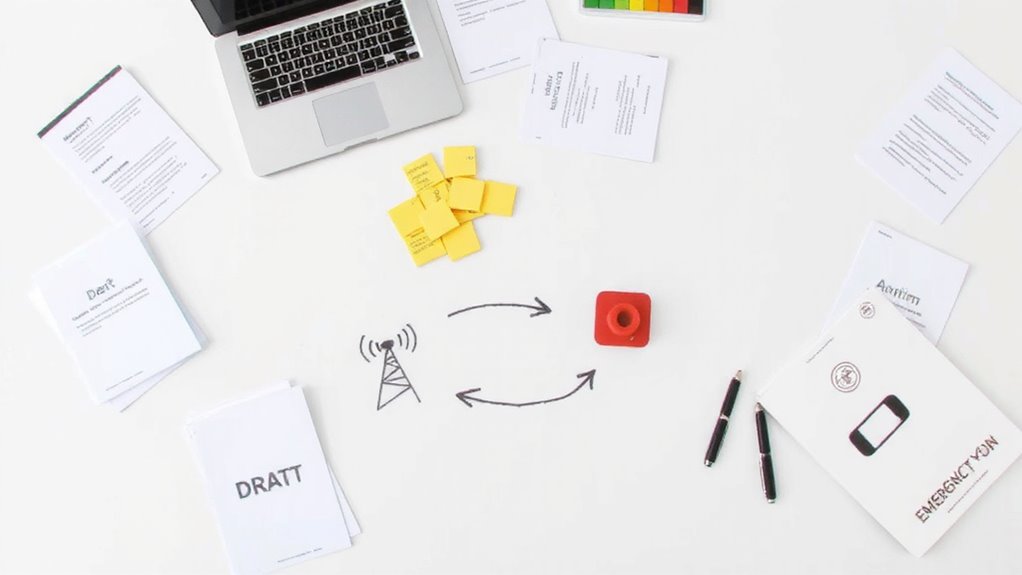
While no single template fits every crisis, a universal alert structure can still work if it’s built around consistent, proven elements. You need a format that guarantees message clarity and adapts to any threat. Start with a clear header stating the alert type-like “Tornado Warning” or “Evacuation Order”-so people know severity at a glance. Follow with concise details: what’s happening, where, when, and who’s affected. Then specify immediate actions-shelter, evacuate, avoid-using plain language. This alert design improves comprehension under stress. Keep phrases short and limit technical terms. Test templates with diverse groups to verify understanding. A well-structured template doesn’t eliminate the need for customization, but it reduces errors and speeds up response. You’re not sacrificing flexibility; you’re enhancing reliability. Consistent sections mean faster reading, fewer mistakes, and better decisions when seconds count.
Deliver Fast Without Spreading Misinformation
When seconds matter, speed alone isn’t enough-accuracy keeps people safe. You need speed precision to prevent panic and enable effective response. Sending alerts fast with incorrect details does more harm than good. Your message must balance speed and truth. Use pre-approved templates so you don’t sacrifice precision under pressure. Clarity consistency ensures the public understands the threat without confusion. Short, direct statements work best. Avoid technical terms. Repeat key facts only if they’re verified. Misinformation spreads when updates contradict earlier ones, so verify before sending. If details are uncertain, say so-people trust honesty over guesses. Test your process regularly. Measure how fast you send alerts and how often corrections are needed. A system with high speed precision, clarity consistency, and low error rates performs best in real emergencies.
Customize Emergency Alert Templates by Crisis Type
Pre-approved templates save time and reduce errors, but using a one-size-fits-all format risks skipping essential details or including irrelevant ones. You need template personalization to match the alert to the actual threat. Crisis classification guarantees you send the right message for floods, wildfires, or chemical spills. A flood alert must include evacuation zones and shelter locations, while a cyber incident might require system shutdown instructions and contact points. Generic alerts confuse people. Customize fields like threat level, recommended action, and affected areas based on crisis type. This improves clarity and response speed. Template personalization doesn’t mean starting over-it means adapting key sections so each alert fits its crisis classification. You maintain consistency while addressing specific risks. Users act faster when messages are relevant. Matching content to crisis type increases accuracy and reduces panic. It’s efficient and practical.
Train Teams to Send Alerts Quickly and Accurately
Speed matters in emergency alerting, but accuracy can’t be sacrificed for it. You need trained teams who master both message formatting and alert timing. Regular drills guarantee your staff sends clear, standardized alerts fast-without errors. Missteps in formatting confuse the public; poor timing delays response. Balance urgency with precision.
| Skill | Purpose |
|---|---|
| Message formatting | Guarantees consistency, readability, and inclusion of critical details |
| Alert timing | Delivers warnings early enough to act, but not so early that info is incomplete |
| Template use | Reduces drafting time and minimizes human error |
| Team coordination | Streamlines approval and broadcast workflows during high-pressure scenarios |
You’ll perform better under stress if protocols are routine. Test monthly. Measure speed and accuracy. Adjust training based on results. Teams that practice together respond reliably.
On a final note
You need clear, fast emergency alerts that deliver critical info without confusion. Standard templates cut errors and save time. They work only if teams train regularly and systems stay reliable under pressure. Customization by crisis type improves response, but simplicity keeps messages usable. Balance speed with accuracy-automate where possible, but verify content. Test formats across devices to guarantee readability. This approach delivers measurable improvements in public response times and trust.