Essential Items to Include in Your Family’s 72-Hour Bug-Out Bag for Urban Evacuations
You’ll need 9 liters of water-use a durable 3-liter container per person and refill at fountains or sinks with a Sawyer Squeeze filter. Pack 2,000-calorie-a-day food like nut butters and energy bars in vacuum-sealed pouches. Include a SOF-T tourniquet, trauma dressing, and antiseptic wipes. Wear dark, layered clothing and carry a sub-1.5-lb emergency shelter. Bring a headlamp, 10,000mAh power bank, and hand-crank radio. There’s more to optimizing each choice effectively.
Notable Insights
- Store 9 liters of water in durable, portable containers and include a purification method for refilling during urban evacuation.
- Pack compact, high-calorie foods like energy bars and dehydrated meals that last 5+ years without refrigeration.
- Include a combat-approved tourniquet, trauma dressing, and antiseptic supplies for emergency medical care.
- Wear durable, layered clothing in neutral colors and pack a sub-1.5 lb shelter that deploys in under 2 minutes.
- Carry a headlamp, hand-crank radio, 10,000mAh power bank, and solar charger to maintain communication and visibility.
Pack 3 Days of Water (And How to Refill)
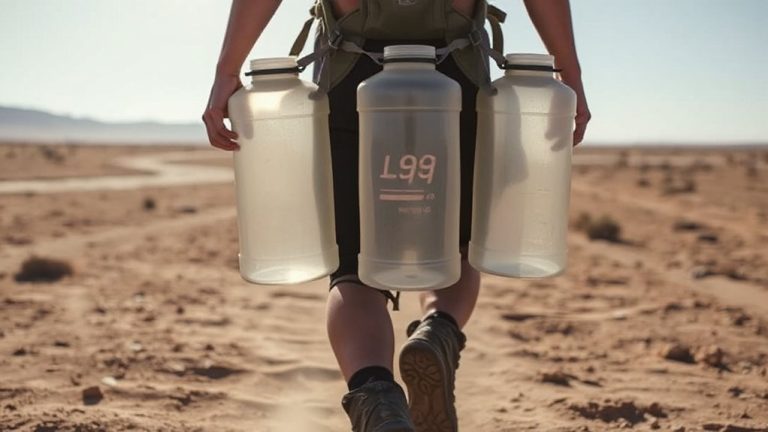
You’ll need at least 3 liters of water per day for drinking and basic hygiene during an urban evacuation, so pack enough to cover 9 liters for a 72-hour period. Use a 3-liter rigid container or durable bladder to minimize leakage and maximize portability. Store it in your bug-out bag’s side pockets for easy access. Once you’re out, rely on refill strategies like public fountains, restroom sinks, or designated relief centers. Carry a water purification method-such as a Sawyer Squeeze or iodine tablets-to treat water from uncertain sources. These filter particles and pathogens effectively, though they require clear water for best performance. UV pens, like SteriPEN, work faster but depend on batteries. Weigh the trade-offs: mechanical filters allow reuse but slow flow; chemical options are lightweight but don’t improve taste. Plan multiple refill strategies to account for infrastructure failure. Test your system beforehand to confirm output and ease of use under stress. For bulk storage and transport, consider a camping water jug designed for durability and leak-proof performance.
Choose Compact, Calorie-Dense Emergency Food
Aim for at least 2,000 calories per day from food that’s lightweight and compact, since space and weight matter when every inch of your bag counts. Choose items with high calorie density-like nut butters, energy bars, and dehydrated meals-so you get maximum energy in minimal volume. A 1,800-calorie meal pack weighing 2 pounds outperforms 10 snack-sized chips that add up to the same calories but take three times the space. Prioritize shelf stability: look for foods with 5+ year expiration dates and no need for refrigeration. Avoid items packed in glass or bulky containers. Vacuum-sealed pouches and retort bags hold up better under stress and temperature swings. Test each food’s taste and texture after six months of storage-some degrade even if technically shelf-stable. Rotate contents every 12 months to maintain reliability. Consider investing in emergency food buckets for long-term storage and bulk meal solutions.
Bring Trauma Care and Personal Protection
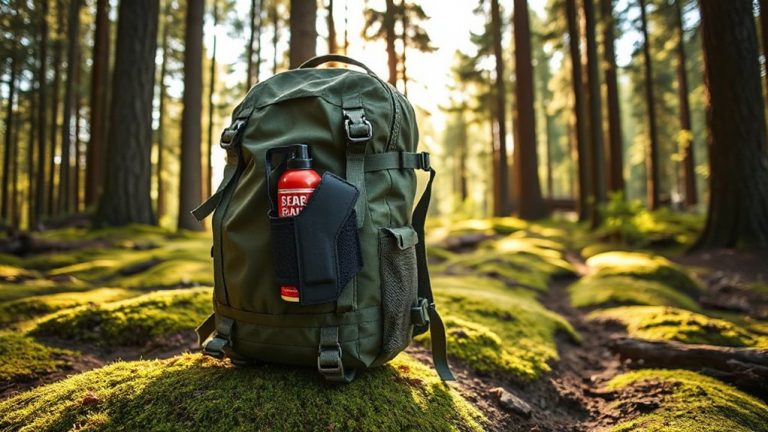
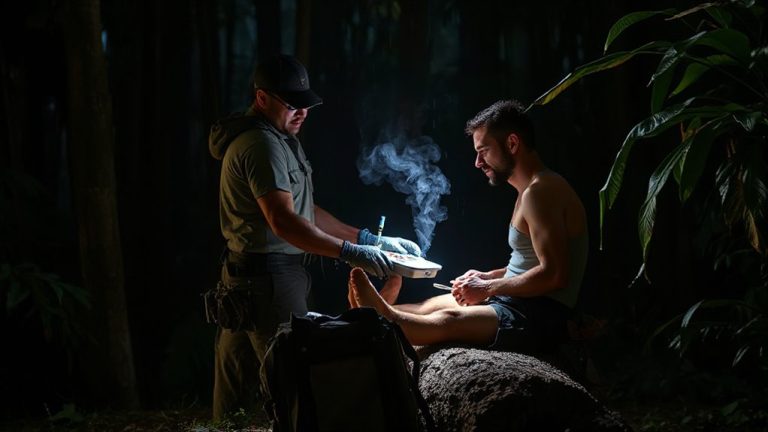
Three essentials dominate trauma care in urban evacuations: hemorrhage control, wound protection, and personal safety. You need a combat-approved tourniquet because proper tourniquet application stops life-threatening leg or arm bleeding within seconds; models like the SOF-T Wide work with gloves and under stress. Pack at least one for each bag user. Include trauma dressings and antiseptic wipes to shield wounds from infection in unsanitary conditions. Personal protection matters just as much-urban chaos increases assault risks. Carry compact self defense tools such as a tactical flashlight with a strobe mode or a legal stun device; they offer non-lethal deterrence without firearm complexity. Avoid bulky gear that slows movement. These items take little space but greatly improve survival odds during violent or medical emergencies. Test tourniquet application beforehand-familiarity saves vital seconds. Prioritize reliability over features. For comprehensive readiness, consider a military first aid kit that includes all essential trauma supplies in a durable, organized format.
Wear and Pack City-Ready Clothing and Shelter
After addressing medical response and personal safety, your next priority is staying mobile and protected from the elements-especially in dense urban terrain where weather, debris, and limited shelter options compound risk. Wear durable, layered clothing that supports movement and blends with surroundings-urban camouflage isn’t about military stealth but avoiding contrast against concrete, asphalt, and steel. Dark, neutral tones reduce visibility at night and fit better in city environments. Pack a compact emergency shelter with a portable blackout feature to block light and retain heat, which helps maintain privacy and temperature regulation in exposed areas. Materials should weigh under 1.5 lbs and deploy in under 2 minutes. Avoid bulky gear; tight spaces demand minimal footprint. Test fit your shelter indoors first. Choose moisture-wicking base layers and waterproof outer shells to manage sweat and rain. Footwear must be broken-in, grippy, and support long-distance walking-think 10,000-step days.
Carry a Light, Radio, and Charging Options
One light, one radio, and at least two ways to charge them-you’ll want this core trio to survive an urban blackout. A headlamp with red-light mode preserves night vision and saves battery. Pair it with a hand-crank emergency radio that includes AM/FM and NOAA weather bands. If the grid stays down, your power bank (minimum 10,000mAh) keeps phones alive. A solar panel backup adds resilience, though charging speed depends on sun exposure.
| Situation | Without These Tools |
|---|---|
| Trapped in dark stairwell | You fumble; risk injury |
| No news for 48 hours | Confusion spreads; rumors win |
| Phone dead, no signal flare | Can’t call for help or signal |
Carry a signal flare as a last-resort visual marker-it works even when networks fail.
Grab ID and Emergency Contact Info
You’ve secured light, communication, and power-now make sure you can prove who you are when systems go down. Include photocopies of IDs-driver’s license, passport, birth certificate-for each family member to support ID verification if originals are lost. Store them in a waterproof folder. Originals should be on your person only if evacuation is underway. Digital scans saved on a password-protected USB drive add redundancy. Pair this with contact backups: a printed list of emergency contacts, including addresses and phone numbers, since cell networks may fail. Avoid relying solely on smartphones. Use a laminated card with medical info and key contacts, too-it’s durable and fits in a wallet. These steps don’t guarantee access but improve odds during chaos. Balancing physical and digital formats reduces single points of failure, ensuring you can verify identity and reach help, even when infrastructure isn’t working.
On a final note
You’ll need water, food, and medical supplies that last 72 hours without resupply. Your bag should weigh under 20 pounds so you can move fast. Choose filtered water bottles over bulky packs-lighter and reusable. High-calorie bars beat canned goods for space and no prep. A compact first-aid kit with tourniquet works better than basic bandages alone. Wear durable, dark clothes. Keep IDs, cash, and a hand-crank radio charged and accessible.