Starting a Fire With a Steel Bike Spoke and Rock Striker
You can start a fire with a steel bike spoke and a rock if you use high-carbon steel-aluminum or coated spokes won’t work. Hold the spoke at a 30-degree angle against quartz-rich rock like flint or chert, then strike downward sharply with a wrist snap to throw sparks. Aim for dry, loose tinder like petroleum-jellied cotton balls, which ignite easier and burn longer. Keep everything dry and practice consistent strokes; better results come with proper grip and tested materials.
Notable Insights
- Use a high-carbon steel bike spoke, as aluminum or coated spokes won’t produce sparks.
- Select quartz-rich rocks like flint or chert that can scratch glass for effective spark generation.
- Hold the spoke at a 30-degree angle and strike downward with a sharp wrist snap.
- Aim sparks directly into dry, loose tinder such as char cloth or petroleum-soaked cotton balls.
- Keep materials dry and practice consistent striking to improve success in various conditions.
Start a Fire With a Bike Spoke
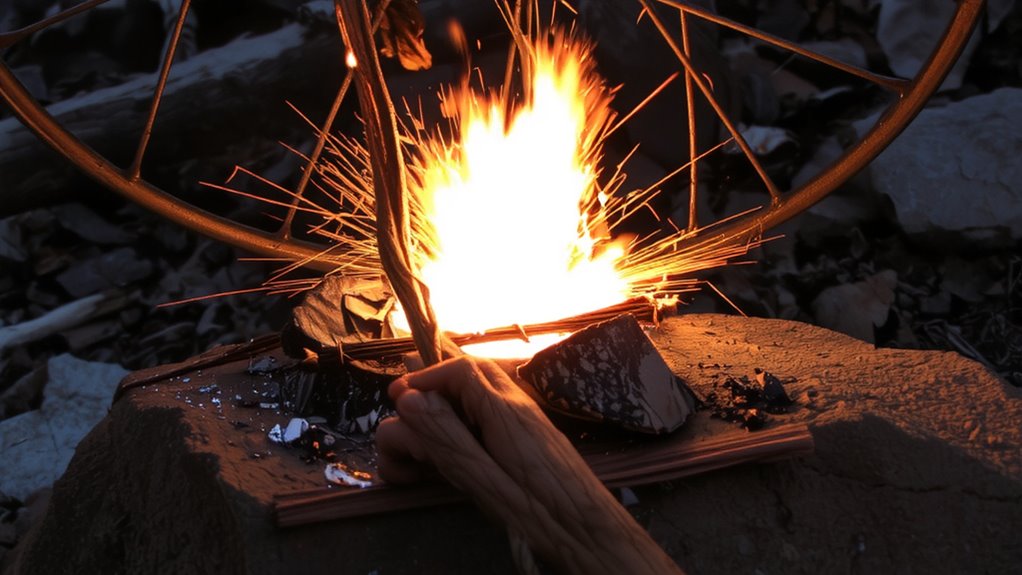
A fire starter isn’t always a flint or lighter-sometimes it’s a bike spoke. You can use a steel bike spoke with a striker rock to create sparks, but success depends on spark timing and setup. Hold the spoke at a 30-degree angle against the rock, then strike downward sharply. Sparks fly best with high-carbon steel spokes-common on older bikes-not aluminum or coated ones. Aim for dry tinder like char cloth or fine wood shavings; they catch easier and improve ignition odds. Maintain consistent spark timing by controlling strike speed and pressure. Too fast, and sparks scatter; too slow, and they lack heat. Practice improves reliability, but never skip fire safety. Clear a 3-foot burn zone, keep water nearby, and never leave the fire unattended. This method won’t replace a lighter, but it works when tools are limited and conditions are right. For backup ignition, consider carrying a compact fire piston as a reliable alternative in damp environments.
Pick the Best Rock for Sparks
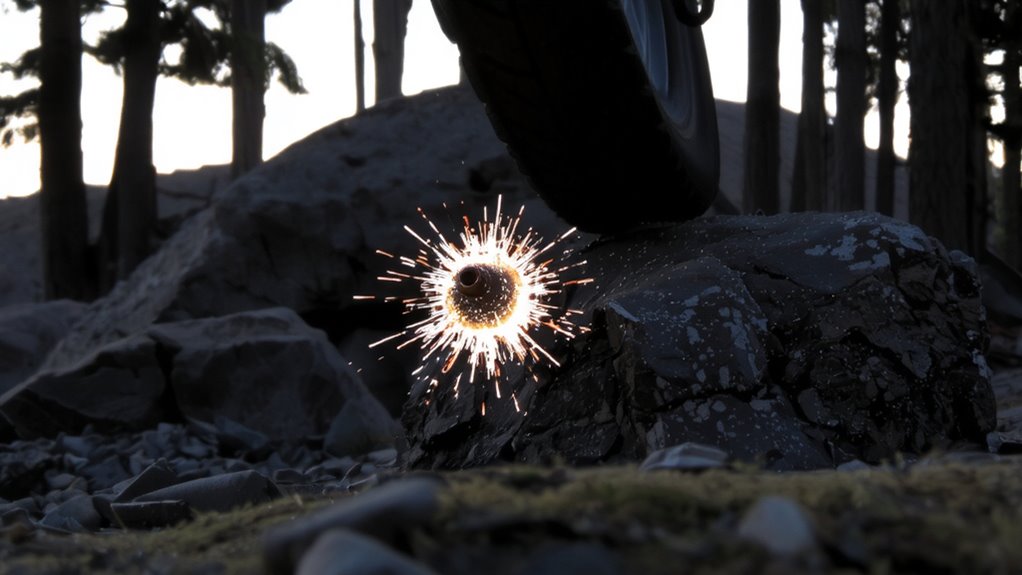
You’ve got the spoke ready and know how to strike it, so now it’s time to pick the right rock-because not every stone will give you sparks. Success depends on rock composition: quartz-rich stones like flint, chert, or quartzite work best since they’re harder than the steel spoke, shearing tiny, hot fragments when struck. Avoid softer rocks like sandstone or limestone-they won’t generate enough friction. Angle matters too; strike at a 30 to 45-degree force angle to maximize spark production. A glancing blow scrapes more material than a direct hit. Test nearby rocks if unsure-look for one that leaves a metallic scratch on the spoke. You don’t need perfection, just consistency. With the right composition and proper force angle, you’ll get usable sparks. No magic, just physics. Pick wisely, aim correctly, and you’ll boost your odds.
Prepare Tinder That Catches Fast
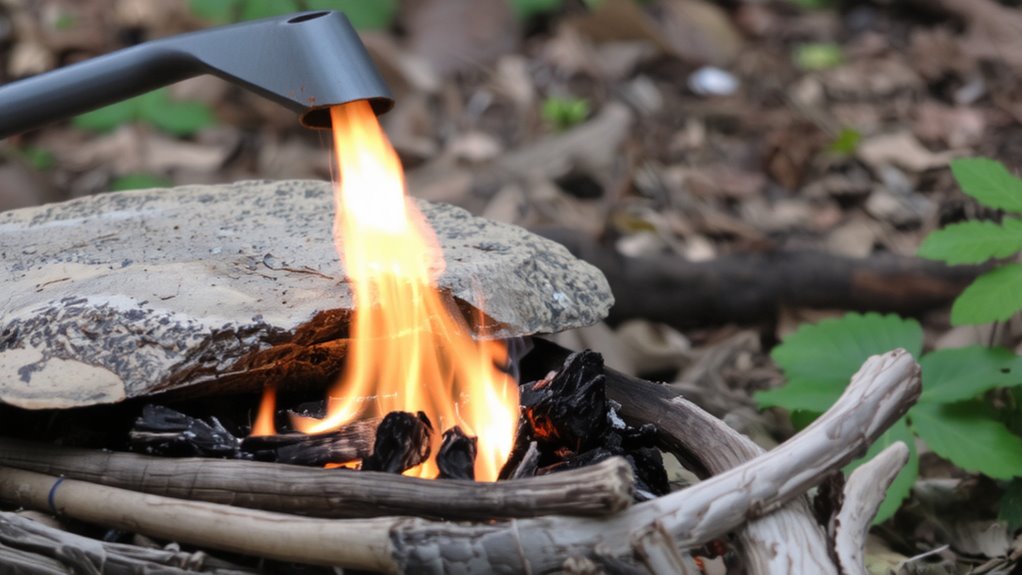
Every successful fire starts with tinder that ignites fast and burns long enough to catch kindling. You need material that catches a spark reliably and sustains a flame. Dry leaves work well when they’re truly dry-damp or thick leaves won’t ignite quickly. Crush them lightly to increase surface area and help them catch. Cotton balls are more dependable, especially if you smear them with petroleum jelly. The jelly lowers their ignition priority and extends burn time to about 30 seconds per ball. Use about four cotton balls or a fist-sized bundle of dry leaves. Place them loosely so air can circulate. Avoid compressing them tight-you want flame spread, not smolder. Test ignition with a single spark if possible. Prioritize cotton balls in wet conditions; they outperform dry leaves when moisture’s present. For even more reliable results, consider using DIY fire starters made from cotton and wax, which are designed to ignite quickly and burn steadily.
Strike the Spoke Like a Pro
Now that your tinder’s ready and waiting, it’s time to get that spark flying. Hold the bike spoke with a proper grip-fingers near the end for control, thumb along the side for stability. Angle the spoke at roughly 30 degrees against the rock striker. A consistent angle guarantees sparks form predictably, not randomly. Strike fast and downward in one fluid motion, dragging the metal sharply across the stone. Don’t tap-it won’t work. Use full-length strokes to maximize friction and spark output. Your wrist should snap, not your arm. Repeat quickly, aiming sparks directly into the tinder bundle. Fatigue reduces accuracy, so keep movements short and sharp. Steel spokes vary, but high-carbon ones throw better sparks. Wet or dirty striking surfaces reduce effectiveness. Keep the contact point dry. Proper grip and consistent angle aren’t optional-they’re the difference between success and smoke without flame. Practice builds reliability. For extended preparedness, consider pairing this method with a reliable survival lighter to ensure fire-starting success in all conditions.
Fix Common Fire-Starting Failures
Why isn’t your strike producing sparks when the gear seems right? Wet conditions are likely drowning your tinder or cooling the spark too fast. You need bone-dry, fine tinder-char cloth, cotton balls, or birch bark-sheltered until use. Even damp air saps heat. Check your technique: a faulty grip on the spoke reduces control and angle precision. Hold it near the end for better leverage, pressing the striker at 30–45 degrees. Too flat, and you get no spark; too steep, and it slips. The rock must be high-silica-like flint or quartz-not just any stone. Test it: if it doesn’t leave a mark on glass, it won’t work. Consistent striking matters more than force. Adjust for weather, grip, and material. Practice beats luck.
On a final note
You can start a fire with a steel bike spoke and rock striker, but it’s slow and unreliable. The spoke dulls quickly, reducing spark output. A dedicated ferro rod produces hotter, more consistent sparks. Rock choice matters-quartz or flint works best. Success depends on dry tinder and proper angle during striking. This method works in a pinch but isn’t efficient. For dependable fire starting, carry a proper fire steel.