Evaluating the Risk of Electrical Fire From Faulty Appliances
You’re at risk of an electrical fire when damaged wires, overheating, or arc faults go undetected. Cracked cords, burning smells, or discolored outlets signal danger. Space heaters, old wiring, and overloaded circuits increase fire chances. Test circuits under load-over 80% of breaker capacity is too high. Replace appliances over 10 years old or with frayed wiring. Daily habits like unplugging devices help. Knowing which appliances to watch and when to replace them cuts your risk markedly-there’s more to check where that came from.
Notable Insights
- Inspect cords regularly for fraying or cracking to prevent short circuits and sparks.
- Unplug appliances showing burning smells, discoloration, or unexpected shutdowns to avoid overheating risks.
- Avoid using extension cords with high-wattage devices like space heaters to reduce overheating and fire hazards.
- Test circuits under load to identify overloads, especially when amperage exceeds 80% of breaker capacity.
- Replace appliances over 10 years old or with repair costs nearing half the price of a new unit.
How Faulty Appliances Cause Electrical Fires
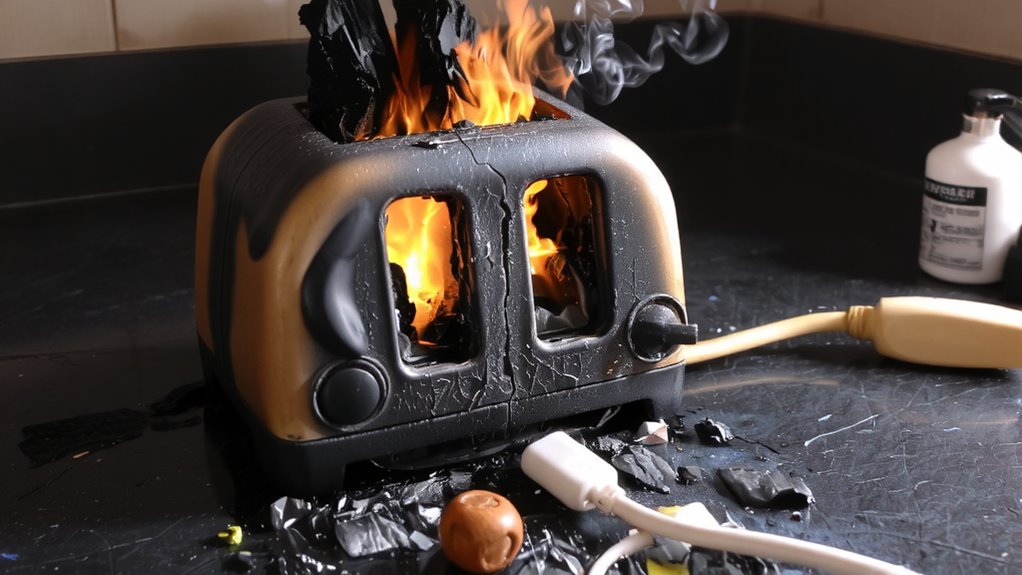
When an appliance develops an internal fault, it often creates excessive heat that can ignite nearby materials, and you’re usually not aware until it’s too late. Arc faults occur when electricity jumps across damaged wires, generating intense heat that ignites insulation or dust inside the unit. These aren’t always detectable by standard fuses. Short circuits happen when live wires touch accidentally, causing a sudden surge in current that overheats components rapidly. Both conditions stress wiring and connections beyond their design limits, increasing fire risk. Appliances with poor internal layouts or substandard materials fail faster under such faults. Even units with basic thermal cutoffs may not respond quickly enough to prevent ignition. You can’t rely solely on build quality-many models pass minimum safety tests but still overheat under fault conditions. Real-world testing shows arc faults and short circuits are leading electrical failure modes. Understanding these mechanisms helps assess which appliances pose higher risks when operated continuously or near combustibles.
Watch for These Warning Signs of Danger
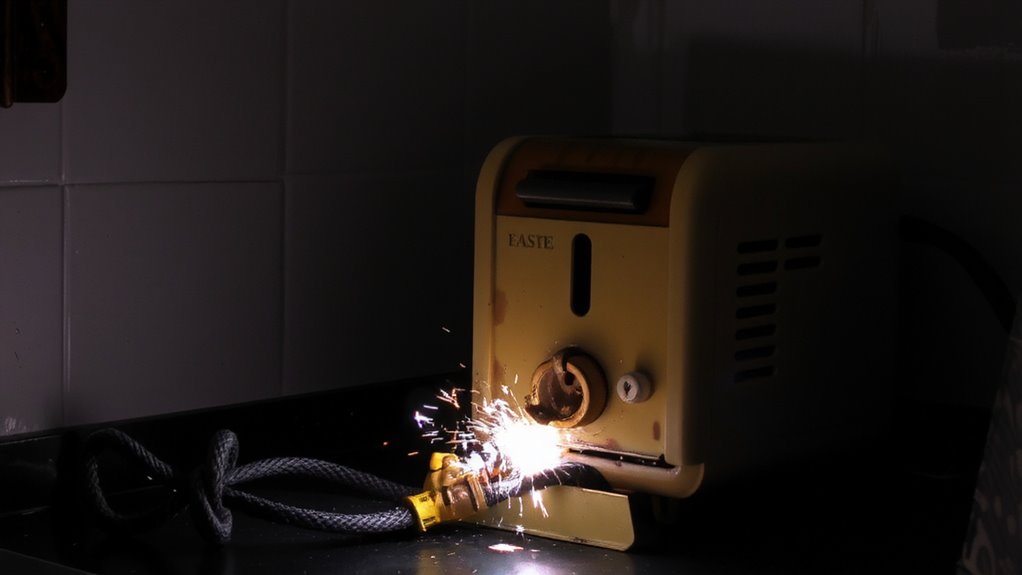
Though you might not see the damage right away, a malfunctioning appliance often gives clear physical cues before it becomes a fire hazard. You should check cords regularly-if they’re cracked or exposing wires, that’s a red flag. Frayed cords increase the risk of short circuits and sparks, especially when plugged or moved. If an appliance shuts off mid-use or emits a burning smell, it’s likely overheating. Overheating devices strain electrical systems and can ignite nearby materials. Discoloration on outlets or plugs also signals trouble. These aren’t minor flaws-they’re early warnings. Ignoring them raises fire risk markedly. You don’t need expert tools to spot these signs; a quick visual and functional check suffices. Catching frayed cords or overheating devices early lets you replace or repair before failure occurs. Stay alert. Small observations prevent big hazards.
Top Appliances That Start Electrical Fires
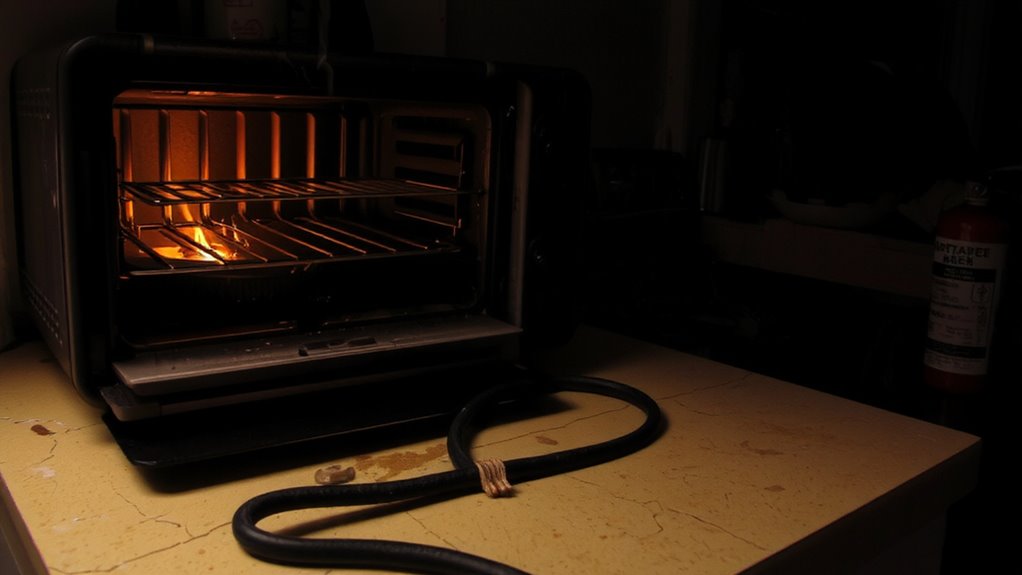
You’ve already learned what warning signs to spot, and now it’s time to know which appliances most often turn into electrical fire risks. Space heaters top the list, especially when left unattended or placed too close to combustibles. They draw high wattage, and using them with extension cords increases overheating risk. Most manufacturers warn against this, yet many still do it. Refrigerators cycle frequently and can spark if wiring degrades, but they rarely cause fires if maintained. Dryers ignite lint buildup, not electrical flaws, so cleaning matters more. Toasters and microwaves overheat with prolonged use, particularly if old or dirty. Extension cords used permanently with high-draw devices like space heaters are dangerous-they’re meant for temporary use and lack the gauge to handle constant load. Portable heaters and misused extension cords represent the clearest electrical fire threats in homes.
Test Your Home for Electrical Fire Overloads
How often do you plug in multiple devices and wonder if your circuits can handle the load? Testing your home’s electrical system isn’t optional-it’s essential for fire prevention. Use circuit testing to measure current draw and detect overload risks. Check each outlet on a circuit while devices are running to see if amperage exceeds 80% of the breaker’s rating. Practice load balancing by moving high-draw appliances to different circuits. Unbalanced loads generate heat, increasing fire risk.
| Circuit | Devices Connected |
|---|---|
| Kitchen | Microwave, Toaster, Coffee Maker |
| Living Room | Space Heater, TV, Game Console |
| Bedroom | Heater, Charger, Lamp |
| Office | Computer, Printer, Monitor |
Address overloads immediately. Rely on measurements, not guesswork.
Replace or Repair? Making the Safe Choice
When an appliance shows signs of failure, deciding whether to replace or repair it comes down to safety, cost, and longevity. You should consider the appliance age-models over 10 years old often aren’t worth fixing due to outdated components and reduced efficiency. A poor repair history suggests recurring flaws, increasing fire risk and lowering reliability. If repairs exceed half the cost of a new unit, replacement is usually smarter. Newer models meet updated safety standards and often include thermal cutoffs and better insulation. Repairs on units with electrical burns, frayed wiring, or frequent malfunctions rarely justify the investment. Even a skilled fix can’t overcome worn internal parts. Prioritize safety over savings: an older appliance with multiple past repairs is more likely to fail again. Replace it to lower fire risk and guarantee dependable performance.
7 Daily Habits to Prevent Electrical Fires
Often, simple daily routines reduce electrical fire risks more than any high-tech safety device. You shouldn’t leave devices plugged in unnecessarily-make unplugged devices a habit, especially overnight or when away from home. Chargers, small appliances, and electronics draw power even when idle, and worn cords or internal faults can overheat without warning. Unplugging them cuts that risk. Also, practice power strip safety: avoid daisy-chaining strips, check for warm outlets or buzzing sounds, and never overload a strip beyond its rated capacity. Most strips are designed for up to 15 amps; exceeding that generates heat and potential ignition points. Use strips with built-in circuit breakers and surge protection, but remember those don’t eliminate fire risk from misuse. You’re better off spacing out high-wattage devices across different circuits. Consistent habits like these lower your exposure without relying on luck or expensive gear.
What to Do If an Appliance Is Risky?
What makes one appliance a hazard while another operates safely? It often comes down to electrical grounding and appliance certification. If an appliance shocks you, trips breakers, or smells burnt, unplug it immediately. Don’t risk using it, even if it still powers on. Check for visible damage to cords or plugs-frayed wires increase fire risk. Verify the unit has a recognized certification label, like UL or ETL, which confirms it met safety testing. Without certification, you can’t trust its design or construction. Guarantee the device is properly grounded, especially high-power units like microwaves or heaters. A three-prong plug must connect to a grounded outlet. Never use adapters that defeat grounding. If grounding is faulty, current could travel through you or ignite nearby materials. Replace uncertified, damaged, or ungrounded appliances promptly. Safety isn’t worth compromising.
On a final note
You can’t prevent all electrical fires, but you reduce risk by acting on clear signs-flickering lights, warm outlets, frayed cords. Test appliances yearly; replace damaged ones. Space heaters, dryers, and microwaves fail most often. Repair only if cost-effective and safe. Unplug devices when not in use. Use surge protectors, not extension cords. These steps won’t guarantee safety, but they lower odds substantially based on fire department data and real-world failure rates.