How to Prepare for Unexpected Shelter-in-Place Orders During Emergencies
You’ll need a stocked emergency kit with a Red Cross-certified first aid supply, 14 gallons of water in BPA-free jugs for four people, and rotated every six months. Set up a communication plan using texts and an out-of-area contact. Pick an interior room with no windows, avoiding basements if flooding’s a risk. Use a NOAA weather radio with hand-crank power to get reliable alerts when networks fail. Practice your plan twice a year-faster coordination saves lives when seconds count. More details follow.
Notable Insights
- Build an emergency kit with a tested first aid kit, one gallon of water per person per day, and FDA-approved, BPA-free containers.
- Designate an out-of-area emergency contact and use texts or satellite messengers when cell service fails.
- Choose an interior, low-floor room with few windows and no flood risk for safe shelter.
- Use a battery-powered NOAA weather radio and hand-crank emergency radio for reliable, network-independent alerts.
- Practice shelter-in-place drills every six months to improve speed, coordination, and response under low-resource conditions.
Build Your Emergency Kit Before Disaster Strikes
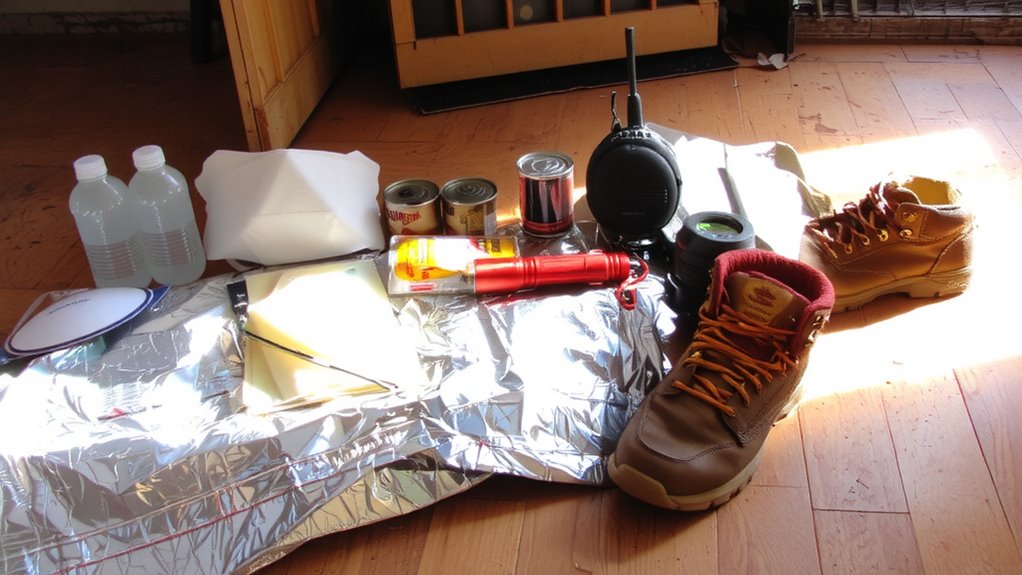
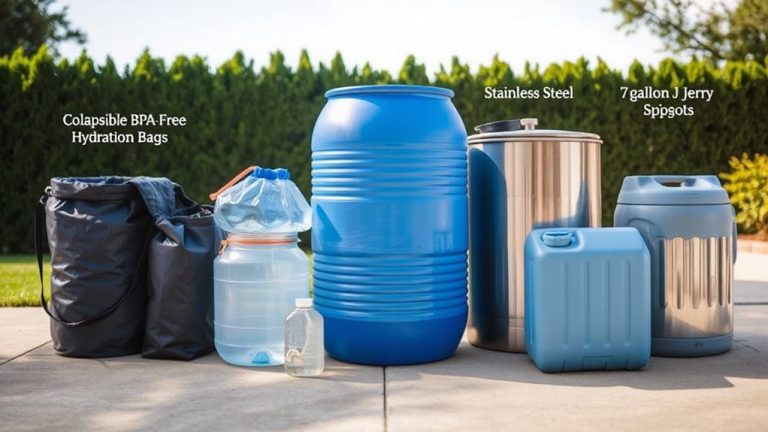
Every household should have an emergency kit ready, because waiting until disaster hits means you’ve already lost time. You need a reliable first aid kit with bandages, antiseptic wipes, gloves, and essential medications-tested kits with Red Cross certification perform best. Store at least one gallon of water per person per day for three days, but a seven-day water supply is smarter for shelter-in-place scenarios. Use FDA-approved, BPA-free containers; two 3.5-gallon jugs take up less space than individual bottles and reduce leakage risk. Rotate water every six months. Include water-purifying tablets as backup. A 500-piece first aid kit and 14 gallons of stored water support a family of four sufficiently. Compact kits save space but may lack critical items. Overpack slightly-space trade-offs beat shortages. Test your kit quarterly. Replace expired items immediately. Know what’s inside and how to use it. For comprehensive preparedness, consider choosing one of the top-rated first aid kits based on expert evaluations and user feedback.
Make a Family Communication Plan for Emergencies
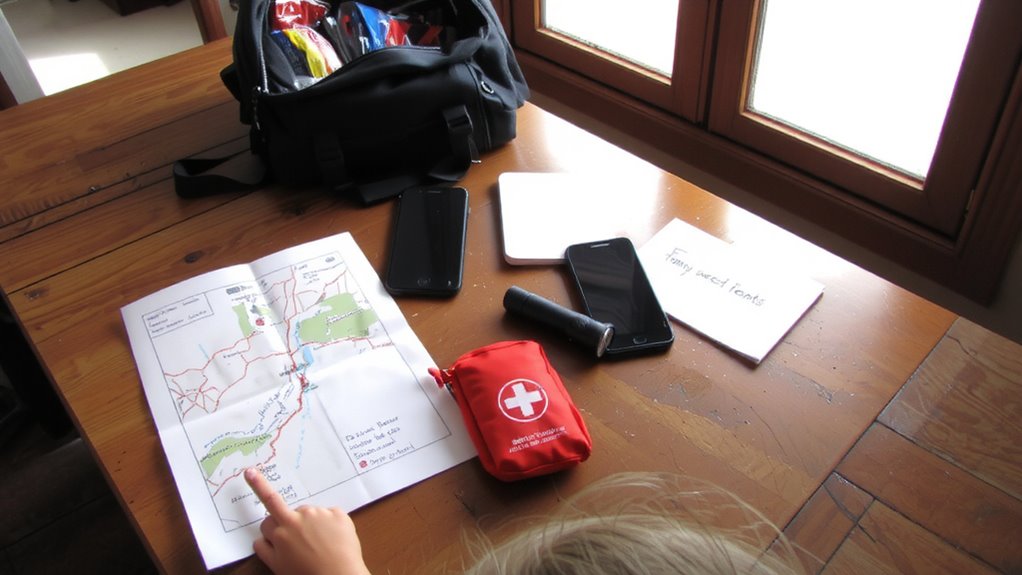
You’ve stocked the water, sealed the meds, and checked the kit-now make sure your family can stay in contact when normal routines collapse. Cell service may fail, so agree on backup methods like text messages or satellite messengers, which often send when calls don’t. Designate one out-of-area emergency contact everyone can reach, even if local lines are down. Share a printed list of numbers with all family members and keep copies in wallets. Review evacuation routes together-know at least two options from home, school, and work-so no one guesses under stress. Practice meeting at predetermined locations if separated. Communication plans work only if tested; drill every six months. A simple plan beats a detailed one that’s never rehearsed. Updates should account for disruptions like power loss or blocked roads. Clarity reduces confusion when seconds count. Including a winter survival kit can provide essential tools and warmth if stranded during severe weather.
Pick the Safest Room in Your Home
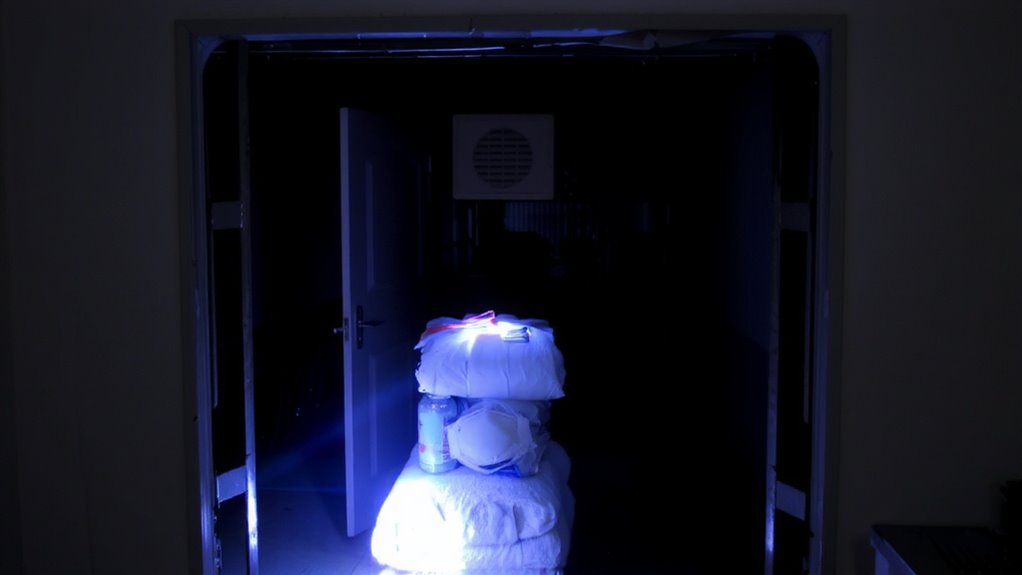
The safest room in your home isn’t always the largest or most comfortable-it’s the one with the fewest windows, exterior walls, and overhead hazards. For effective room selection, choose an interior space on the lowest floor, like a bathroom or closet. These rooms typically have more structural support and less exposure. Basements offer strong protection but avoid them if flooding is a risk. Conduct a safety assessment by checking for hazards like heavy objects overhead or poor ventilation. Avoid rooms with gas lines or water heaters unless necessary. Size matters less than location and construction. A small, windowless room reduces exposure to wind, debris, and contaminants. Prioritize accessibility for all household members, including those with mobility needs. Good room selection improves your shelter’s effectiveness during tornadoes, chemical spills, or active threats. Make the call before disaster strikes-don’t wait to decide where to go.
Track Alerts Without Panic
While staying informed during an emergency, relying solely on smartphone alerts can leave you blind if service drops or your battery dies-so it’s wise to use more reliable tools. A battery-powered NOAA weather radio with tone alert delivers official updates directly, no network needed. Pair it with a hand-crank emergency radio to maintain communication during prolonged outages. These devices help you stay informed and avoid rumors spread through unverified social media. For reliable performance, consider checking the best hand-crank radios for emergencies based on expert testing and user feedback.
| Device | Power Source | Signal Reliability |
|---|---|---|
| Smartphone | Battery, charging required | Variable (network dependent) |
| NOAA Radio | Batteries, AC | High (direct broadcast) |
| Hand-Crank Radio | Manual, battery backup | Moderate to high |
Choose tools that balance durability and consistent access. Test them quarterly. Avoid forwarding unconfirmed alerts-verify through trusted channels first. Staying informed without panic means relying on proven tech, not hype.
Practice Your Shelter-in-Place Plan
Having reliable ways to get updates means you’re ready to act, not just react. Now, practice your shelter-in-place plan like you’d test any survival tool-under real conditions. Run emergency drills every six months to check response times and gaps in communication. These drills reveal whether everyone knows where to go, how to shut off utilities, and which supplies are accessible. Your shelter routines should include clear roles, lighting methods, and communication backups. Time each drill to track improvement. Include pets and practice with limited power or water. You’ll see what works and what doesn’t without the stress of a real event. Adjust routines based on these results. Practicing guarantees actions become automatic, not uncertain. It’s not about perfection-it’s about readiness you can rely on when systems fail. Measure success by speed, coordination, and calm.
On a final note
You’ve got the basics: a stocked kit, a plan, and a safe room. Now, test it. Run drills every six months-timing matters. Use a weather radio with NOAA alerts; it’s reliable when cell service drops. Real-world tests show LED lights last 50 hours, but keep spare batteries. Your communication app must work offline. No plan survives first contact without practice. Expect gaps. Fix them. Keep adjustments simple, tested, measurable. That’s how readiness works.