Creating a Four-Season Foraging Strategy for Consistent Wild Food Access
You can find wild food all year by following seasonal cycles. In spring, grab fiddleheads, ramps, and dandelions right after snowmelt-they’re richest in nutrients when young. Summer brings berries; hit blueberries and blackberries weekly to beat spoilage and birds. Know your climate zone-microclimates shift timing. Avoid poison hemlock and polluted areas. Harvest sparingly to keep populations strong. Pick every third plant, take under 10%, and leave mature roots intact. There’s more to get right if you’re aiming for reliability.
Notable Insights
- Match foraging targets to seasonal availability, focusing on spring greens, summer berries, fall nuts, and winter-hardy greens or roots.
- Use USDA climate zones and local microclimates to predict plant emergence and optimize harvest timing.
- Prioritize sustainable harvest by taking less than 10% per patch and skipping every third plant to ensure natural regeneration.
- Accurately identify toxic look-alikes like poison hemlock and false morels to avoid dangerous misidentification.
- Scout and monitor berry patches weekly to harvest before spoilage or wildlife consume the crop.
Find Wild Edibles by Season
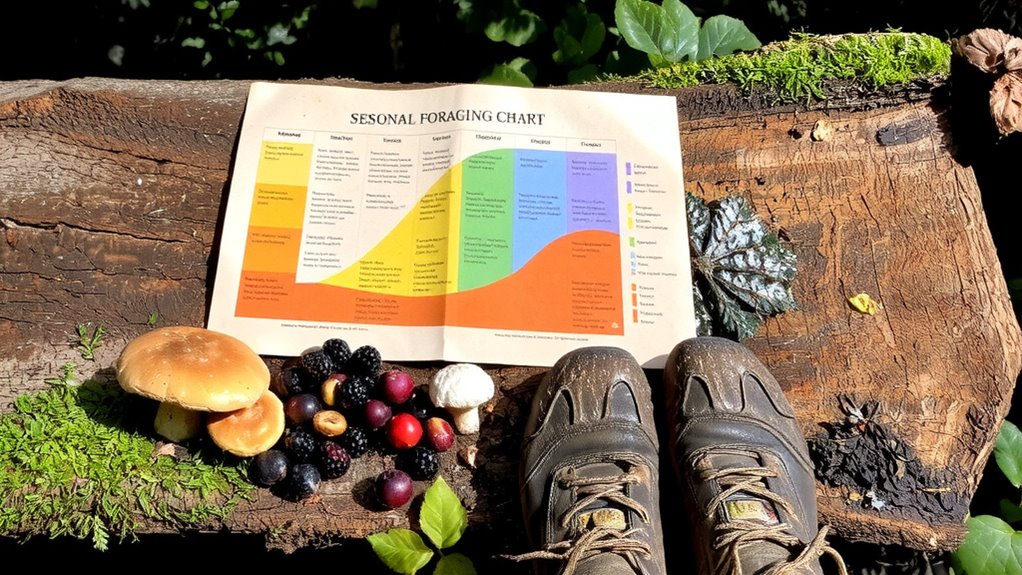
When should you actually start looking for wild edibles? Right when the snow melts. That’s your signal for spring greens like fiddleheads, ramps, and dandelion-nutrient-rich and best harvested young. You’ll want to act fast; their peak edibility lasts just a few weeks. As temperatures rise, the focus shifts to summer berries-blueberries, blackberries, strawberries-ripe from early to late summer depending on the region. These provide high-calorie returns with minimal effort, but you must beat birds and spoilage. Timing matters: pick too early, and berries lack sugar; too late, they turn moldy or vanish. You’ll need to scout patches in advance and monitor ripening weekly. Each season offers a narrow, predictable window. Missing it means waiting a full year. Consistent access isn’t luck-it’s tracking these cycles, year after year, and harvesting precisely when quality peaks.
Match Foraging to Your Climate
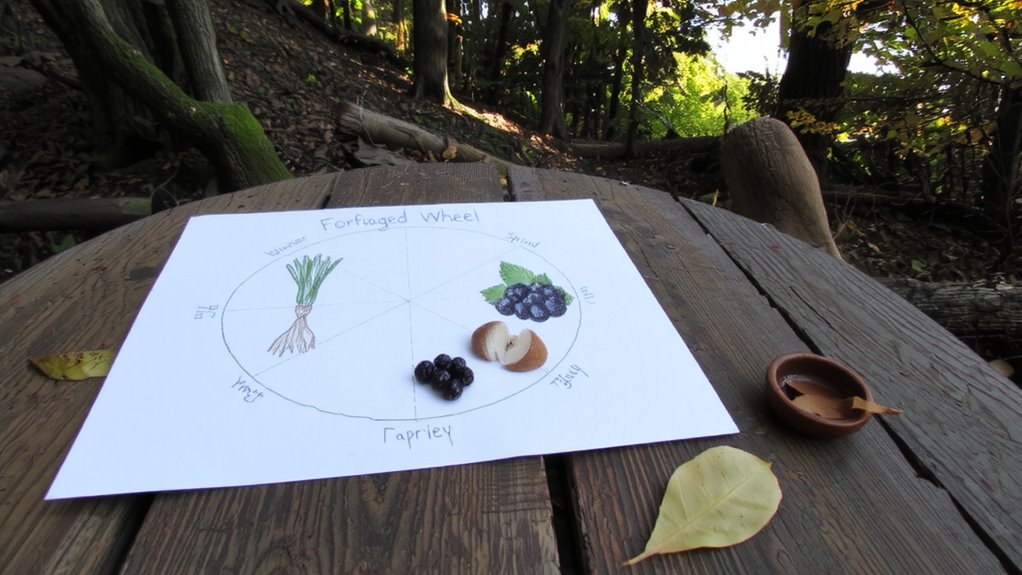
Though some foraging guides suggest universal timing, your success hinges on adjusting to local climate patterns-what works in the Pacific Northwest won’t apply in the Southeast. You need to identify your specific climate zone, as this determines growing seasons, frost dates, and plant availability. USDA zones offer a baseline, but microclimates-like south-facing slopes, urban heat pockets, or shaded ravines-can shift conditions markedly. A sheltered cove might host fiddleheads weeks earlier than a nearby ridge. These small-scale variations let you extend harvests across the year. Pay attention to temperature trends, rainfall, and elevation changes in your area. Matching your foraging schedule to these real-time conditions improves yield and reliability. Relying solely on broad regional advice overlooks critical local differences. Observe, record, and adapt your efforts to the actual environment around you. Precision beats assumption when sourcing wild food consistently.
Avoid Poisonous Look-Alikes and Polluted Areas
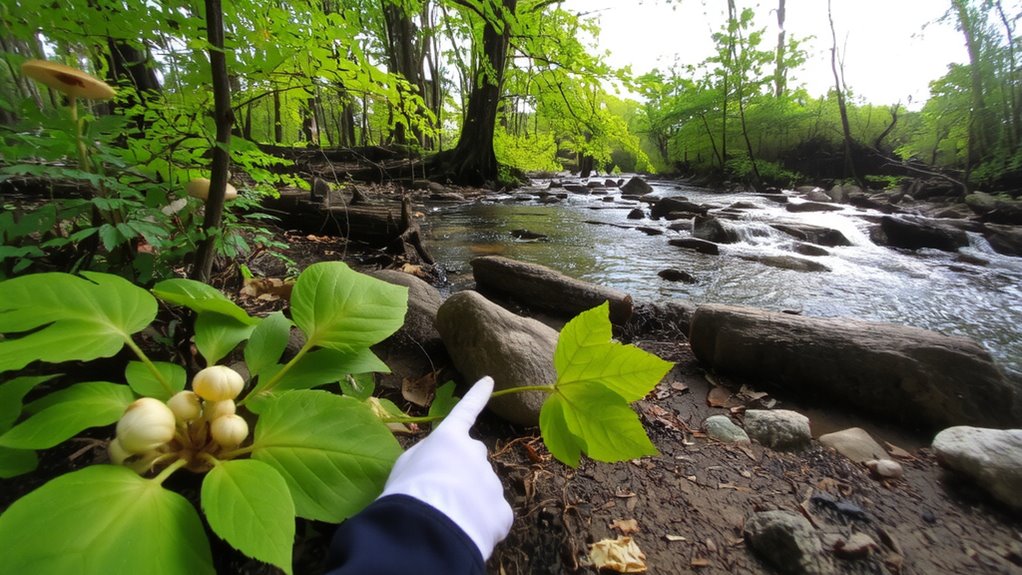
You’ve matched your foraging to local climate patterns, but knowing when and where to harvest means nothing if you bring home something dangerous. Mistaking a toxic twin for an edible plant can lead to severe illness or worse. Always identify toxic twins with certainty-use reliable field guides, cross-reference multiple sources, and never guess. For example, poison hemlock resembles wild carrot; the key differences are smell and stem markings. Similarly, false morels can mimic true morels but have a wrinkled, brain-like cap and can be deadly. You must also avoid contaminated zones. Stay clear of roadsides, industrial sites, and areas sprayed with pesticides. Heavy metals and pollutants accumulate in plants and mushrooms, making them unsafe even if properly identified. Urban runoff and airborne toxins persist in soil and vegetation. Test soil if uncertain, but when in doubt, choose a cleaner location. Safety hinges on vigilance, not just knowledge.
Forage Without Harming the Ecosystem
While foraging supports self-reliance, taking too much from one area damages plant populations and soil health. Practice sustainable harvesting by taking only what you need and leaving enough for regeneration. Ethical gathering means avoiding rare or slow-growing species and focusing on abundant, resilient plants. Stick to these principles to guarantee long-term access and ecosystem balance.
| Action | Impact |
|---|---|
| Harvest every 3rd plant | Maintains population stability |
| Take <10% per patch | Allows natural reseeding |
| Avoid uprooting mature plants | Preserves root systems and soil structure |
This approach supports consistent yields across seasons without depleting resources. You’ll find more reliable harvests over time when you prioritize ecosystem health. Ethical gathering isn’t optional-it’s practical necessity. Sustainable harvesting guarantees wild foods remain available year after year, season after season, without unintended consequences.
Store Wild Foods for Year-Round Use
Preserving your harvest guarantees you benefit from foraging long after the growing season ends. You can rely on drying methods for mushrooms, herbs, and berries-simple air-drying or using a low-temperature dehydrator removes moisture and prevents spoilage. Dried foods last up to a year if stored in airtight containers away from light. Canning techniques work well for acidic wild fruits and pickled greens, preserving texture and flavor for 12–18 months. Water bath canning is sufficient for high-acid foods; pressure canning is necessary for low-acid varieties, though wild edibles rarely require it. Each method has trade-offs: drying saves space but concentrates flavor, while canning retains original texture but demands more equipment. Choose based on your storage space, intended use, and available tools. Both approaches, when done correctly, guarantee reliable access to nutrient-rich wild foods across all seasons.
On a final note
You can forage year-round by learning seasonal edibles and your local climate. Stick to clear identifiers to avoid toxic look-alikes, and forage only in clean, unpolluted areas. Harvest sustainably-take less than half to preserve plant populations. Dry, freeze, or preserve foods to extend availability. This strategy works reliably, but requires planning and discipline. No gear or cost guarantees success-only knowledge and consistency do.