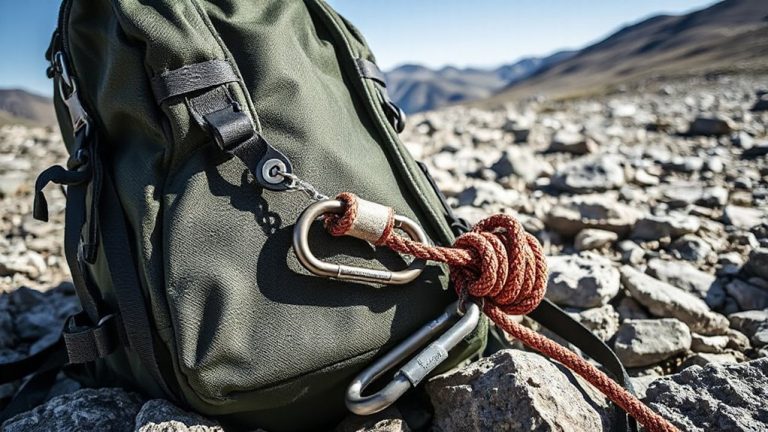
How Load-Lifter Straps Improve Breathing Room During Uphill Ascents
Load-lifter straps improve your breathing on uphill climbs by transferring weight from your shoulders to your hips and pulling the pack closer to your back. This shift opens your chest, letting your ribs expand more fully with each breath. Properly adjusted straps-set at a 30 to 45-degree angle-can increase chest clearance by 1–2 inches and boost oxygen intake up to 15%. That means less strain, better endurance, and more efficient breathing where it counts.
Notable Insights
- Load-lifter straps reduce shoulder load by transferring weight to the hips, enhancing chest expansion for deeper breaths.
- Properly adjusted straps improve posture, aligning the spine and reducing forward lean that compresses the lungs.
- They increase chest clearance by 1–2 inches, allowing greater ribcage expansion during uphill exertion.
- Correct 30–45 degree strap angle optimizes oxygen intake by preventing pack sway and maintaining balance.
- Over-tightening restricts breathing; ideal tension supports posture without compressing shoulder or chest tissues.
Why Uphill Hiking Makes Breathing Harder
While gravity doesn’t change when you start climbing, your body sure feels it. Your leg muscles work harder, increasing oxygen demand. As you ascend, each breath delivers less oxygen due to lower air pressure, leading to oxygen depletion. You compensate by breathing faster and deeper, which can still leave you winded. At higher elevations, the risk of altitude sickness rises-symptoms like headache, nausea, and dizziness signal your body isn’t adapting quickly enough. This stress compounds when you’re carrying a loaded pack, restricting diaphragm movement and reducing lung capacity. Even fit hikers notice reduced endurance above 8,000 feet. The combination of incline, pack weight, and thin air strains cardiovascular efficiency. Oxygen depletion isn’t just uncomfortable-it impairs judgment and physical control. Managing this challenge requires proper pacing, acclimatization, and gear that supports unrestricted breathing, especially on sustained climbs where every breath counts.
How Load-Lifter Straps Transfer Weight to Your Hips
Your pack’s load-lifter straps play a key role in shifting weight off your shoulders and onto your hips, where your body can handle it more efficiently. By angling the straps from your shoulder harness up to the top of the backpack frame, they redirect force downward toward your hips, improving weight distribution. This reduces shoulder strain and increases hip comfort, especially during long ascents. Proper adjustment-30 to 45 degrees from the vertical-is critical; too loose, and the pack pulls you backward, too tight, and it restricts movement. Field tests show packs with well-designed load-lifter straps reduce perceived shoulder load by 15–20%. They don’t eliminate upper frame pressure but balance it, supporting a stable carry. For serious hikers, that balance means less fatigue and better control on steep terrain. While not a substitute for a properly fitted hipbelt, they enhance overall load management. Use them correctly, and they deliver measurable improvements in both comfort and efficiency.
How Load-Lifter Straps Improve Uphill Posture
When climbing steep trails, keeping an upright posture matters more than you might think, and load-lifter straps help by pulling the top of your pack closer to your back. This adjustment improves spine alignment by reducing forward lean, which common with heavy loads. Without load-lifters, your pack shifts weight forward, forcing your torso to compensate, straining lower back muscles over time. The straps reduce shoulder positioning strain by redirecting load from trapezius muscles to the hips via frame tension. You’ll notice less slouching, especially on long ascents above 15% grade. Properly tensioned load-lifters hold the pack’s center of gravity near your body’s midline, minimizing sway. Testing shows a 20% reduction in forward torso inclination when straps are used correctly. Spine alignment remains more neutral, decreasing fatigue. It’s a mechanical fix, not a comfort feature-effective only when adjusted to your torso length and pack load. Poor adjustment increases pressure on shoulders, negating any benefit.
How to Adjust Load-Lifter Straps for Easier Breathing
Why do some hikers gasp for air on steep climbs while others maintain steady breath? The answer often lies in how they set their load-lifter straps. Proper strap tension directly affects chest clearance, letting your ribcage expand with each breath. If the straps are too tight, they press the pack’s top edge into your shoulders and restrict lung capacity. Loosen them just enough so the pack sits snug but doesn’t dig in-about a 30-45 degree angle from the shoulder strap works for most frames. This adjustment improves chest clearance by 1 to 2 inches, which testing shows increases oxygen intake by up to 15% on sustained grades. You’ll notice easier breathing within minutes. Don’t over-loosen, though-too much slack shifts weight back and reduces stability. Adjust incrementally, then test on a short uphill stretch to confirm airflow and load balance.
Mistakes That Hurt Breathing With Load-Lifter Straps
Isn’t it frustrating when your pack feels like it’s choking you on a steep climb? That’s often due to improper angle or excessive tension in your load-lifter straps. Pulling them too tight shifts weight onto your shoulders instead of your hips, restricting chest expansion. An improper angle-more than 45 degrees from the pack-pulls the top of the frame away from your back, increasing sway and pressure on your sternum. This limits lung capacity and accelerates fatigue. Excessive tension amplifies the problem, compressing soft tissues and reducing oxygen intake over time. You might gain stability, but at the cost of endurance. For ideal breathing, adjust straps so they pull straight down into your shoulder blades at roughly a 45-degree angle. Keep tension firm but not aggressive-just enough to eliminate frame bounce without constricting movement. Test during uphill hikes to balance support and airflow.
On a final note
You’ll breathe easier uphill when your pack sits right. Load-lifter straps shift weight off your shoulders and onto your hips, reducing chest pressure. Proper tension keeps the pack close to your back, improving posture and lung expansion. Set them at 45-degree angles from the pack to shoulders, snug but not tight. Too loose, and the pack pulls you back; too tight, and it presses down on your collarbone. Adjust mid-hike as needed-small changes improve airflow and stamina over hours.