How to Build a Fire in a Cave Without Risking Rock Spalling or Smoke Buildup
Pick a spot deep inside the cave, away from wind and overhangs, using solid, dry rock like igneous or metamorphic stone-avoid sandstone or shale. Test airflow with grass or tissue at different heights to guarantee ventilation. Build a 6-inch base of flat, tight-fitting stones to lift the fire off damp ground. Start small with dry tinder and wood, adding fuel only as needed. If you hear rocks cracking, extinguish immediately-this signals danger. Douse thoroughly, stir, and confirm it’s cold before scattering ashes. There’s more to get right if you want to stay warm and safe overnight.
Notable Insights
- Choose a fire location deep inside the cave, away from cracks and overhangs, using stable, flat surfaces shielded by natural rock formations.
- Test natural ventilation at multiple heights and times using lightweight materials to ensure consistent airflow and prevent smoke accumulation.
- Avoid damp, porous, or layered rocks like sandstone and shale; select dry, dense igneous or metamorphic stones to reduce spalling risk.
- Build a raised fire base with tightly fitted, dry stones at least six inches above the ground to improve heat distribution and prevent moisture contact.
- Start with small, dry materials, monitor for popping rocks, and fully extinguish the fire, stirring until ashes are cold to the touch.
Pick a Deep, Draft-Free Spot
While you might be tempted to set up near the cave’s entrance for easy access, staying deeper inside helps avoid wind gusts that can spread sparks or snuff out your fire. Choose a spot shielded by natural rock formations to reduce airflow and enhance heat retention. Avoid areas with visible cracks or layered stone, as these rock formations are more prone to spalling under heat. Position your fire on a flat, stable surface away from overhanging rocks to minimize risk. The deeper you go, the more noticeable cave acoustics become-sharp echoes mean you’re surrounded by hard, reflective surfaces, which can also indicate denser, more stable stone. However, excessive echo may suggest large open chambers where cold air circulates. A balance between enclosure and space improves safety and comfort. This location reduces exposure while maintaining manageable conditions for fire control and sound diffusion.
Test for Natural Ventilation First
You’ve picked a sheltered spot deep in the cave, but before laying down fuel, you need to check whether the space allows for natural airflow. Tear a small piece of tissue or grass and drop it near the cave entrance or ceiling to observe air movement. If it drifts steadily upward or outward, you’ve got usable air flow. Check at different heights-sometimes air flow shifts near the floor versus the roof. Wind direction outside matters: if the current blows into the cave, it may push smoke inward; if it draws out, ventilation improves. Test during different times of day, as wind direction can shift with temperature changes. A faint draft is better than none, but no visible movement means poor ventilation. Without adequate air flow, smoke accumulates fast. Don’t rely on guesswork-confirm flow before committing to the spot.
Avoid Wet or Cracked Rock: It Can Explode
If the rock around your fire site looks damp or shows visible cracks, move to a drier, more stable area-trapped moisture in stone turns to steam when heated, and pressure buildup can cause it to fracture violently. Rock moisture is a serious hazard; even seemingly dry surfaces can conceal water within porous layers. When heated rapidly, that moisture expands and may trigger explosive spalling. You can’t afford to overlook crack detection-fine fissures often worsen under thermal stress, leading to unpredictable breakage. Visually inspect the area in good light, running your hand over surfaces to feel for hidden flaws. Avoid sandstone and shale, which retain water and split easily. Stick to dense, dry igneous or metamorphic rock when possible. A quick test: press your cheek to the stone-if it feels cool, it’s likely holding moisture. Prioritize safety with careful observation; a few minutes of inspection prevents dangerous failures later.
Build a Raised Stone Base for Safety
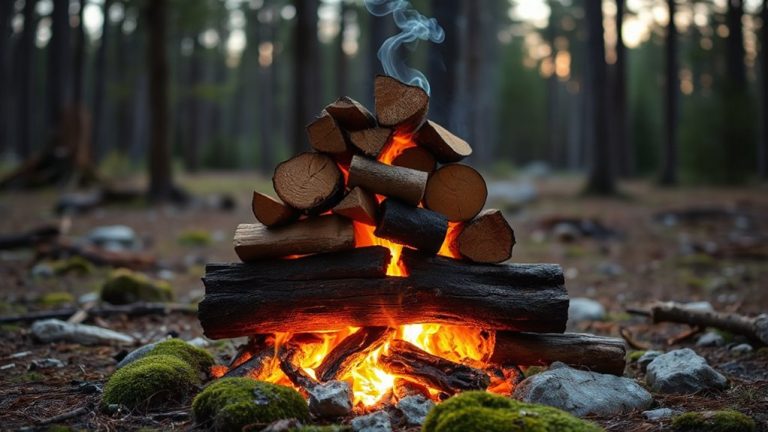
Since heat rises and can damage cave floors, building a raised stone base keeps your fire contained and protects the ground beneath. A stable platform improves heat distribution and guarantees structural stability, reducing risks of shifting or collapse. Use flat, dry stones of similar size to stack a base at least 6 inches high. Avoid thin or layered rocks-they can crack under thermal stress. This setup lifts the fire off damp or uneven surfaces, promoting consistent airflow and safer burning.
| Feature | Benefit | Risk if Ignored |
|---|---|---|
| Raised base | Protects cave floor | Ground cracking or spalling |
| Even stone layers | Improves heat distribution | Uneven burning, flare-ups |
| Tight fit | Enhances structural stability | Collapse, spreading embers |
| Dry materials | Prevents steam explosions | Rock fragmentation |
Start With Small Dry Wood to Control Smoke
While starting your fire with larger logs might seem efficient, it’ll often smother and produce excessive smoke due to poor airflow and incomplete combustion-especially in the confined space of a cave. Instead, begin with small, dry wood to guarantee quick ignition and steady flame control. Your success hinges on proper tinder selection: use fine, bone-dry materials like birch bark, dead grass, or cotton balls soaked in petroleum jelly. These ignite easily, even in damp conditions, and sustain a flame long enough to catch small kindling. Gradually add slightly larger sticks, letting each layer burn completely before progressing. This method minimizes smoke output by promoting clean, efficient combustion. Small wood burns hotter and faster, reducing the chance of lingering smoke that can accumulate overhead. You’re not just building a fire-you’re managing airflow and heat from the start, which is critical in a sheltered environment where ventilation is limited and safety depends on predictability.
Listen for Pops and Cracks: Stop If Heard
When you hear popping or cracking sounds from the rocks around your fire, stop adding fuel and back away-those noises mean moisture trapped inside the stone is heating rapidly and could cause it to explode. Hear pops, stop fire-this isn’t a suggestion. Rock spalling happens when steam builds up under pressure, and weak layers fracture violently. You won’t always see it coming, but sound is a reliable early warning. If the cave walls or ceiling make sharp noises, extinguish the flames immediately. Let the area cool before evaluating damage. Ignoring the signs increases the risk of flying debris and structural compromise. Fires in caves demand constant attention, not just for warmth but for safety. Monitoring sound cues is low-effort and high-reward. It costs nothing to act, but ignoring them could cost you everything. Stay alert. Your survival hinges on noticing small signs before they become big threats.
Put Out the Fire Fully and Scatter Ashes
Once the fire’s died down, douse it completely-don’t just smother it-because hot coals buried under ash can reignite or radiate enough heat to warm nearby rocks, increasing spalling risk later. Stir the remains while adding water to guarantee everything’s cold to the touch. Fire safety doesn’t end when flames disappear; residual heat can still pose risks, especially in enclosed spaces like caves. After confirming the fire’s fully out, practice proper ash disposal by scattering cooled ashes over mineral soil or rock, well away from flammable material. Avoid leaving concentrated piles, which can retain heat and attract animals. Scattering also minimizes environmental impact and preserves the site for others. Never bury ash-it traps heat and complicates future use of the area. Responsible ash disposal is a core part of cave fire safety, reducing hazards and guaranteeing stability long after you’ve left.
On a final note
You keep the fire small and off the ground to prevent rock spalling. Choose dry wood and watch for cracking sounds-stop if you hear any. Test airflow first to avoid smoke buildup. A raised stone base protects the cave floor and improves safety. Always fully extinguish the fire and scatter ashes to leave no trace. It works, but only if you stay alert and follow each step without shortcuts.