How to Create a Fire From a Power Bank and Thin Copper Wire in a Grid-Down Crisis
Use a 10,000mAh lithium-ion power bank without short-circuit protection and connect a stripped 0.2-ohm copper wire across the terminals. The low resistance draws heavy current, heating the wire in seconds to ignite tinder. Pair it with petroleum-soaked cotton or char cloth for reliable catch. Wear insulated gloves, limit contact to one second, and avoid damaged banks to prevent hazards. This method fails if damp or underpowered-knowing backup tricks improves success when the grid’s down.
Notable Insights
- Use a lithium-ion power bank with at least 10,000mAh and no short-circuit protection to ensure sustained current flow.
- Connect a thin, stripped copper wire (0.2 ohms) across the power bank’s positive and negative terminals to generate intense heat.
- Choose highly flammable, compact tinder like petroleum-soaked cotton balls or char cloth for reliable ignition from the hot wire.
- Secure the copper wire with insulated pliers or clips to prevent burns and disconnect after 1–3 seconds to avoid battery damage.
- In wet conditions, dry tinder with body heat and use steel wool or longer thin copper strands to improve spark success.
How to Start a Fire With a Power Bank
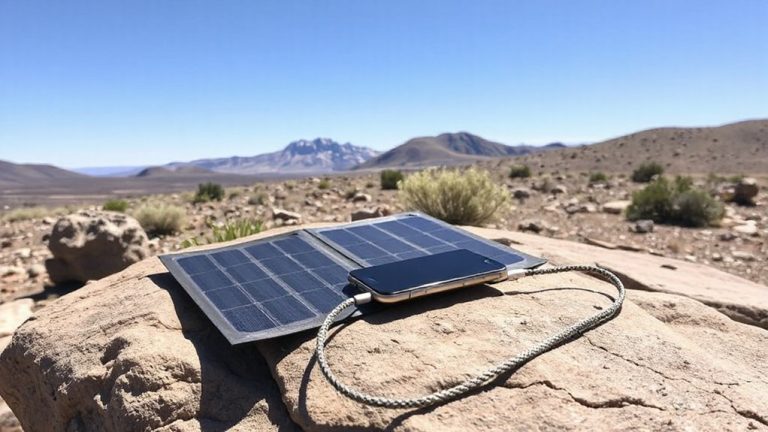
Fire starts with heat, and a power bank can generate plenty-if you know how to harness it. You’ll need a lithium-ion power bank with at least 10,000mAh and a stable output. Strip a thin copper wire, connect it across the positive and negative terminals, and resistance in the wire creates intense heat. The key is balancing energy efficiency with fire resistance: cheaper cables overheat too fast, while better-insulated ones delay ignition. Use wires with minimal coating to reduce fire resistance, letting heat build quickly. A 0.2-ohm wire typically ignites tinder in 3–5 seconds. Don’t use power banks with short-circuit protection-they’ll shut off before heat builds. Test your setup beforehand; not all models deliver sustained current. In real conditions, cotton tinder catches faster than dry grass. This method works reliably when components match the load, but inefficiency wastes stored energy. Plan for two ignition attempts per charge.
Why Copper Wire Heats Up Fast
You just saw how connecting a copper wire across a power bank’s terminals can ignite tinder, but the real reason it works so fast comes down to physics, not luck. Copper has low electrical resistance, so current flows heavily with little opposition. That energy doesn’t vanish-it turns into heat. Even brief exposure to high current makes thin copper wires heat up rapidly. High thermal conductivity lets copper spread heat quickly along its length, but in thin wires, heat concentrates faster than it dissipates, creating hot spots. Below is a comparison of wire properties affecting performance:
| Material | Electrical Resistance (Ω/m) | Thermal Conductivity (W/m·K) |
|---|---|---|
| Copper | 0.017 | 401 |
| Iron | 0.10 | 80 |
| Nichrome | 1.10 | 11 |
| Aluminum | 0.028 | 237 |
Low resistance and high thermal conductivity make copper ideal for fast heating when overloaded.
Best Tinder for Power Bank Sparks
Dry, fine materials catch fastest when exposed to the brief, intense heat from a power bank’s short-circuited copper wire. You’ll want tinder that ignites easily with minimal sustained heat, since the spark lasts less than a second. Cotton balls coated in petroleum jelly work best-they’re reliable, store well, and ignite even when slightly damp. Dryer lint is also effective if kept dry, though it compresses easily and loses potency. Birch bark and char cloth are solid natural options, with char cloth being particularly sensitive to small sparks, making it ideal as a fire starter. Commercial fire starter cubes function well but add weight. In emergency preparedness, prioritize lightweight, compact tinder that fits into your survival kit without taking up space. Test combinations beforehand so you know exactly how much tinder to use. Success depends on preparation and material quality-not luck.
How to Avoid Burns and Short-Circuit Hazards
A solid grip and steady hand keep you safe when bridging a power bank’s terminals with thin copper wire, because the wire heats to ignition temperature in under two seconds and can blister skin fast. Use insulated gloves and tools to maintain heat safety-direct contact with the wire or terminals risks severe burns. Work on a non-flammable surface to support fire control, and keep water or sand nearby to extinguish stray flames. Never hold the wire in place with your fingers; instead, secure it with pliers or a clip. Avoid over-discharging the power bank by limiting connection time to one second. A short circuit can damage the battery or cause thermal runaway, so inspect your power bank for swelling or heat before and after use. This method demands focus-distractions increase hazard risk. Proper prep reduces danger without sacrificing reliability in a crisis.
When This Method Fails (And What to Try)
Why does the power bank and copper wan method sometimes fail? It often comes down to wet conditions, poor connections, or low battery charge. If your setup results in failed ignition, don’t assume the method is useless-check variables first.
| Issue | Solution |
|---|---|
| Wet conditions | Use a tarp or body heat to dry components |
| Weak spark | Try a higher-capacity power bank (20,000 mAh+) |
| Failed ignition | Switch to finer steel wool (0000 grade) |
| Wire resistance too low | Use longer, thinner copper strands |
You’ll need dry tinder and proper wire gauge. In damp environments, protect your materials ahead of time. If the spark doesn’t catch, combine the wire spark with flammable cotton or petroleum-jelly-soaked cloth. This method isn’t foolproof, but adjustments often restore function when conditions interfere. For reliable backup ignition, consider carrying a fire piston as part of your survival kit.
Make Fire With a Power Bank: Step-By-Step Demo
You’ll usually get the best results by starting with a fully charged power bank of at least 10,000 mAh, since lower capacities may not deliver enough current to generate sustained heat in the wire. Strip a thin copper wire-about 6–8 cm long and no thicker than 0.2 mm-and drape it across the power bank’s positive and negative terminals. The moment contact is made, resistance heats the wire quickly. Watch for electrical arcing at weak points; this signals high current flow and can ignite nearby tinder. Hold the wire in place with insulated tools-never by hand-to avoid burns. If the wire glows red and stays intact for 3–5 seconds, it may ignite fine, dry tinder like cotton or char cloth. Avoid prolonged contact, as this can trigger thermal runaway in the power bank, causing swelling or rupture. This method works best with older, unprotected lithium-ion banks that lack overcurrent protection. Success isn’t guaranteed, but it’s repeatable with practice.
On a final note
You can start a fire with a power bank and copper wire, but it’s situational. Thin copper heats fast under load, igniting fine tinder like cotton or dry grass. Expect 10–20 seconds of heating before the wire fails. Use insulated gloves-short circuits cause burns. Success drops in humidity or with poor connections. Power banks with higher output (2.1A+) work best. It’s a last-resort method; fire steel or lighters are more reliable.