How to Evaluate Your Home’s Vulnerability to Wildfire Spot Fires
Check for combustible materials like mulch or leaves within 5 feet of your home, since embers can ignite them easily. Use gravel or pavers in that zone. Make certain your roof is Class A rated and gutters are clean. Replace 1/4-inch vent mesh with 1/8-inch metal mesh to block embers. Seal gaps around windows, doors, and siding. Upgrade to dual-pane tempered glass and non-combustible siding like fiber cement. Small fixes now greatly cut your ignition risk-knowing your weak spots is the first step toward real protection.
Notable Insights
- Inspect roofing and gutters for debris and ensure Class A fire-rated materials are installed to reduce ignition risk.
- Check vents for 1/8-inch metal mesh covering to block ember entry into attics and wall spaces.
- Examine siding for gaps, cracks, or vinyl damage that could allow embers to reach combustible framing.
- Evaluate windows for dual-pane, tempered glass and intact seals to resist heat and ember intrusion.
- Assess defensible space by clearing flammable vegetation and materials within 5 feet of the home’s foundation.
Spot How Embers Can Ignite Your Home
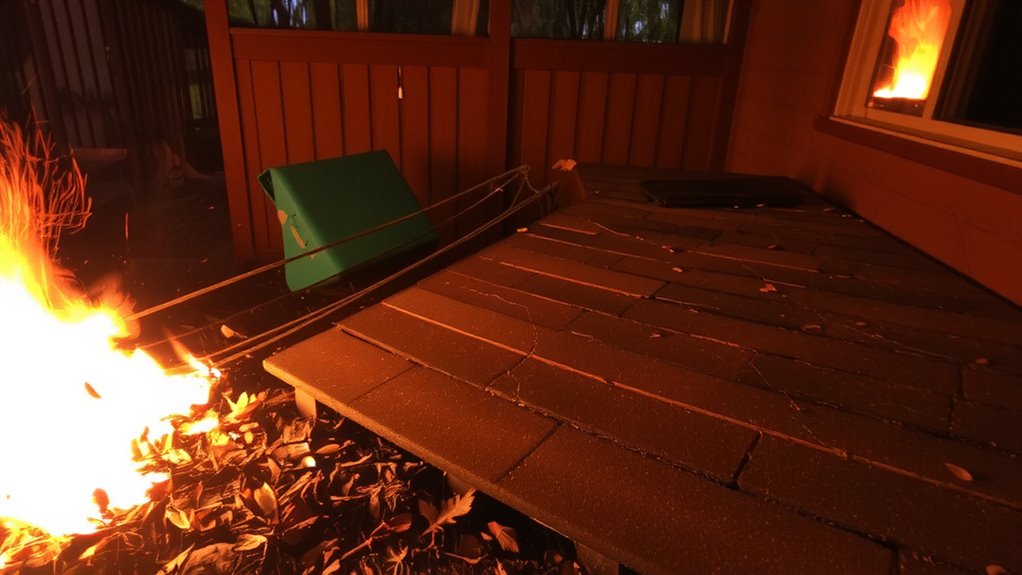
Why do some homes catch fire during a wildfire while nearby structures survive? The answer often lies in ember accumulation and ignition pathways. Embers can travel over a mile ahead of a fire, landing on or near your home. If they find flammable materials-like leaves in gutters, wood piles, or mulch-ember accumulation increases ignition risk. These small sparks don’t need flames to start a fire; they only need a way in. Ignition pathways include vents, eaves, decks, and cracks in siding. Embers enter through these openings, igniting insulation, attics, or framing. Homes with metal roofs, ember-resistant vents, and noncombustible siding reduce ignition pathways. Simple upgrades, like sealing gaps and using 1/8-inch mesh over vents, block embers. Testing shows homes with these features are twice as likely to survive. You don’t need perfect protection-just fewer weak points.
Stop Spot Fires: Create Defensible Space
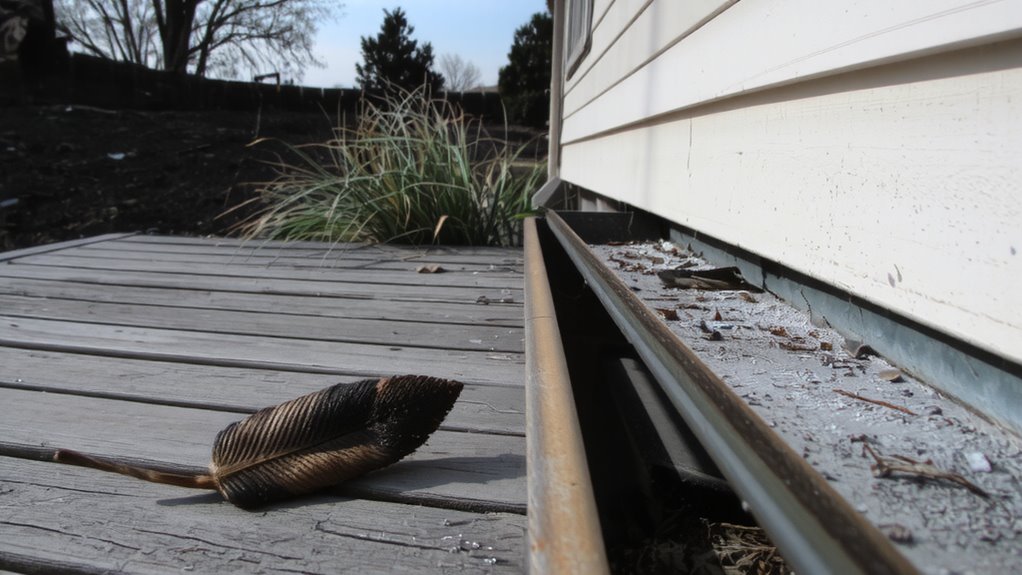
Even if you can’t control the wind or the fire, you can still reduce your home’s exposure to spot fires by building defensible space around it. This means managing vegetation and materials within 100 feet of your home to limit ember spread. You divide this area into ignition zones: Zone 0 (0–5 feet) should have no plants or combustibles; use gravel or pavers instead. Zone 1 (5–30 feet) requires low-growing, high-moisture plants spaced widely. Zone 2 (30–100 feet) needs trees and shrubs thinned to prevent fire from climbing or jumping. Your landscaping choices directly impact risk-flammable plants and mulch increase vulnerabilities. Remove dead vegetation regularly and keep grass short. Defensible space isn’t about clearing everything; it’s about strategic placement and maintenance. Proper spacing and material selection reduce ignition likelihood when embers arrive.
Check Your Roof, Siding, and Vents for Risks
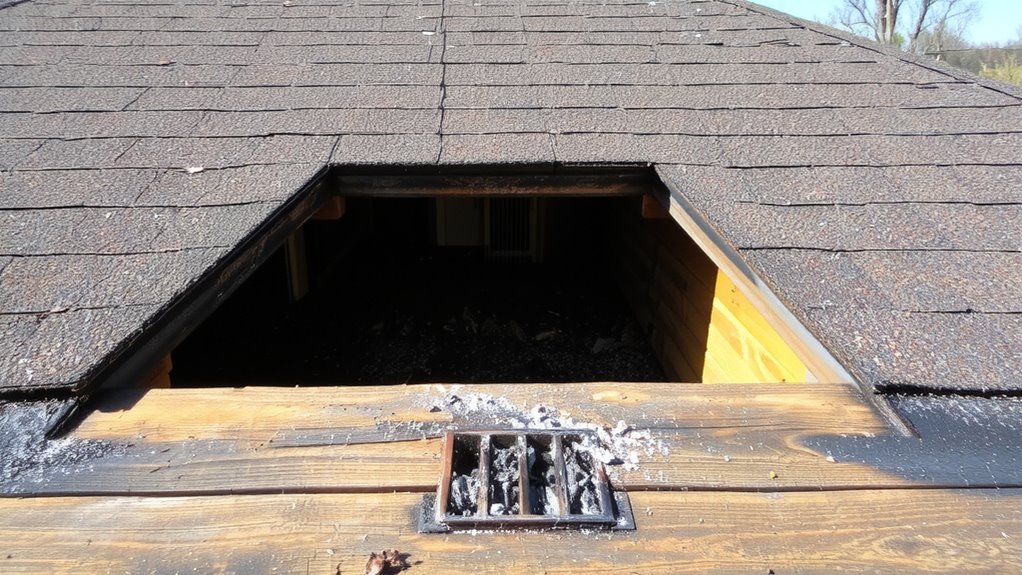
Your roof, siding, and vents are front-line defenses when embers strike-choices here determine whether your home resists ignition or becomes fuel. Check your roof material: Class A fire-rated asphalt, metal, tile, or concrete outperform wood shakes, which catch embers easily. Even non-combustible materials can fail if debris accumulates in gutters or valleys. Siding type matters just as much-fiber cement, stucco, and brick resist burning better than vinyl, which melts and exposes underlying wood. Aluminum and some treated woods offer moderate protection but still pose risks under intense ember exposure. Metal mesh over intake vents reduces ember penetration, but standard 1/4-inch mesh isn’t enough-use 1/8-inch to block smaller embers. These components aren’t fail-proof, but upgrading them improves survival odds. Small gaps or combustible materials create weak links. Evaluate each part as part of a system, not in isolation.
Close Ember Entry Points in Your Home
While embers can travel over half a mile ahead of a wildfire, they only need a small opening to ignite your home from within-sealing these entry points is among the most effective steps you can take. Check all exterior openings, including vents, utility penetrations, and gaps around doors and windows. Faulty window seals allow embers to enter through glazing gaps, especially in older double-hung units; replace them with compression seals rated for wildfire zones. Inspect attic vents: use 1/8-inch metal mesh to cover them, as larger openings let embers inside where they can ignite exposed attic insulation. Make certain siding joints and foundation gaps are sealed with fire-resistant caulk or mesh. Don’t overlook recessed lighting or plumbing penetrations-embers exploit any weak point. Sealing entry points doesn’t guarantee safety, but it markedly reduces ignition risk when combined with proper clearance and maintenance.
Upgrade Key Areas to Resist Spot Fires
If you’re serious about surviving a spot fire, focus first on upgrading vulnerable entry points like windows, roofing, and siding-these areas fail early under radiant heat and ember exposure, and only specific materials hold up. Install dual- or triple-pane windows with tempered蒱 glass, which resist heat better than single-pane; pair them with fine-mesh window screening (1/8 inch or smaller) to block embers. For siding, choose fiber cement, stucco, or masonry-avoid wood or vinyl, which melt or ignite. Your roof should be Class A fire-rated; asphalt shingles with fire-resistant underlayment meet this standard. Replace wood deck materials with non-combustible alternatives like concrete, tile, or UL-listed composite decking tested for ignition resistance. Keep decks clear of flammable items. These upgrades don’t guarantee survival, but they considerably improve performance under real wildfire conditions by reducing ignition points and slowing fire spread when embers land.
On a final note
You can reduce spot fire risks by focusing on what actually works. Metal roofs outperform wood shakes under ember exposure. Ember-resistant vents cut ignition chances by blocking debris. Tight-fitting soffits and mesh screens stop embers from entering. Fire-rated siding like fiber cement adds margin. Clearing 5 feet of non-combustible zone around your home is proven. Trade aesthetics for survivability where needed-simple changes meet code standards and real-fire performance.