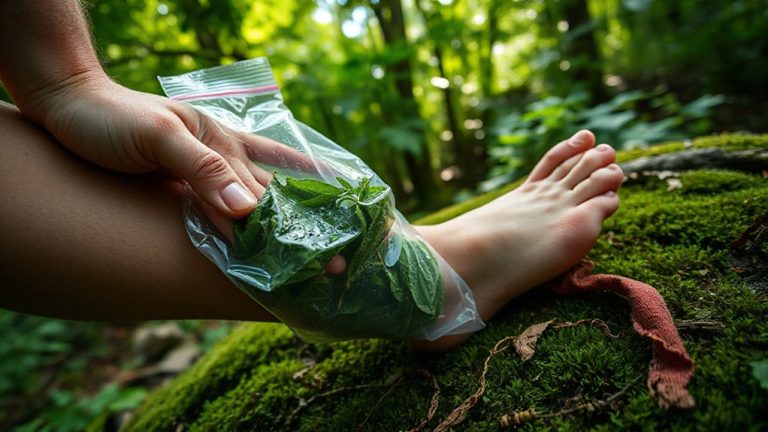
Preventing Cross-Contamination When Processing Wild Edibles in the Kitchen
Wash your hands with soap and water before handling wild edibles to stop transferring dirt and pathogens. Use dedicated, labeled tools-knives, boards, baskets-for only foraged foods to avoid cross-contamination. Rinse harvests under cool running water, dry thoroughly, and keep them separate from raw meat at every step. Store prepped items in sealed, labeled containers on lower fridge shelves. Proper setup now reduces health risks later-you’ll want to get the details right the first time.
Notable Insights
- Wash hands thoroughly with soap and water before handling foraged foods to prevent transferring pathogens.
- Use dedicated, labeled tools and cutting boards for wild edibles to avoid cross-contact with raw meat.
- Clean all foraging tools and containers after each use to eliminate bacterial buildup and contamination risks.
- Rinse foraged items under cool, running water and dry thoroughly before storage or use.
- Store processed wild foods in labeled, airtight containers below raw meat in the fridge to prevent drip contamination.
Wash Hands Before Handling Foraged Foods
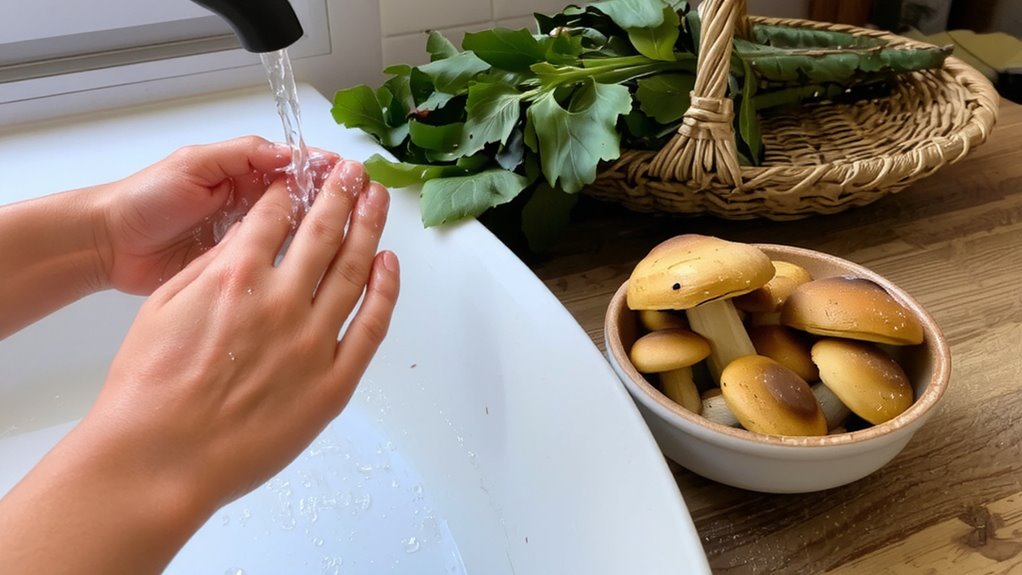
While it might seem obvious, washing your hands before handling foraged foods is a step you can’t afford to skip, especially when you’re dealing with wild plants that could already carry soil, microbes, or insect residue. Proper hand hygiene reduces the risk of transferring contaminants to what you’ll eat. You’re not just cleaning dirt-you’re minimizing pathogens that could cause illness. For forager safety, assume everything from the wild carries some level of contamination. Use soap and water for at least 20 seconds; hand sanitizer works if water isn’t available, though it’s less effective on soiled hands. This simple step takes little time but notably lowers health risks. Skipping it undermines every other precaution you take in processing wild edibles. Hand hygiene isn’t optional-it’s foundational. Treat it like checking plant ID: non-negotiable, practical, and essential for safe foraging.
Use Dedicated Tools for Wild Edibles
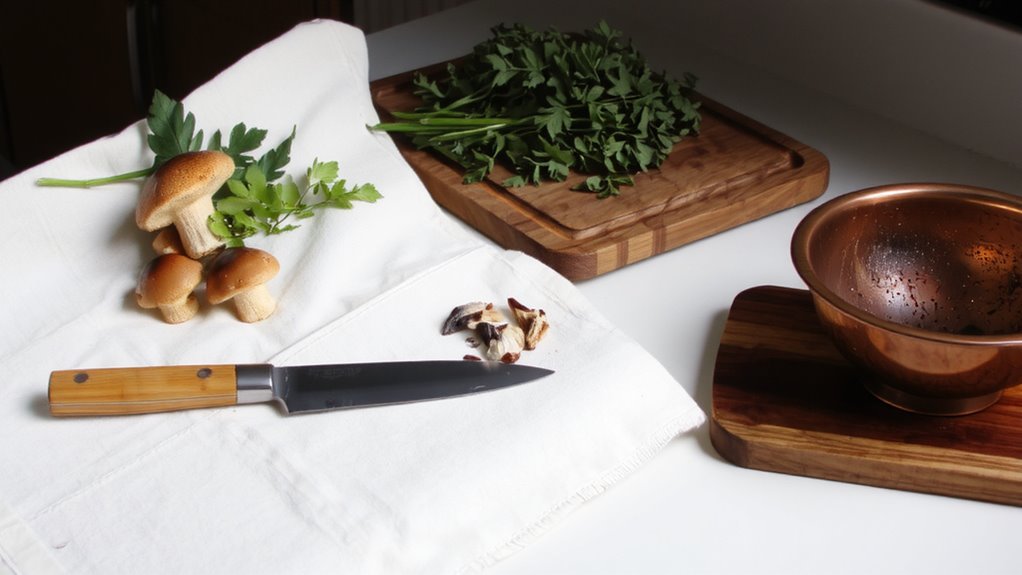
You wash your hands to keep contaminants off your foraged foods, but clean hands won’t fix what happens if you use the same knife or basket for everything. Cross use prevention starts with dedicated tools-simple, practical, and effective. Assign specific cutting boards, knives, and harvest baskets solely to wild edibles. This reduces pathogen transfer from raw meat or unclean outdoor contact. Labels or colors help distinguish these tools in shared kitchens. Tool maintenance matters: clean after each use, inspect for cracks where bacteria hide, and replace worn items. Stainless steel or food-grade plastic works best-they resist odors and are easy to sanitize. Cloth bags need washing after every trip. Using gear only for foraging cuts contamination risks fast and keeps processing efficient. No extra steps, just smarter habits.
Clean and Prep Foraged Harvests Safely
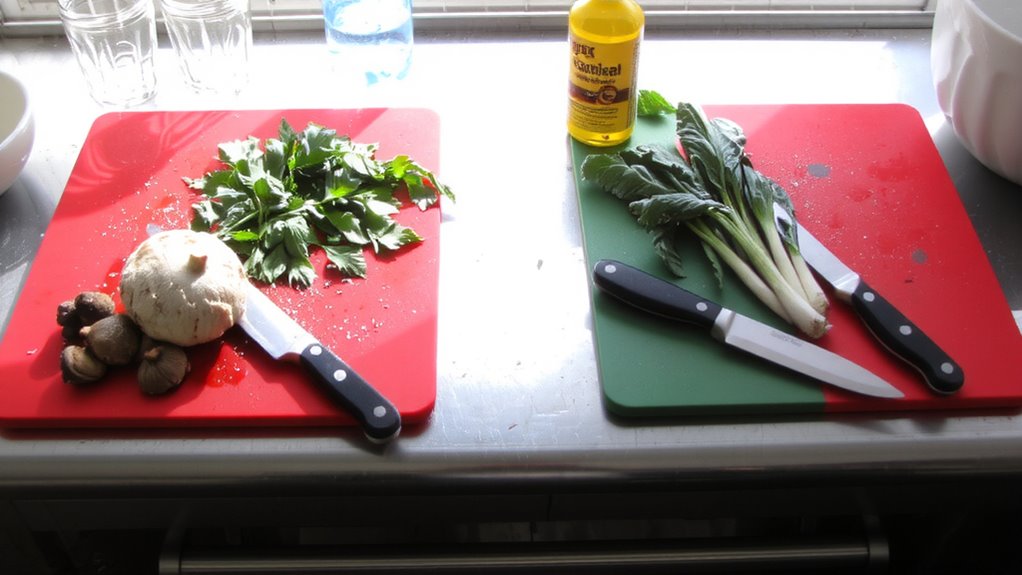
After gathering your wild edibles, rinsing them right away cuts down on dirt, insects, and potential pathogens that linger on the surface. Use cool, running water and a gentle scrub if needed, especially for roots or leafy greens. Don’t soak them-excess moisture encourages spoilage. Once cleaned, choose effective drying techniques: air-dry on clean towels, use a salad spinner, or pat gently with paper towels. Make sure they’re fully dry before storage to prevent mold. Labeling practices are just as important-always mark containers with the foraged item’s name and date. This avoids mix-ups and tracks freshness. Mistakes in ID or timing can compromise safety, so clear labels reduce risk. You’re not just organizing-you’re building a system that supports safe, repeatable use of wild harvests. Consistency matters.
Keep Wild Foods Away From Raw Meat
Once your foraged items are clean and dry, store them separately from raw meat to prevent dangerous cross-contamination. Raw meat can harbor harmful bacteria, and even a small amount of meat juices can transfer pathogens to wild edibles. You’re not exaggerating the risk-studies show that juices from raw meat can spread salmonella and E. coli across surfaces. Always use separate cutting boards: dedicate one for meat and another for foraged plants. Color-coded boards help you keep track. Never place cleaned greens on a surface that held raw meat unless it’s been thoroughly sanitized. Even residue you can’t see poses a threat. Keep storage containers apart in the fridge, with wild foods above meat to avoid drips. It’s a basic step, but skipping it undermines all prior safety efforts. Cross-contamination isn’t theoretical-it happens in real kitchens every day. Stay vigilant.
Store Foraged Items Separately After Prep
A clean, organized approach starts with dedicated storage-keep your prepped wild edibles in sealed containers away from other food categories. Use airtight storage containers to maintain freshness and block contaminants. Always apply clear labeling practices to avoid mix-ups and track prep time. Store items by type and harvest date to manage rotation efficiently.
| Factor | Recommendation |
|---|---|
| Container Type | Rigid, BPA-free plastic or glass with locking lids |
| Placement | Bottom shelf of the fridge, away from raw proteins |
| Label Info | Species name, date foraged, date prepped |
| Labeling Practices | Use waterproof markers and standardized tags |
This system reduces risk, supports traceability, and keeps your foraged goods safe. You won’t eliminate cross-contamination without consistent storage containers and labeling practices. Organize by protocol, not convenience.
On a final note
You’ve cleaned your hands and tools, prepped safely, and kept wild edables away from raw meat. Store them in labeled containers, separate from other foods. Cross-contamination risks drop substantially when you use dedicated gear and follow consistent hygiene. It’s not extreme-just effective. These steps are minimal effort for real food safety. No special gear needed, just discipline. That’s how you handle foraged foods without compromise.