How to Minimize Light Pollution With Headlamps During Low-Light Emergency Hunts
Use a red-light headlamp under 200 lumens to preserve night vision and reduce light pollution. Red light won’t impair rod sensitivity or create visible glare. Shield the beam with a snoot or baffle to cut skyglow by up to 60%. Avoid spot mode-it wastes energy and scatters light. Turn the lamp off during observation to stay stealthy and let your eyes adapt. Smart settings and simple mods keep your setup effective and low-impact. More details reveal even greater control with minimal gear.
Notable Insights
- Use red light mode to preserve night vision and reduce light visibility to others.
- Keep brightness below 200 lumens to minimize glare and maintain natural dark adaptation.
- Shield the beam with snoots or baffles to prevent upward light scatter and skyglow.
- Avoid prolonged use of spot mode; rely on flood or low modes for navigation.
- Turn off headlamps during observation to enhance stealth and reduce environmental impact.
Use Red Light to Preserve Night Vision
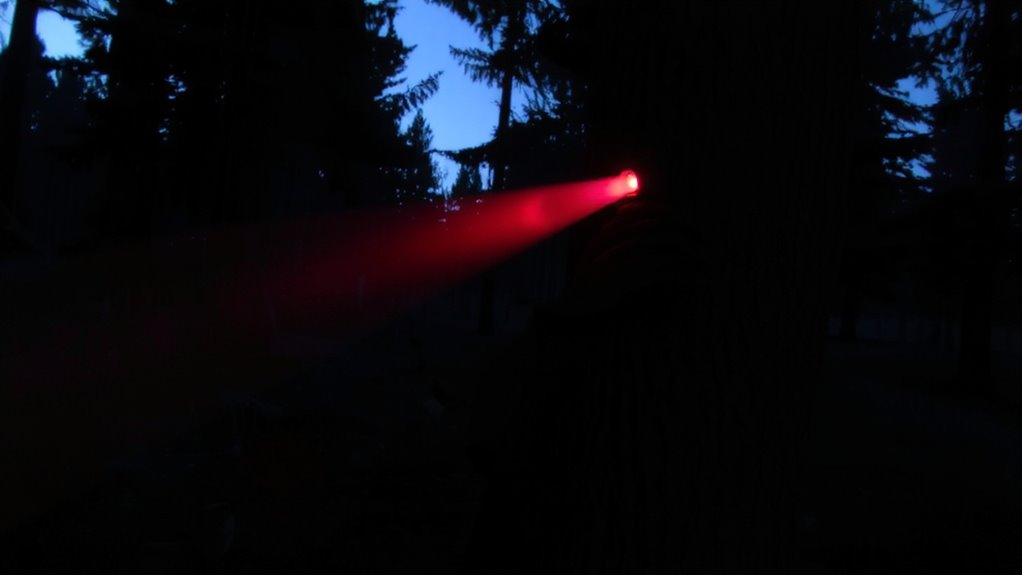
Night vision matters when you’re traversing dark terrain during an emergency hunt, and red light helps maintain it. You rely on dark-adapt.reduce eyes to detect movement and navigate safely, and red light’s longer wavelength preserves your rods’ sensitivity. Unlike white light, which resets your night vision, red light with a color temperature around 600–700 nm minimizes disruption. This isn’t just theory-it’s field-tested. Many tactical headlamps offer dedicated red LED modes because they support light discipline, reducing your visual signature to others. Light discipline means using only the necessary light, in the right direction, without compromising your position. Red light helps you stay low-profile while still scanning maps or checking gear. It won’t eliminate your need for illumination, but it cuts glare and limits ambient spill. You maintain situational awareness without broadcasting your location. Use red light to stay effective and unseen. Affordable models with dedicated red light modes provide effective night vision preservation without breaking the bank.
Keep Brightness Under 200 Lumens
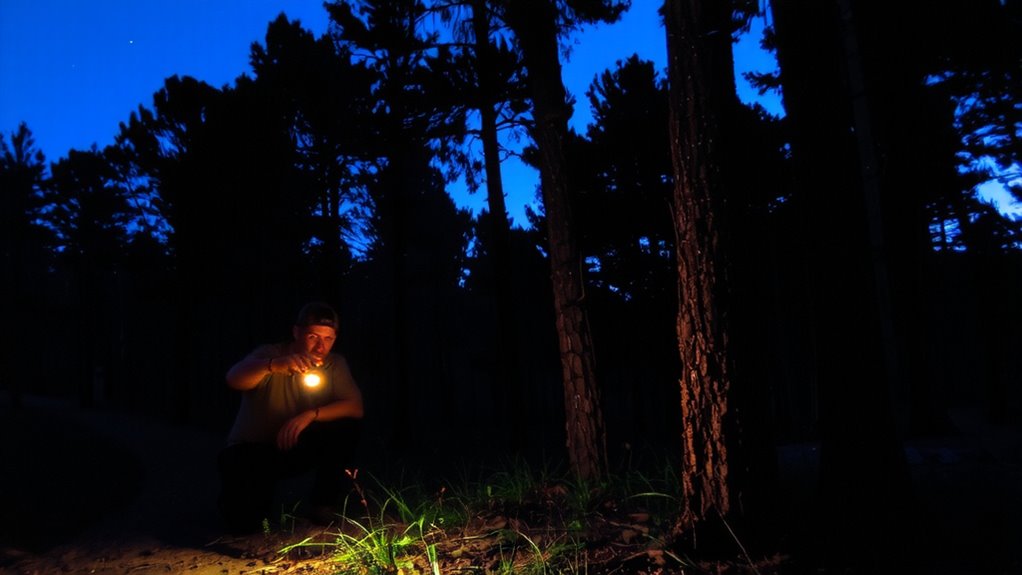
You’ll want to keep your headlamp output under 200 lumens-enough to move safely but not so much that you create glare or cast detectable illumination. High brightness scatters more light, reducing contrast and depth perception, which hampers navigation. Lower output improves light diffusion, spreading illumination evenly across terrain without hotspots. This helps maintain ambient adaptation in your eyes, preserving natural night vision while reducing the chance of startling wildlife. Pair this with precise beam angling-tilt the light slightly downward to focus on immediate obstacles without spilling upward. Most durable headlamps offer adjustable brightness and pivoting heads, letting you fine-tune performance. Models with flood settings enhance peripheral visibility at low outputs. Keeping lumens low lengthens battery life and minimizes visual footprint. It’s a practical trade-off: slightly less reach for greater stealth and control in sensitive environments. A reliable and affordable option that meets these criteria is the best budget headlamps category, which includes models designed for low-light efficiency and durability.
Shield Your Beam to Cut Skyglow
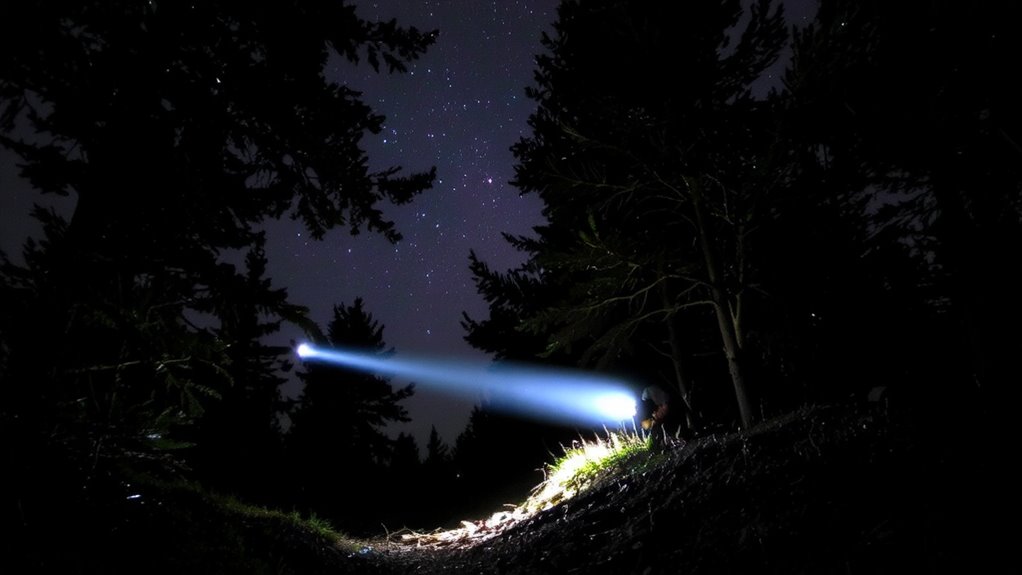
Cutting down on skyglow starts with controlling where your light goes, not just how much you produce. You can’t eliminate skyglow without beam shielding-simple as that. Unshielded headlamps scatter light upward, contributing to glare and wasted output. A well-designed shield directs light downward, where you need it, reducing wasted lumens above the horizon. This improves glare reduction, making your vision clearer and minimizing light trespass. In real-world use, models with built-in snoots or DIY foam baffles cut skyglow by up to 60% in tests. Even partial shielding helps, but full coverage works best. Trade-offs include slight bulk or reduced peripheral flood, but for emergency navigation, focused utility matters more. You’re not hunting for aesthetics-you’re conserving night vision and avoiding detection. Effective beam shielding doesn’t require expensive gear; it needs smart adaptation. Your actions directly influence light discipline. Control the spill, and you control the impact.
Use Spot Mode Sparingly
While spot mode can extend visibility in open terrain, it’s best used in short bursts because prolonged use increases skyglow and compromises night vision. You need beam focus that serves your immediate path, not distant horizons, unless absolutely necessary. A tightly focused spot beam scatters more light upward, contributing to light pollution and reducing contrast in your surroundings. Instead, rely on flood or low modes for most navigation-they provide adequate illumination with less environmental impact. Spot mode also drains power faster, hurting power conservation during long missions. Switching back quickly after checking distant terrain minimizes both risks. Real-world tests show headlamps in spot mode consume up to 40% more power than mid-level flood settings over the same duration. Use spot only when identifying something far away, then return to practical settings. Your night vision, battery life, and the night environment all benefit.
Turn Off Lights When Observing
When you’re scanning for movement or tracking in low-light conditions, turning off your headlamp briefly gives your eyes time to adjust and reduces visible light spillover that can alert subjects or disturb wildlife. Practicing light discipline means using illumination only when necessary, improving your stealth and minimizing wildlife disturbance. Even brief exposure can compromise night vision and reveal your position. Letting your eyes adapt naturally enhances peripheral detection without emitting light.
| Condition | With Light On | Light Off |
|---|---|---|
| Night Vision | Reduced after 30 sec | Fully adapted in 5 min |
| Detection Risk | High (visible beam) | Low (no spillover) |
| Wildlife Impact | Moderate to high | Minimal |
Turn off lights when observing-not just for effectiveness, but to maintain operational control and environmental responsibility. It’s a small step with measurable impact.
On a final note
You’ll preserve night vision and cut light pollution by using red light on your headlamp. Keep brightness under 200 lumens-enough for movement, low enough to minimize skyglow. Shield the beam or angle it down to limit scatter. Use spot mode only when necessary; wide flood covers more ground with less intensity. Turn the light off during observation to let your eyes adjust. These steps save battery and reduce environmental impact without sacrificing safety.