How to Plan for Evacuation When You Have a Service Animal That Requires Medication
Keep your service animal’s meds ready with a waterproof, crush-proof kit holding a 7-day supply in labeled, airtight bags. Store insulin or temperature-sensitive drugs in an insulated bag with ice packs or a portable cooler powered by a 12V battery, tested under real conditions. Carry printed medical records, laminated med lists, and vet contacts. Confirm shelter policies that accept service animals ahead of time. Practice full evac drills with your kit-timing reveals gaps. You’ll see how simple prep improves outcomes when conditions get tough.
Notable Insights
- Prepare a 7-day supply of prescribed medications in a waterproof, crush-resistant container labeled by date and time.
- Keep digital and printed medical records, including vaccinations, prescriptions, and vet contact information, readily accessible.
- Identify and pre-verify animal-friendly emergency shelters or backup lodging that accept service animals.
- Use insulated, temperature-controlled storage with portable power to maintain medication stability during evacuation.
- Conduct regular evacuation drills with your service animal, practicing medication handling and route navigation under real conditions.
Create a Medication Kit for Your Service Animal
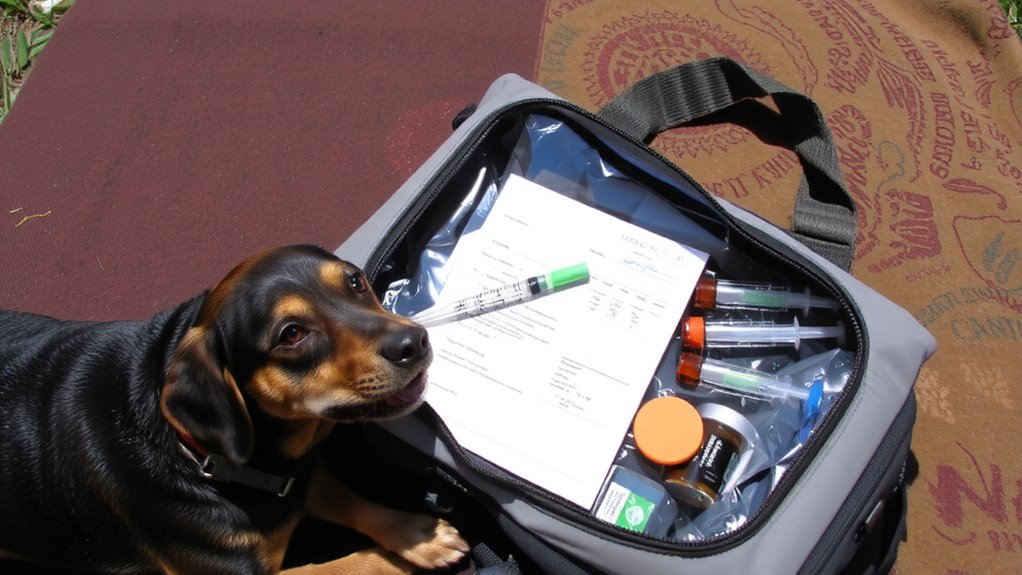
Start with a dedicated medication kit that holds at least a 7-day supply of your service animal’s prescribed drugs, since emergencies can delay access to refills. Use a waterproof, crush-resistant container to guarantee medication storage remains intact during transport. Organize pills in labeled, airtight bags by date and time to support accurate dosage tracking. Include a printed log that records administration times, dosages, and any observed side effects, updated daily. Pair this with a small digital alarm or phone-based reminder set to repeat every 12 or 24 hours, depending on the dosing schedule. Don’t rely solely on memory or phone apps that may fail without power. A physical checklist clipped to the kit allows verification under stress. Rotate stock every three months to prevent expiration. This system minimizes errors, supports consistency, and withstands disrupted routines. You’re not preparing for convenience-you’re guaranteeing survival-level reliability.
Have Medical Records Ready for Evacuation
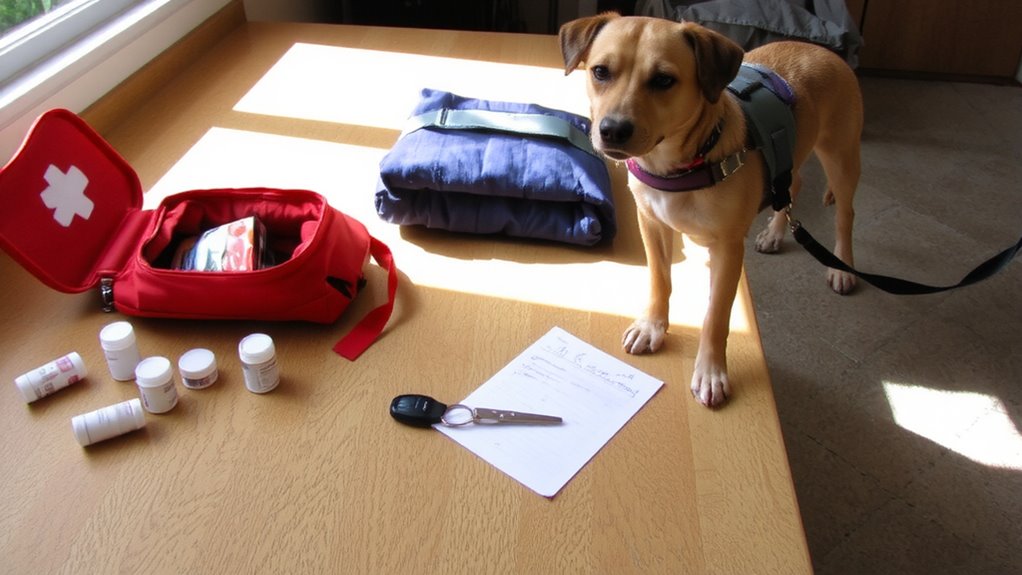
Your service animal’s medical records are a survival tool-treat them like your emergency kit. You’ll need them for legal documentation and prescription verification during evacuations. Keep digital and physical copies secure but accessible. Include vaccination history, medication details, and vet contact info. Authorities or shelters may require proof of medical need or current treatment plans.
| Record Type | Purpose | Format to Keep |
|---|---|---|
| Vaccination Proof | Meets health regulations | PDF & printed copy |
| Medication List | Guarantees continuity of care | Laminated sheet |
| Vet Contact Info | Emergency consultations | Phone & email saved |
| Service Animal ID | Supports legal documentation | Photo & original |
| Prescription Rx | Required for prescription verification | Copy from pharmacy |
Losing access to these delays care. Update them every six months.
Find Animal-Friendly Emergency Shelters
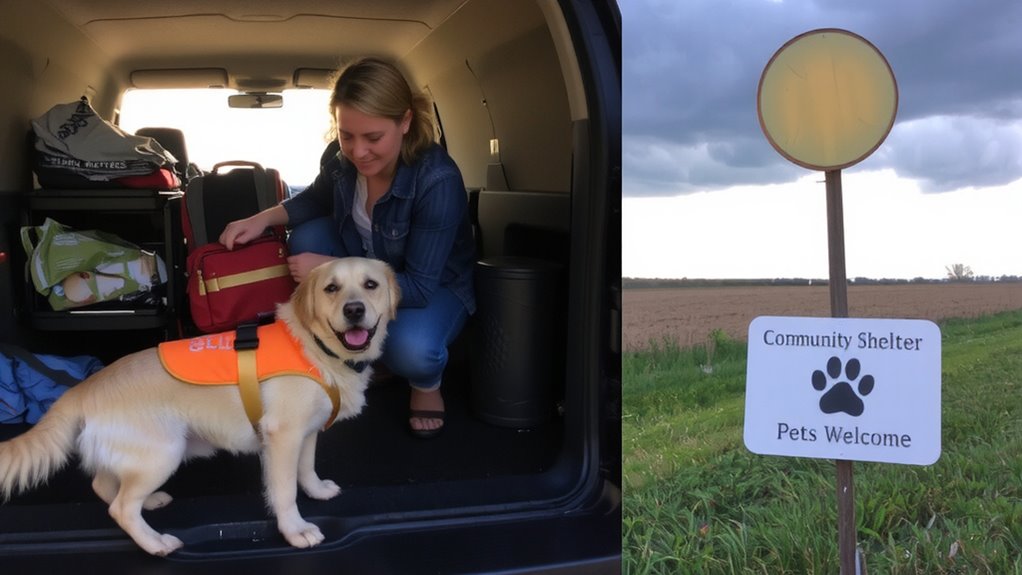
Where will you go when evacuation orders drop and your service animal can’t be left behind? Start by researching animal-friendly emergency shelters now. Not all shelters accept animals, so checking shelter availability in advance is critical. Look up local Red Cross shelters, community centers, and government-run facilities, but verify their pet policies-some allow only service animals, not pets. Call emergency management offices to confirm where your animal is welcome. Many general shelters don’t provide separate spaces for animals, which can cause stress or access issues. Alternative options include motel lists with pet-friendly policies or pre-arranged veterinary clinics that permit short-term stays. Don’t wait until evacuation day-by then, shelter availability may be limited or full. A proactive search guarantees you won’t be stranded without safe, legal lodging that accommodates both you and your service animal under real-world emergency conditions.
Maintain Power and Climate for Medications
Once you’ve secured shelter options that accept your service animal, consider how you’ll keep any required medications stable during an evacuation. Temperature control is critical-many medications degrade if exposed to heat or cold outside recommended ranges. Use insulated medication bags with ice packs or heating elements, depending on the environment. For long-term needs, a portable power source paired with a small cooler or medical-grade travel fridge offers refrigeration backup. Devices like battery-powered coolers with DC/AC adaptability maintain internal temps for up to 12 hours on a single charge, provided ambient conditions stay within 35–95°F. Solar chargers can extend runtime but depend on daylight. Standard coolers with ice last 4–6 hours in moderate climates but require frequent ice replacement. A reliable power solution includes using a 12V solar battery charger to maintain consistent energy for cooling devices during extended outages. Test your system in advance under realistic conditions so you know its limits. Planning guarantees your meds stay effective when stability matters most.
Practice Your Evacuation Plan With Your Animal
A trial run is the best way to spot gaps in your evacuation strategy, especially when your service animal depends on medication. Conduct emergency drills regularly to test how well you and your animal follow evacuation routes under stress. Time each drill to track improvements and identify delays, such as handling medication storage or accessing mobility aids. Use the same exit paths you’d use in a real emergency, including stairs, elevators, or alternate exits, to assess physical demands. Include your complete go-bag and medication kit-verify that everything stays secure and within temperature limits. Practice in different conditions, like low light or crowded hallways, to simulate real disruptions. Adjust routes or procedures based on what the drills reveal. Repeating this process builds consistency, reduces panic, and guarantees both you and your animal respond efficiently when it matters.
On a final note
You need meds for your service animal, so pack them in a labeled, insulated case with a cold pack if required. Keep records digital and printed. Confirm shelters allow service animals and stock backups. Test your evacuation route monthly-delays happen. Power loss risks refrigerated meds, so use verified coolers. A practiced plan beats improvisation every time. Your animal’s health depends on consistency, not guesses. Plan precisely.