Developing a Language-Specific Emergency Contact List for Multilingual Families
You need a language-specific emergency contact list because misunderstandings during crises can delay care or lead to wrong decisions-studies show medical errors rise by up to 50% when languages don’t match. Pick one reliable person per household language, someone calm and reachable who knows your routines. Store their name, number, preferred app, and language in your phone, on printed cards, and in cloud files. Update this list every six months or after big changes. Practice using it with all family members in their native language to build quick, clear responses under stress-there’s more to contemplate when matching contacts to real-life emergencies.
Notable Insights
- Identify a trusted contact for each language spoken in the family to ensure clear emergency communication.
- Match each contact with cultural understanding and familiarity with family routines for effective support.
- Record each contact’s name, relationship, primary language, phone number, email, and preferred app.
- Store the list in multiple formats-phone groups, printed cards, and secure cloud files-for easy access.
- Update all contacts immediately after changes and confirm accuracy across devices and emergency records.
Recognize the Danger of Language Gaps in Emergencies
Silence can be deadly when help arrives but no one understands. You face serious miscommunication risks during emergencies if language barriers block clear exchange. First responders may speak only English, while a family member might only understand Mandarin or Tagalog. That gap can delay treatment, distort symptoms, or lead to wrong decisions. Studies show language discordance in medical settings increases error rates by up to 50%. You can’t rely on gestures or guessing under stress. Simple misunderstandings-like dosage instructions or allergy alerts-become life-threatening. Even basic questions about chest pain or breathing difficulties get lost. These risks aren’t hypothetical; they happen in homes every day. You need a plan that bridges comprehension immediately. A prepared contact list in each spoken language reduces confusion. It’s a practical step that counters real-world flaws in emergency response. The cost of skipping it? You might not get a second chance.
List Who to Call in Each Family Language
Your family’s safety depends on clear communication, so start by identifying who can speak each language represented in your household. Match each language to a reliable contact who understands both cultural traditions and personal preferences. This guarantees instructions are followed correctly during high-stress moments. Choose people who are reachable, calm under pressure, and familiar with your family’s routines.
| Language | Primary Contact |
|---|---|
| Spanish | Aunt Maria |
| Mandarin | Uncle Wei |
| Arabic | Neighbor Samir |
| French | Cousin Léa |
| Tagalog | Grandma Rosa |
These contacts don’t need to be relatives-personal preferences matter. Some may align with cultural traditions, like relying on elders. Others may reflect logistics, like proximity or phone access. The goal is clarity, not conformity. Pick the right person for each language, not the obvious one.
Build Your Language-Specific Emergency Contact List
Clarity matters most when seconds count. You need a language-specific emergency contact list that reflects your family’s language preferences and cultural considerations. Start by listing each person’s name, relationship, and primary language. Include phone numbers, email addresses, and any preferred communication apps like WhatsApp or WeChat. Note which family members speak which languages fluently-this avoids delays during crises. Account for cultural considerations, such as trusted elders or community leaders who may serve as intermediaries. Store the list in multiple accessible places: a phone contact group, a printed card, and a shared cloud file. Update it every six months or after any major family change. A well-structured list reduces confusion, guarantees accurate message delivery, and respects how your family actually communicates. It’s not just who you call-it’s how and in what language they understand you.
Practice the Plan With Kids and Elders
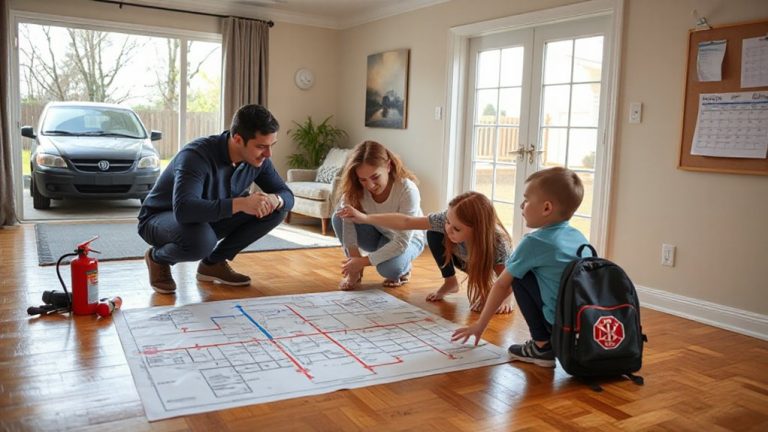
How do you make certain everyone in your family can act quickly when an emergency strikes? Practice the plan with kids and elders regularly using role playing and safety drills. Children may freeze under stress, so rehearsing steps in their home language improves response time. Elders might struggle with new instructions, making repetition essential. Conduct drills at least once a quarter, simulating fire, storm, or medical emergencies. Use the language each person understands best during training. Role playing helps identify gaps-like delayed reactions or confusion over contact names. Adjust the plan based on these observations. Drills should last 5–10 minutes, focusing on escaping, calling contacts, and meeting safely. Practice using actual phones to dial, reinforcing muscle memory. These exercises aren’t perfect, but they improve clarity and coordination. Consistent practice increases the odds everyone responds correctly when it matters.
Update Contacts After Moves or Number Changes
When you move to a new home or someone in your family changes their phone number, updating emergency contacts isn’t optional-it’s necessary. Outdated info delays response times, especially in multilingual households where language barriers already complicate communication. You must act immediately to guarantee contact updates are recorded in every relevant place: phones, printed lists, school forms, and medical records. Assign one family member to manage family notifications so everyone gets the new details in their preferred language. Test updates by making a call or sending a confirmation text. Store changes in a shared, secure digital space accessible to all adults. Use labeled folders or apps with language tags for clarity. Delayed contact updates create preventable risks. A one-day lag can mean a missed emergency call. Consistency reduces confusion. Update within 24 hours. Verify twice. This system works only if it’s current.
On a final note
You need a working emergency list in every language your family uses. It cuts confusion when seconds count. List key contacts with clear labels and language tags. Test it with kids and elders to confirm understanding. Update after moves or number changes. A well-maintained list isn’t fancy, but it performs-every time, under pressure. Skip the extras; focus on clarity, access, and accuracy. That’s what keeps everyone safe.