How to Plan for Evacuation When You Have a Severe Allergy
You must plan for allergen exposure during evacuation because dust, shared transport, and crowded shelters increase anaphylaxis risk. Always carry two epinephrine auto-injectors on your person-never in luggage-and store them at room temperature. Pack freeze-dried or canned allergy-safe food with clear labels, rotating every six months. Wear a durable medical ID with allergen details and a fast-loading QR code. Choose evacuation routes and shelters that avoid pets, food vendors, and high-dander zones, confirming status ahead of time-smart prep could save your life.
Notable Insights
- Carry two epinephrine auto-injectors on your person, stored at room temperature and accessible within seconds.
- Pack allergy-safe, long-shelf-life food in labeled, sealed containers and rotate stock every six months.
- Wear a durable medical ID with engraved allergens and a QR code linking to your emergency medical profile.
- Choose evacuation routes and shelters that avoid allergen triggers like pet facilities, food vendors, and high pollen areas.
- Verify shelter allergen policies in advance and identify at least one backup pet-free, medical-accessible location within 10 miles.
Identify Allergy-Specific Evacuation Risks
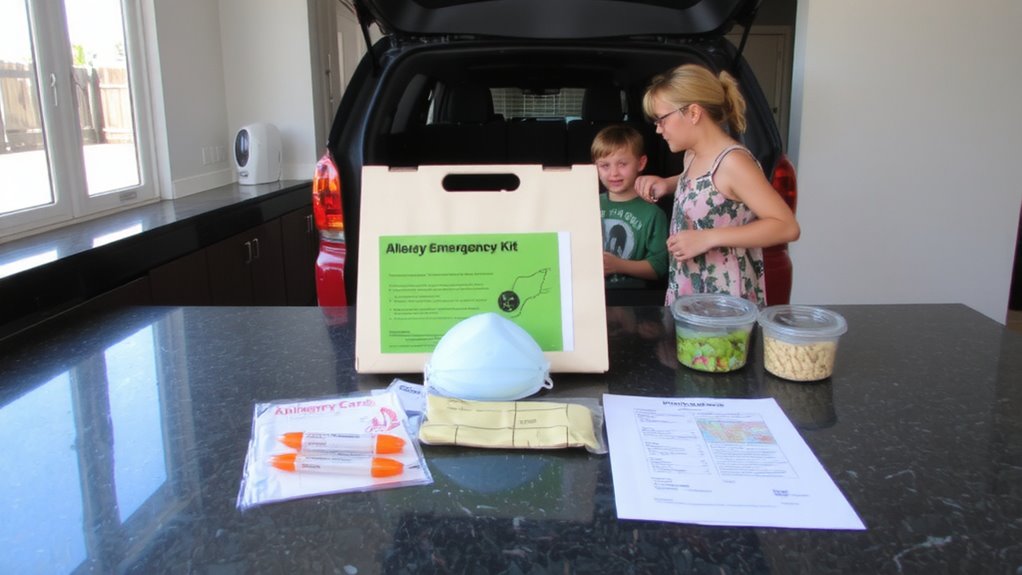
Timing can make the difference between a safe evacuation and a medical emergency when you’re managing a severe allergy. You need to identify risks that increase your chance of allergen exposure during evacuation. Common triggers-like dust in older buildings, shared transportation, or contaminated shelters-can pose real threats. Know the layout of your route and shelter options ahead of time; some may lack allergen-free zones. Poor ventilation and crowd density raise exposure risk. Emergency communication systems don’t always broadcast allergy-specific alerts, so relying solely on public announcements is dangerous. You must proactively communicate your needs to authorities and companions. Carry written instructions with allergen details and emergency contacts. Test your communication tools regularly-battery life, signal range, and clarity matter under stress. Planning around these factors reduces uncertainty. Success isn’t luck; it’s measuring risks, preparing responses, and acting early.
Grab Your Epinephrine First: Every Time
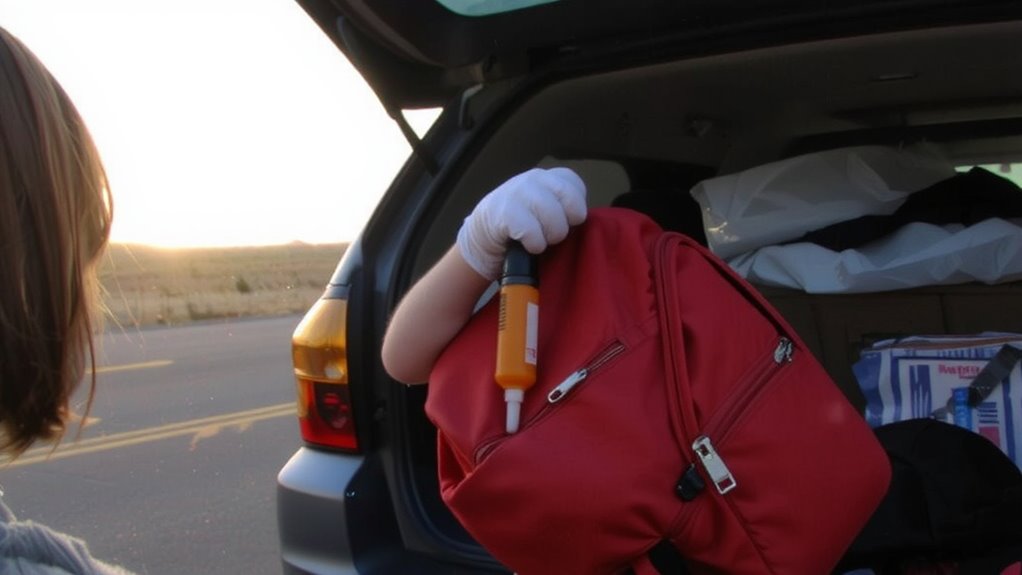
Always grab your epinephrine first-every time-because seconds count when an allergic reaction starts. You can’t afford delays if breathing becomes difficult or blood pressure drops. Epinephrine is your first-line treatment, and having it immediately available could mean the difference between survival and catastrophe. Make certain your auto-injector is stored properly-epinephrine storage matters, as extreme heat or cold degrades the medication. Keep it at room temperature and replace it before expiration. Never pack it in checked luggage or leave it in a car. Design your evacuation plan around emergency access: carry at least two doses on your person, not in a bag that could get lost. Practice drawing it quickly. A waistband case or front pocket allows faster reach than a backpack. Simplicity saves time. Epinephrine accessibility isn’t optional-it’s essential.
Pack Allergy-Safe Emergency Food
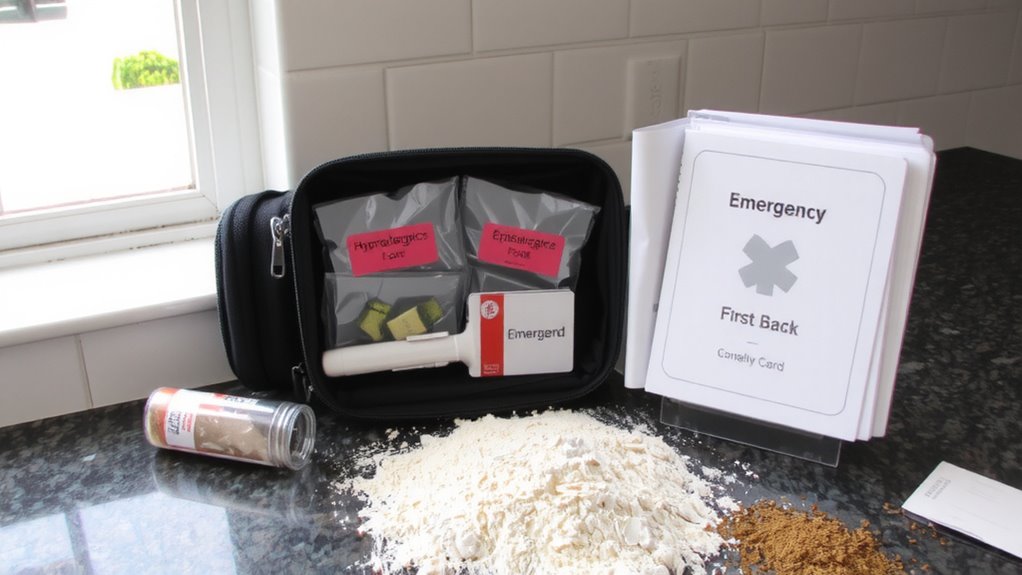
You’ve secured your epinephrine-now make sure you won’t trigger a reaction by accident when you’re stuck without safe options. Emergency food must meet strict food safety standards: no cross-contact, clear labeling, and long shelf life. Focus on meal prep that avoids allergens entirely-don’t rely on “may contain” guesses. Stick to single-ingredient or certified allergy-safe products you’ve tested before. Below are reliable choices ranked by shelf life, portability, and allergen risk:
| Food Type | Shelf Life | Allergen Risk |
|---|---|---|
| Freeze-dried meal (certified) | 25 years | Low |
| Canned fruit (no added syrup) | 18 months | Low |
| Granola bar (DIY) | 3 months | Medium |
Commercial options save time, but DIY gives control. Rotate stock every six months. Store in sealed, labeled containers away from heat. Proper meal prep now prevents risky compromises later. Consider selecting from top-rated emergency food buckets for pre-assembled, allergy-conscious kits that meet long-term storage needs.
Label Your Medical Info for First Responders
A clear medical ID can make the difference in seconds when you’re unable to speak. Medical labeling guarantees first responder access to your critical allergy details during emergencies. Use a durable bracelet or necklace with laser-engraved text listing your allergens, such as “Severe Peanut Allergy” or “Anaphylaxis to Shellfish.” Standardized symbols, like a red alert emblem, improve recognition under stress. Some IDs include QR codes linking to digital profiles with emergency contacts and medical history-verify these load in under five seconds on mobile devices. Avoid fabric bands; they degrade in heat or rain. Metal or silicone tags last longer and remain legible. First responders are trained to check wrists and necks within initial triage seconds, so placement matters. Test visibility in low light. Proper medical labeling doesn’t replace communication but supports it when you can’t speak. It’s a minimal cost safeguard with measurable impact during critical moments.
Choose an Allergy-Safe Evacuation Route and Shelter
If you’re managing a severe allergy, picking an evacuation route and shelter isn’t just about distance or speed-it’s about minimizing exposure risk when every minute counts. Use allergy mapping to identify high-risk zones, like areas with common allergens such as nuts, pollen, or pet dander, and route around them. Stick to highways or streets with fewer food vendors or animal shelters. Confirm all potential shelters through shelter verification-call ahead or check online for pet-free, allergen-aware facilities. Not all emergency shelters accommodate allergies, so relying on standard listings isn’t enough. Choose public buildings like schools or community centers with controlled access and prior cleaning records. Keep backup shelters identified within a 10-mile radius. Your route should have minimal stops and direct access to medical care. Allergen exposure during evacuation increases risk; planning reduces it.
Run a Realistic Allergy Emergency Rehearsal
How prepared are you when seconds matter? A realistic allergy emergency rehearsal tests your actual readiness. Use practice scenarios that mimic real threats-like accidental exposure during evacuation. Time each response to measure speed and efficiency. Response timing matters because delays can turn mild symptoms into life-threatening situations. Start the drill with an alarm or verbal cue, then follow your emergency plan exactly. Guarantee epinephrine auto-injectors are accessible, not buried in a bag. Test communication-can everyone alert help clearly? Repeat drills under different conditions: daytime, night, different locations. Adjust based on what the practice scenarios reveal. Refine steps that cause hesitation or delay. A well-timed, practiced response isn’t luck-it’s the result of deliberate repetition. Evaluate what works, what doesn’t, and update your plan. Rehearsal turns preparation into action when hesitation isn’t an option.
On a final note
You’ll move faster and safer if you plan ahead. Grab your epinephrine first-every time-because seconds count. Pack sealed, allergy-safe food and clearly label medical info so first responders act correctly. Pick shelters and routes free of your allergens, not just the nearest option. Run a drill to spot gaps. A realistic rehearsal cuts panic and reveals what works. Preparedness isn’t optional; it’s what keeps you alive.