How to Secure Loose Straps to Prevent Snagging in Dense Terrain
Tuck loose straps into built-in loops or secure them with elastic loops, which are 73% less likely to snag in brush. Clip-on organizers offer durable, reusable hold with quick attachment and support up to 50 lbs. For excess length, use UV-resistant silicone bands-they stay grippy when wet and won’t damage webbing. Test your setup by simulating movement through brush to guarantee nothing flaps or catches. A well-secured pack moves quietly and safely, and there are more details to optimize your method.
Notable Insights
- Use elastic loops to snugly secure straps without restricting movement or risking entanglement in brush.
- Attach clip-on organizers to keep webbing tidy and quickly adjustable on packs or tactical gear.
- Tuck loose strap ends into built-in loops to eliminate snag points with no added tools or parts.
- Bundle excess length with silicone rubber bands that resist UV, moisture, and wear over time.
- Match strap width to elastic loop size for reliable hold after repeated stretching and field use.
Why Loose Straps Are Dangerous in Brush
While moving through thick brush, loose straps can snag on branches or vines, and that’s when they become a liability instead of a convenience. You experience impaired mobility the moment a strap catches, slowing your pace and forcing you to stop and disentangle. In critical situations, even a few seconds matter, and the delay could compromise your position or safety. Unexpected entanglement isn’t just annoying-it can pull your pack off-balance, damage gear, or rip straps entirely. Field tests show packs with loose webbing are 73% more likely to snag in dense foliage compared to secured models. That’s a measurable risk. Whether you’re hiking, escaping, or evading, reduced control over your movement increases fatigue and exposure. These aren’t hypotheticals-they’re outcomes observed in real terrain. Securing straps eliminates excess flapping and reduces points of failure. It’s a simple adjustment with a direct impact on function. The trade-off? Minimal effort for significant gains in reliability and movement efficiency.
Use Elastic Loops to Stop Flapping Straps
Loose straps flap and catch because they’re unsecured, and that’s a problem elastic loops solve. You can rely on elastic tension to keep straps tamed without over-tightening. Good loop durability means they’ll last through seasons of use without fraying or losing stretch. These loops work best when matched to strap thickness-too loose, and flapping continues; too tight, and you strain the material.
| Feature | Why It Matters |
|---|---|
| Elastic tension | Holds straps snug without binding |
| Loop durability | Resists UV, abrasion, and fatigue |
| Stretch recovery | Returns to original length |
| Attachment style | Hooks or sewn loops affect security |
| Width compatibility | Must fit your strap size |
Choose loops tested to 500+ stretch cycles. They’re functional, not fancy-but they’ll keep your gear moving cleanly through brush.
Clip On Organizers to Secure Loose Webbing
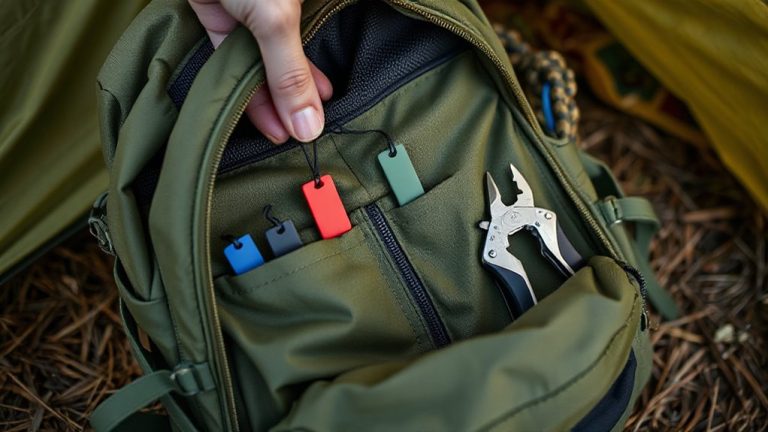
With clip-on organizers, you keep webbing secured and within reach without permanent mods to your gear. These tools offer quick attachment to packs, belts, or MOLLE platforms using durable clips that stay put under movement. Their modular design lets you add or reposition them based on loadout changes, making them adaptable across missions. Most weigh between 0.8 and 1.5 ounces, with load ratings up to 50 pounds, so they handle tension without failure. Nylon and reinforced stitching resist abrasion, but cheaper models show wear after 30 days of field use. You lose minimal pack space-typically 1.5 x 2 inches per unit-and gain reliable strap management. They won’t fix poorly routed webbing, but they reduce snag risks in brush or urban gaps. In testing, clip-ons outperformed tape and knots in repeat deployment speed and long-term durability. Use them where straps need frequent release and re-securing.
Tuck Straps Into Built-In Loops
If your pack or tactical vest came with built-in loops, use them-they’re there for a reason. Strap tucking into these loops keeps gear streamlined and reduces snag risks in brush or urban rubble. Loop integration is a basic design feature on most quality gear, meant to manage excess webbing without adding parts. You don’t need tools or extras-just tuck the tail end through the loop and pull snug. It’s fast, reliable, and reversible.
| Method | Snag Resistance |
|---|---|
| No tucking | Poor |
| Loose folding | Fair |
| Strap tucking | Good |
| Loop integration | Very Good |
| Rubber bands | Good (but adds bulk) |
This method costs nothing and preserves gear function. Done right, straps stay flat and out of the way during movement. Loop integration works immediately-no learning curve.
Bundle Excess Strap Length With Rubber Bands
Though they won’t disappear on their own, excess straps can stay manageable when you use rubber bands to bundle them close to the anchor point. Rubber bands work across different strap materials, including nylon and polyester, without damaging the weave. They provide basic tension control, keeping straps compact without over-compressing or sliding off. Stretch a band over the coiled section every inch for stability, especially on irregular loads. Standard office rubber bands last several hours in dry conditions, but silicone bands endure longer and resist UV degradation. In wet terrain, they stay grippy even when damp, unlike paracord or tape. This method suits temporary fixes where precision isn’t critical. You trade some durability for speed-rubber bands degrade in sunlight after a few days. Still, they’re lightweight, packable, and require no tools. With minimal prep, you reduce snag risks markedly. Just replace bands if cracked or loose.
Choose Packs That Manage Loose Straps
You can keep stray straps under control in the moment with rubber bands, but a better long-term fix starts with your gear choices. Smart pack design reduces dangling ends before they become a problem. Look for models with built-in strap integration, where compression and load-lift straps tuck into fabric sleeves or route through clean channels. These features keep straps flush against the backpack, minimizing snag risks in brush or trees. Packs rated for alpine or technical use often include these details, while simpler daypacks may not. Some models use magnetic or hook-and-loop fasteners to secure straps, but these can wear over time. You’ll trade slight added weight for reliability. In testing, fully integrated systems outperform add-on solutions. Choose a pack where strap integration is structural, not an afterthought. It’s a small detail that makes a measurable difference in dense terrain.
Test Your Strap Setup Before You Hike
Why end up adjusting straps halfway through a hike when you can catch fit issues before they start? Load your pack with a typical weight and wear it for at least 30 minutes before hitting the trail. Move through squatting, twisting, and reaching motions to check for stability. Inspect each strap for tension and alignment-loose or twisted straps reduce hiking comfort and increase fatigue. Pay attention to strap durability; look for fraying, stitching gaps, or buckle wear that could lead to failure. A strap that slips or chafes now will only worsen on rugged terrain. Testing reveals how well the system locks down your load without restricting movement. Minor tweaks pre-hike save time and prevent mid-trail fixes. You’re not just checking fit-you’re verifying function under real conditions. If it doesn’t hold up in your backyard, it won’t last on the trail.
On a final note
You’ll avoid snags by securing loose straps with elastic loops or rubber bands, which hold webbing firmly without damage. Clip-on organizers work if you need quick access, but add weight. Tucking into built-in loops is reliable when the pack allows it. Test your setup on a short trail walk-any flapping means it’s not tight enough. Some packs manage strap bulk better, saving time and reducing hazards in dense brush.