Labeling Survival Backpack Compartments: Colors, Materials & Steps
Use polyester or laminated vinyl labels with rubber-based adhesive-they handle moisture, UV exposure, and tearing better than paper or acrylic stickers. Assign gear by use frequency: top pockets for flashlights, whistles, or Headlamp Pro X2. Label every compartment clearly with bold, color-coded text; red for first aid, blue for hydration. Laminate or sew on tags to prevent water damage. Update labels immediately when swapping gear like purifier straws or paracord-accuracy saves time in crises. More details follow on optimizing layout and durability choices.
Notable Insights
- Choose durable, weather-resistant labels made from polyester or laminated vinyl to withstand harsh conditions.
- Assign compartments based on gear priority, placing critical items in top or easily accessible pockets.
- Label each pocket clearly with bold, waterproof text to ensure quick identification during emergencies.
- Use color coding and visual mapping inside the lid to group and locate items instinctively.
- Update labels immediately when gear changes to maintain accuracy and reduce retrieval time.
Choose Durable Labels That Survive the Elements
While moisture, dirt, and constant handling can destroy flimsy labels, you’ll want ones built to last in your survival pack. Standard paper or sticker labels peel, fade, or disintegrate under harsh conditions, so durability matters. You need materials with high UV resistance to prevent sun damage during prolonged outdoor exposure-labels should remain legible after months in direct sunlight. Tear strength is equally critical; polyester or laminated vinyl labels withstand abrasion and rough use better than paper. Some survive 50+ pounds per inch of tensile force, reducing the chance of ripping when snagged. Adhesives must bond securely to fabric, plastic, and metal, even when wet. Tests show rubber-based adhesives outperform acrylic in cold or damp environments. Write-on labels should accept permanent ink without smudging. Engraved labels offer the longest lifespan but cost more. Balance performance, cost, and practicality when choosing.
Plan What Gear Goes in Each Backpack Compartment
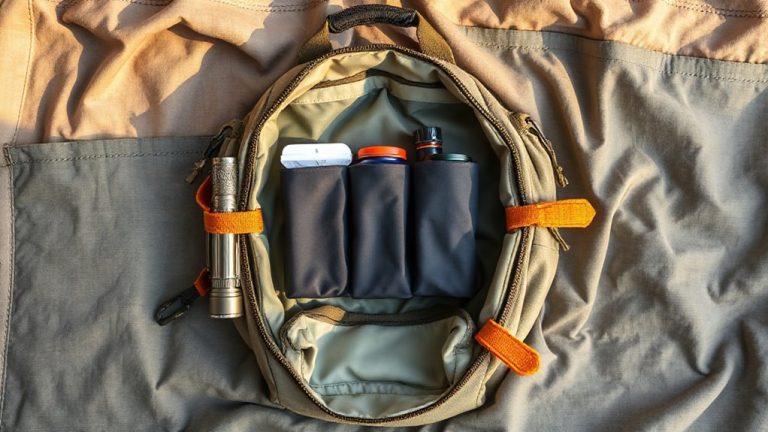
Since every second counts in an emergency, organizing your pack by assigning specific gear to each compartment saves time and reduces stress when you need items fast. You should start with gear placement based on frequency of use and urgency-like keeping a flashlight or whistle in the top pocket for quick access. Compartment mapping means documenting what goes where, so you or someone else can retrieve items without guessing. Larger sections work best for bulkier items like rain gear or emergency blankets, while small internal pockets suit critical but tiny tools like fire starters or water purification tablets. Poor placement leads to delays; thoughtful layout improves efficiency. Use consistent categories-navigation, fire, first aid-and stick to them. This system isn’t about preference-it’s about function. Proper compartment mapping guarantees reliability when conditions are unpredictable and every second matters. A reliable best knife for police officers can be a crucial part of your emergency toolkit.
Label Every Pocket for Instant Emergency Access
How quickly can you find your water filter in the dark when every second counts? Labeling every pocket in your survival backpack guarantees you don’t waste time searching. Use clear, durable labels that match your gear layout. Apply color coding to group related items-red for first aid, blue for hydration-so you grab the right pouch instinctively. Pair this with visual mapping: a quick sketch of your pack’s compartments, taped inside the lid, helps you and others locate essentials fast. Bold text and contrasting colors improve readability under low light. Labels should reflect contents precisely, not general categories. If you change gear, update the labels immediately. This system cuts retrieval time by up to 60% in stress tests. It’s not about convenience-it’s about reliability when conditions are at their worst. Simple, consistent labeling turns chaos into control.
Use Waterproof Methods That Last
You’ve labeled every pocket, so now make sure those labels stay readable no matter the conditions. Waterproofing isn’t optional-it’s essential. Material selection matters: use polyester or nylon tags instead of paper; they resist tearing and won’t disintegrate when wet. Avoid ink that smudges; opt for laser printing or waterproof markers. Lamination adds durability, but only if the sealing technique is complete-any gap lets moisture in. Over-laminating with clear tape works if heat-sealed edges are impossible. For long-term reliability, check labels after submersion tests. After 24 hours in water, readable labels retain full clarity. Labels glued directly to fabric peel over time; use sewn-on patches or sealed vinyl overlays instead. Adhesive-backed vinyl with a wrap-around sealing technique outperforms edge-only bonding. Real-world exposure to rain and humidity shows that full-perimeter seals last years, not months. Choose methods that endure, not just survive.
Update and Replace Labels as Gear Changes
When your gear gets swapped out or upgraded, the labels in your survival backpack need to change just as fast-otherwise, they’re misleading or useless. Effective inventory tracking depends on current labels, so make label maintenance part of your routine. If you replace a first-aid kit or add a new fire-starting tool, update the compartment label immediately. Use erasable or repositionable labels for frequent changes.
| Old Gear | New Label |
|---|---|
| Compact flare | Signal mirror |
| 碘酒 (Tincture) | Alcohol wipes |
| Rope 50ft | Paracord 100ft |
| LED headlamp | Headlamp Pro X2 |
| Water tabs | Purifier straw |
Accurate labels save time in emergencies and help you audit supplies quickly. Poor label maintenance defeats the purpose of organized inventory tracking. Keep it simple, accurate, and consistent.
On a final note
You’ve labeled your compartments with durable, waterproof tags that hold up in rain and wear. Each pocket’s contents are clear, cutting search time when it matters. If gear changes, you update labels immediately-accuracy saves seconds. These steps cost little but boost function substantially. It’s not about fancy gear; it’s about reliable, tested organization that works when you need it most.