How to Sterilize Foraging Tools to Prevent Bacterial Transfer to Edible Plants
You should sterilize your foraging tools to stop bacteria from spreading to edible plants. Wipe blades with a lint-free cloth dampened in 70% isopropyl alcohol-it kills most pathogens in a minute and leaves no residue. For deeper cleaning, boil metal tools for 5 minutes or use a 10% bleach solution, but rinse well and watch for corrosion. Carry alcohol in the field for quick cleanups, and always let tools air-dry fully. Store them in sealed, labeled containers to avoid recontamination. There’s more to optimize in your routine.
Notable Insights
- Boil foraging tools for 5 minutes to effectively sterilize them and minimize microbial contamination.
- Use 70% isopropyl alcohol to disinfect tools quickly; it kills bacteria and evaporates without residue.
- Soak tools in a 10% bleach solution for 30 seconds, then rinse thoroughly to prevent plant damage.
- Clean tools in the field with alcohol-dampened cloths and a stiff brush to remove debris and pathogens.
- Store sterilized tools in sealed, labeled containers to prevent recontamination before reuse.
Disinfect Foraging Tools: Why It’s Essential
Hygiene isn’t optional when you’re gathering food from the wild-it’s a baseline requirement. You’re exposing edible plants to risk every time you use a dirty tool. Without regular tool inspection, debris and residue accumulate in crevices, creating ideal conditions for microbial growth. That gunk isn’t just dirt-it can harbor harmful bacteria and fungi that transfer to your foraged harvest. Even tools that look clean can carry invisible contaminants. You’re not just collecting food; you’re managing a chain of contact where each point must be controlled. Consistent disinfection reduces cross-contamination, especially when moving between sites or plant types. Neglecting this step compromises safety, regardless of how carefully you identify species. Tool inspection isn’t about appearance-it’s a functional check to catch wear, corrosion, or material gaps where pathogens hide. Assume every tool is contaminated post-use. Your diligence between uses directly determines the sanitary integrity of your foraging practice. Skip shortcuts-microbial growth starts fast, and consequences follow.
Sterilize Knives and Scissors: Best Methods
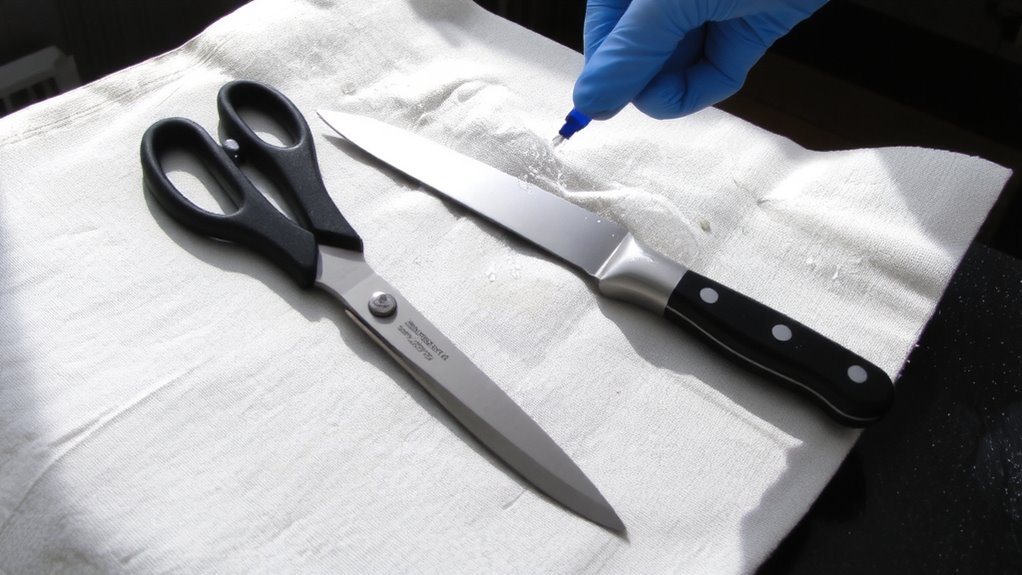
A reliable method for sterilizing knives and scissors starts with heat or chemical exposure that kills pathogens on contact. You can maintain blade maintenance and tool durability by choosing sterilization methods that avoid corrosion or blade wear. Boiling water works in 5 minutes, while bleach solution (10%) needs 30 seconds but requires rinsing. Isopropyl alcohol (70%) kills bacteria fast and evaporates cleanly, reducing rust risk. Autoclaving is best for frequent use, ensuring full pathogen kill without degrading metal.
| Method | Time Needed | Effect on Tool Durability |
|---|---|---|
| Boiling Water | 5 min | Moderate wear over time |
| Bleach Solution | 30 sec | High corrosion risk |
| Isopropyl Alcohol | 1 min | Low impact, preserves edge |
| Autoclave | 15 min | Best for long-term use |
| Flame Sterilization | 15 sec | Risk of temper loss |
Clean Tools Fast in the Field
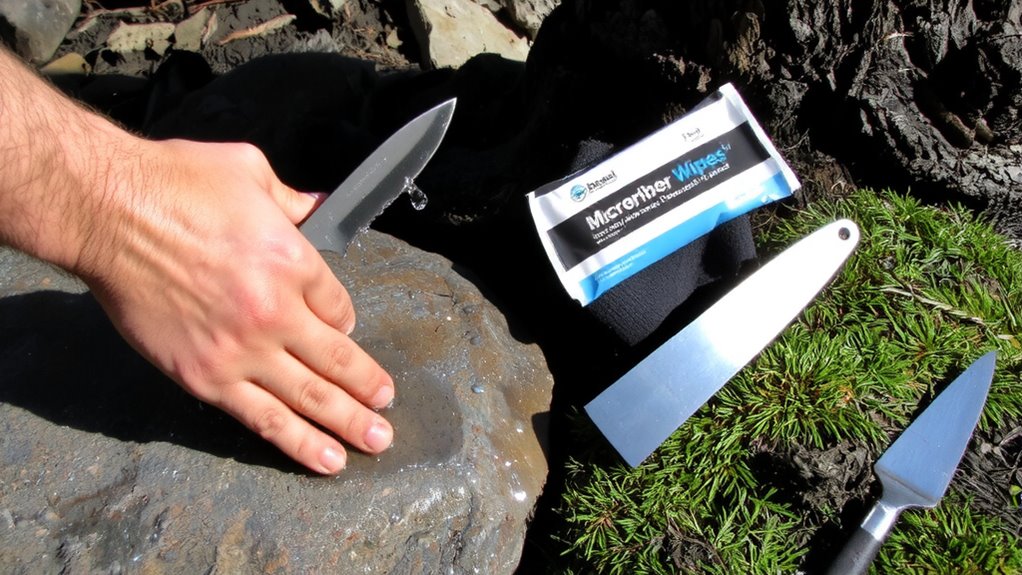
When you’re miles from your car with sap-coated blades and gritty residue gumming up your scissors, how do you clean tools fast without compromising sterility? Field cleaning demands efficiency and effectiveness. Wipe blades with a lint-free cloth dampened with 70% isopropyl alcohol-it cuts grime and kills pathogens without damaging metal. Carry a small bottle to limit waste and guarantee control. For stuck-on debris, use a stiff-bristle brush; it’s durable and fits in a pack. Avoid soaking, which risks corrosion. After cleaning, air-dry tools fully before storing-this guarantees quick drying and prevents moisture-related contamination. Don’t use fabric that sheds lint or retains bacteria. A foldable drying rack or open blade spread keeps surfaces exposed and speeds evaporation. This routine takes under two minutes, maintains tool function, and minimizes transfer risk. Field cleaning isn’t thorough sterilization, but it’s a reliable stopgap when time and resources are tight.
Choose Plant-Safe Sanitizers
You just cleaned your tools in the field, but wiping grime off isn’t the same as keeping pathogens away from sensitive plant tissue. That’s where plant-safe sanitizers come in. You need something effective but gentle on the plants you harvest. Natural sanitizers like diluted hydrogen peroxide (3%) or food-grade vinegar can reduce microbes without leaving harmful residues. They’re not as strong as bleach, but they offer solid protection when used correctly. Eco friendly options such as citric acid solutions or thyme-based sprays have shown reliable results in lab tests, killing up to 90% of common plant pathogens. Alcohol (70% isopropyl) works fast and evaporates cleanly, though repeated use may degrade tool coatings. Each product has trade-offs: effectiveness, contact time, material safety. Stick with solutions tested for agricultural use, and always rinse tools with clean water afterward to avoid tissue damage. Your plants will respond better with less chemical stress.
Stop Cross-Contamination Between Sites
Why carry diseases from one patch of woodland to the next? You don’t-it defeats the purpose of sterilizing tools. Site isolation matters because infected soil or plant residue can spread pathogens to clean areas. Keep gear separated by location to maintain clean zones. Tool rotation helps: dedicate specific tools to specific sites and tag them accordingly. This reduces transfer risk even when sterilization slips. Here’s how two strategies compare:
| Strategy | Effectiveness (Scale 1–10) |
|---|---|
| Tool rotation | 8 |
| Site isolation | 9 |
Neither replaces cleaning, but together they add layers of protection. You’ll minimize contamination simply by keeping gear apart and tracking usage. Practical? Yes. Overkill? Not when edibles are involved. Stick to the system-you’ll catch fewer contaminants before they spread.
Store Tools to Prevent Recontamination
After cleaning and drying your tools, proper storage keeps them contamination-free until the next use. Tool storage isn’t just about space-it’s a critical step in contamination prevention. Keep tools in sealed, labeled containers or ziplock bags to block dust, moisture, and pathogens. Avoid tossing them loose into a backpack or shed, where bacteria or mold can transfer from surfaces. A dedicated foraging kit with compartments reduces contact risk and preserves sterility. Plastic cases are lightweight and easy to wipe down; metal tins offer durability but add weight. Store away from chemicals, raw foods, or damp areas that compromise cleanliness. Shelf life of sterility depends on environment-dry, cool spaces extend protection. Recheck tools before reuse, even if stored properly. No container guarantees 100% protection forever, but smart tool storage greatly lowers recontamination chances. Plan for practicality and consistency-your safety relies on it.
On a final note
You should sterilize your foraging tools because it stops harmful bacteria from reaching your food. Wipe blades with 70% isopropyl alcohol-it kills germs fast and dries quickly. In the field, use disinfectant wipes for a quick clean. Avoid bleach; it corrodes metal and can leave residues. Store tools in sealed bags to block contamination. Clean between sites to prevent cross-contamination. Simple, consistent hygiene protects your harvest and health.