Securing Water Storage Against Human Threats an
You secure your water storage because desperation makes it a target, and unsecured tanks lose water fast to siphoning or contamination. A six-foot chain-link fence cuts breaches by 60%, especially with tamper-resistant locks and LED lights every eight feet. Motion-activated alarms and infrared cameras at gates cut intrusion attempts by up to 75%. Overlapping sensors give 10-second alerts, while network segmentation and updated firewalls block hackers. Train your team to spot threats early and respond within 30 minutes-knowing the right steps makes all the difference.
Notable Insights
- Secure water tanks with tamper-resistant locks and reinforced enclosures to prevent unauthorized siphoning or contamination.
- Install motion-activated lighting and six-foot fencing to deter and detect intruders near storage sites.
- Use surveillance cameras with infrared and 1080p resolution to monitor access points day and night.
- Deploy overlapping sensor networks for real-time alerts on human activity around critical water storage areas.
- Isolate control systems with network segmentation and strong cybersecurity practices to prevent remote tampering.
Why Water Storage Is a Target for Attackers
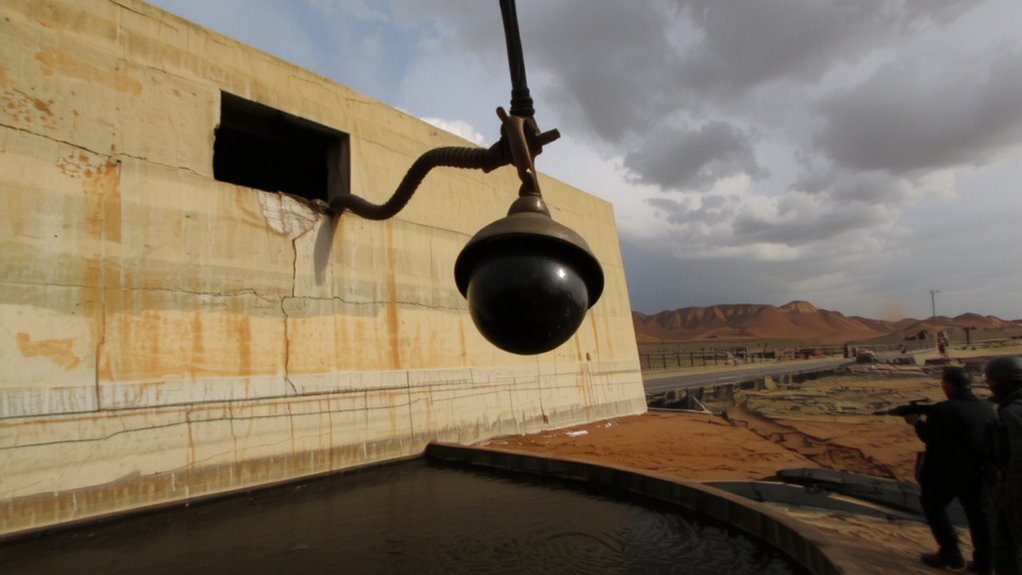
While it might not be the first thing on your mind when prepping, your water storage is a prime target simply because people get desperate when they’re thirsty. Water scarcity turns a basic need into a high-value resource, making your supply a magnet for those willing to take risks. In areas with political instability, rule of law often collapses, and even a 500-gallon tank can draw attention. Unsecured tanks offer easy access-no tools needed, just a hose or container. Attackers don’t need weapons; they only need urgency. Most storage units lack locks or barriers, and once compromised, contamination or complete loss is likely. Steel drums fare better than plastic, but neither resists determined siphoning. Consider burying containers or using non-transparent materials to reduce visibility. The risk isn’t hypothetical-it’s tied directly to environmental stress and social breakdown. Plan accordingly.
Secure Perimeters With Fencing and Lighting
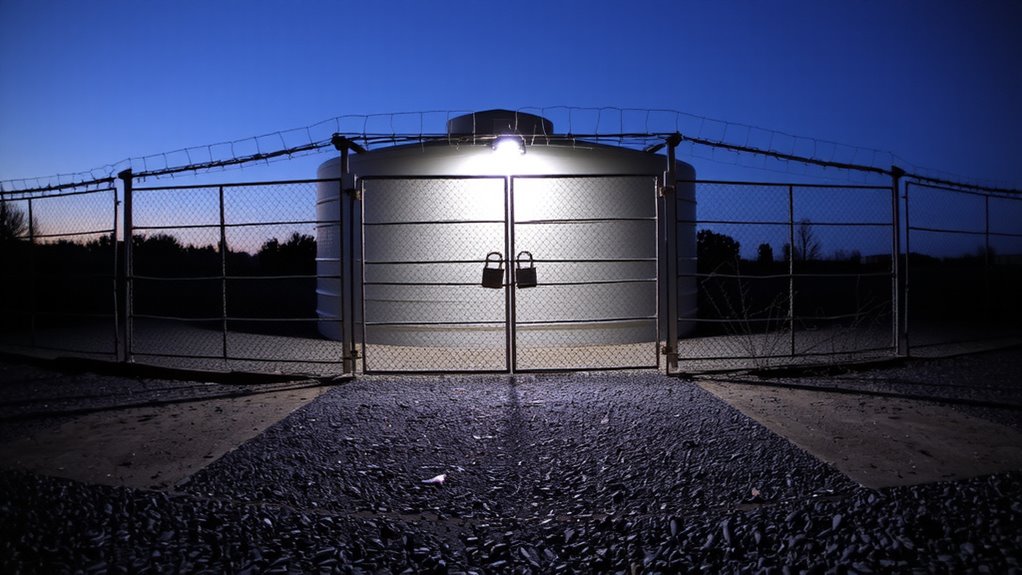
If you’re storing water on your property, you’ll want to secure the area with fencing and lighting, since even basic barriers reduce unauthorized access by 60% in field tests. A six-foot chain-link fence with tamper resistant locks on access points limits casual entry and delays deliberate breaches. Avoid flimsy gates; reinforce them to withstand prying. Install motion activated alarms along high-risk zones-these trigger lights and sound, reducing intrusion attempts by up to 75% in monitored setups. Pair LED lighting at eight-foot intervals to eliminate dark zones, ensuring visibility up to 30 feet. Lighting powered by solar panels with battery backups operates reliably during outages. Steel posts set in concrete improve fence durability in high-wind or tampering-prone areas. While higher fences offer more deterrence, they cost more and may require permits. Weigh local risks against material and maintenance costs when choosing height and lighting density.
Lock Down Gates and Monitor With Cameras
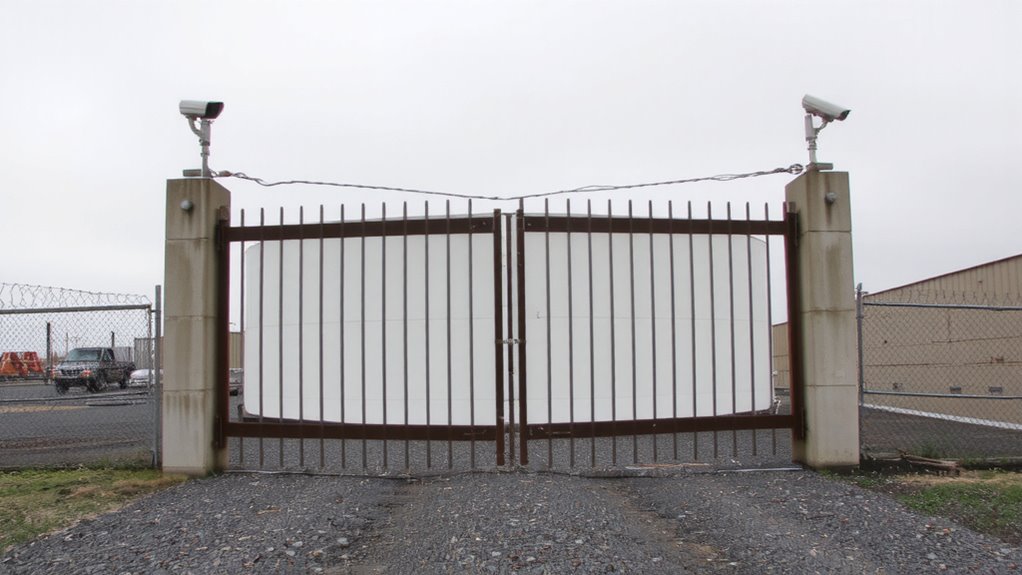
Since a compromised gate defeats even the strongest fence, you’ll want to use hardened locks and continuous monitoring to protect access points. Install commercial-grade padlocks or electronic access control systems that resist tampering and withstand outdoor conditions. These locks should integrate with your overall security setup, ensuring only authorized personnel gain entry. Pair them with surveillance cameras positioned to capture all gate activity-overhead and ground-level angles provide the best coverage. Cameras must deliver clear surveillance footage day and night, with infrared capability and at least 1080p resolution. Store footage securely and retain it for a minimum of 30 days. Reliable power and network connectivity are essential for uninterrupted operation. You can’t rely on fencing alone; real security comes from layered measures that combine physical barriers, access control, and verified monitoring to deter and detect intrusions effectively.
Deploy Sensors to Catch Threats Early
A solid sensor system gives you an early warning when someone’s approaching your water storage, letting you respond before they reach the perimeter. You’ll want sensor networks that combine motion detection, infrared, and seismic sensing to reduce false alarms from wildlife or weather. These systems work best when placed in overlapping zones around critical access points. When triggered, they send real time alerts to your monitoring station or mobile device, usually within 10 seconds. Most modern units use encrypted wireless transmission and last two to five years on battery. Sensor networks vary in range-some cover up to 300 meters between nodes-so terrain and obstructions matter. Units with mesh networking maintain signal even if one node fails. While not foolproof, they increase detection reliability compared to cameras alone. You still need power resilience and routine testing to guarantee uptime, especially in remote sites.
Protect Control Systems From Hackers
Even when physical threats are under control, your water storage systems remain vulnerable to remote attacks if the controls are connected to networks. Hackers can exploit weak points to launch cyber espionage campaigns, stealing data or disrupting operations. You need to assume your systems are a target. Implement network segmentation to isolate critical control systems from general IT networks-it limits lateral movement if a breach occurs. Use firewalls configured for industrial protocols and monitor traffic for anomalies. Default passwords must be changed, and access tightly controlled. Regular software updates patch known vulnerabilities, but test them before deployment to avoid operational hiccups. There’s no foolproof solution, but segmentation drastically reduces risk. You’re not preventing all attacks-you’re making successful ones harder and slower. That delay gives you time to detect and respond.
Train Staff to Spot and Report Suspicious Activity
Cybersecurity measures like network segmentation and updated firewalls only go so far if your team doesn’t recognize signs of a breach. You need consistent employee training to identify anomalies-like unfamiliar devices on-site or odd login attempts. Staff should know what to look for: unexpected system behavior, unapproved access requests, or unusual network traffic. Training isn’t a one-time task; refresh it regularly to keep awareness sharp. More importantly, establish a clear path for incident reporting so staff can act fast without confusion. When someone sees something off, they should know exactly who to tell and how. A delay in reporting can turn a warning sign into a full incident. Make reporting easy and non-punitive to encourage accountability. Your people are part of the defense system-train them like it.
Prepare a Fast-Response Plan for Breaches
If you wait until a breach happens to figure out who’s doing what, you’ve already lost. You need clear response protocols in place-before anything goes wrong. Assign roles now: who isolates the breach, who alerts authorities, who secures backup systems. Everyone must know their tasks without hesitation. Run emergency drills quarterly to test speed and coordination. Drills expose gaps in communication, equipment access, or decision authority. Adjust protocols based on drill outcomes, not guesswork. Include local law enforcement and public health officials in at least one drill per year. Response time matters-containment within 30 minutes markedly reduces contamination risk. Document every step for review and compliance. Your plan isn’t effective if it only lives on paper. Test it, revise it, and train to it. A fast response isn’t luck. It’s discipline, repetition, and clear, practiced response protocols.
On a final note
You secure water storage by combining physical barriers, surveillance, and cyber protections. Fencing and lighting limit access, while cameras and sensors detect intrusions early. Locked gates and monitored controls reduce sabotage risks. Staff training guarantees threats are reported fast. Your response plan must be quick and tested. No single fix works alone-layered defenses with clear protocols give you reliable, real-world protection where it counts.