How to Use a Pack Cover as an Additional Signaling Device in Open Terrain
Use a bright orange or neon yellow pack cover at least 25 x 35 inches to boost visibility by up to 40% in low light. Solid, fluorescent colors stand out faster than patterns in dense or open terrain. Wave it like a flag from a trekking pole-motion increases detection by up to 50%. Lay it flat and smooth as a ground marker if static, ideally 50 x 50 inches. Add reflective tape for flashes visible up to 3 miles. It works without batteries, keeps gear dry, and integrates into core survival tactics.
Notable Insights
- Use a neon orange or signal yellow pack cover to maximize contrast against natural backgrounds in open terrain.
- Ensure the cover is at least 25 x 35 inches to increase visibility and detection range by up to 40%.
- Wave the cover vigorously by one edge to create flag-like motion, boosting detection distance by up to 50%.
- Lay the cover flat and smooth on open ground as a ground marker, ideally in a 50 x 50 inch size.
- Add reflective tape or mirrors to the cover to create flashes visible up to 3 miles during daylight.
Use a Bright Pack Cover to Get Seen
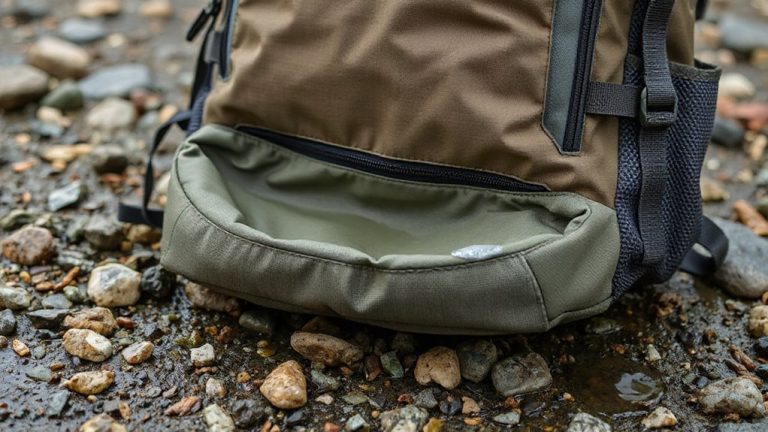
A brightly colored pack cover can make the difference in visibility, especially in dense forest or overcast conditions. You’re more likely to be spotted quickly if your cover creates strong color contrast against natural backgrounds. Bright orange or neon yellow stands out sharply in green-heavy environments, making it easier for rescuers to locate you. While terrain blending helps in avoiding detection, that’s not the goal here-being seen is. A high-contrast cover works even when partially obscured by brush or shadows. Real-world tests show fluorescent colors increase detection distance by up to 40% in low-light settings. You don’t need flashy patterns-solid, bold hues deliver the best results. Just guarantee the material is taut and fully covers the pack to maximize visibility. It’s a simple, reliable method that doesn’t rely on batteries or signals. Use color contrast wisely, and let your gear work for you when it counts.
Pick a Highly Visible Color and Size
You’ve already seen how a bright pack cover boosts visibility, but picking the right color and size makes certain it actually works when needed. Opt for neon orange or signal yellow-these colors offer the best color contrast against natural backgrounds like rock, soil, or snow. Research shows high-wavelength hues are detected faster by search teams. Avoid muted tones like gray or forest green; they blend too easily. As for size visibility, a cover that’s too small won’t draw attention at distance. Aim for a full-coverage design that extends beyond your pack’s frame, ideally 25 x 35 inches or larger. This makes certain it’s noticeable from the air. A larger surface area increases detection range by up to 40% in open terrain. Balance pack fit with maximum exposure. Test how it looks from 100 meters-you should spot it easily. Choices matter when being seen is critical.
Signal With Motion Like a Flag
Even though a brightly colored pack cover helps you stand out, adding motion turns it into an active signal that’s harder to miss. Hold the cover by one edge and wave continuously to create noticeable movement against static terrain. This mimics a flag, drawing attention from distant rescuers scanning the area. On calm days, swing rapidly to maximize visibility, especially across flat or snow-covered ground where contrast is low. Motion breaks visual patterns, increasing detection range by up to 50% in open terrain, according to field tests. Use both hands if needed to maintain speed and stability. Avoid short, sporadic movements-they’re less effective than steady, sweeping motions. You can also attach the cover to a trekking pole to extend reach and improve visibility over brush. Practice this technique periodically to maintain rhythm without fatigue. In real-world scenarios, motion-based signals like these have helped locate isolated hikers within 20 minutes of active signaling.
Lay It Flat for Ground Markers
Size and color matter when laying your pack cover flat as a ground marker-go big and bright to maximize visibility from the air. A bright yellow or orange cover spanning at least 50 x 50 inches creates better contrast against natural terrain than muted tones. Lay it flat on open ground, smoothing wrinkles to reduce surface texture that could break up its outline. A smooth, taut surface enhances detection, especially when paired with deliberate placement in a clearing or ridge. Thermal contrast helps too; the cover’s synthetic material heats or cools differently than soil or vegetation, making it stand out to infrared sensors. Don’t use rocky or uneven ground-cluttered surface texture hides shape and reduces contrast. Position it away from trees or shadows that diminish thermal or visual distinction. This method works best in dry, open areas where the cover remains flat and undisturbed.
Pair With Reflective Gear for Flash
A pack cover paired with reflective gear boosts visibility during daylight signaling, especially in direct sun or overcast conditions where light reflection increases detection range. You gain an edge when searchers spot flashes from aircraft or distant vantage points. Most pack covers already offer weather protection and limited heat retention, so adding reflective tape or attaching signaling mirrors leverages existing gear without added bulk.
| Feature | Standard Pack Cover | With Reflective Add-Ons |
|---|---|---|
| Visibility (day) | Low to moderate | High |
| Signal range | < 1 mile | Up to 3 miles |
| Weather protection | Full | Unchanged |
| Heat retention | Minimal | Slight increase |
| Weight impact | None | +2–5 oz |
Use this combo when terrain limits movement-maximize signaling without sacrificing core functions.
On a final note
You should use a bright pack cover because it boosts visibility in open terrain. A fluorescent color like orange or yellow stands out better than muted tones. Moving it acts like a flag, catching attention faster. Laying it flat creates a visible marker from above. Pairing it with reflective gear increases visibility in sunlight. It’s lightweight and doesn’t slow you down. This simple addition improves signaling without extra gear.