How to Use a Portable Water Filter in Your Evacuation Hydration Plan
Pick a lightweight filter (6–14 oz) that purifies water in under two minutes-critical when every second counts. Use it with moving water from streams, not stagnant sources. Pre-strain murky water with cloth to avoid clogs. Filter fast: most units deliver safe water in 60 seconds. After each use, backflush and air-dry fully to prevent mold. Carry spare O-rings and check seals daily. A $50 filter can work as well as pricier models if maintained. Real-world performance hinges on consistency, not cost. Knowing the full steps guarantees you’re never caught off guard.
Notable Insights
- Choose a lightweight, durable filter (6–14 oz) that balances cost, weight, and filtration capacity for easy evacuation use.
- Deploy the filter in under 60 seconds by submerging the intake and pumping steadily for immediate clean water.
- Prioritize flowing water from streams or rivers, and avoid stagnant or flood-contaminated sources.
- Pre-strain cloudy water with cloth to prevent clogging and maintain filter efficiency in the field.
- Backflush and clean the filter after each use, inspect seals daily, and store it fully dry to ensure reliability.
Choose the Best Portable Water Filter for Your Evacuation
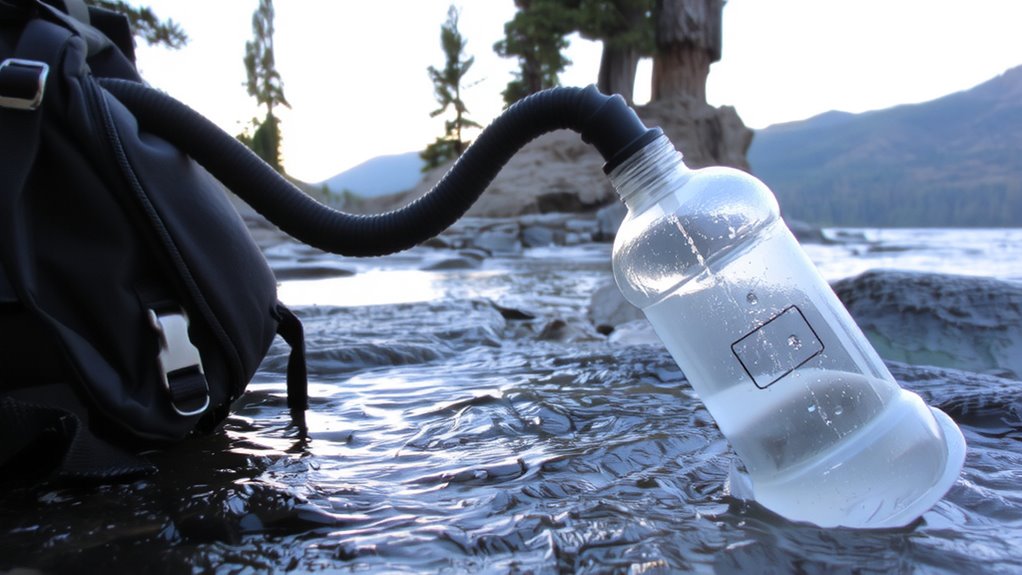
Why carry a water filter that’s too slow or fragile for real emergencies? You need something reliable when every ounce and dollar counts. Filter weight matters-it shouldn’t drag you down. Most good options weigh between 6 and 14 ounces, light enough to carry without compromise. Heavier filters often mean bulkier parts or extra features you might not need. Filter cost varies, but don’t assume price equals performance. Units under $50 often work well for basic pathogens, while those above $100 may offer faster flow or longer life. Consider flow rate, ease of cleaning, and durability. Some filters cost more upfront but save money over time with replaceable cartridges. Others are cheap but clog fast. Choose based on real use, not claims. Balance filter weight, filter cost, and field performance to pick what truly fits your evacuation plan.
Get Clean Water Fast With Your Portable Filter
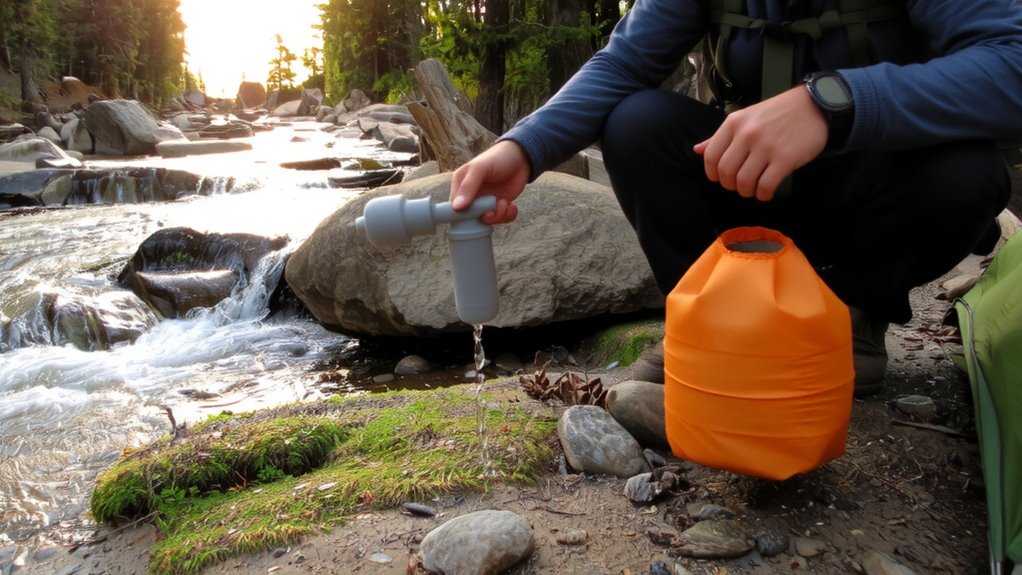
You’ve picked a lightweight, durable filter that fits your budget and performance needs-now it’s about using it efficiently when clean water isn’t a wait-you-can-afford. Water purification starts the moment you begin pumping or sipping-no prep, no waiting. With rapid deployment, most filters deliver safe drinking water in under 60 seconds. Just submerge the intake, operate steadily, and drink. Avoid clogging by pre-straining murky water through cloth. Simplicity saves time and energy when both are scarce.
| Situation | Time to Safe Water | Emotional Impact |
|---|---|---|
| Post-quake, no tap water | < 2 minutes | Relief |
| Family dehydrated, no supply | < 90 seconds | Hope |
| Storm shelter, limited resources | 1 minute | Calm |
| Evacuation route, no access | < 2 minutes | Control |
| Night, low visibility | ~90 seconds | Safety |
Rapid deployment means real-time resilience. Efficiency isn’t luxury-it’s survival. Your filter works fast because you need it to. Test it before you need it.
Find Safe Water Sources for Filtering
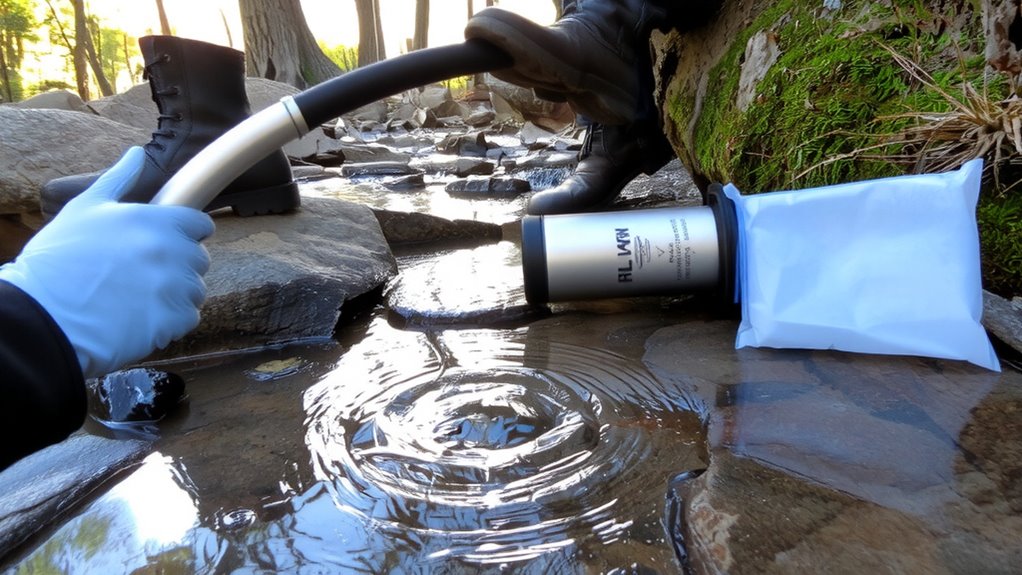
Where should you look when you need water fast? Focus on moving water like streams or rivers, as they’re less likely to harbor stagnant water contamination. Avoid puddles, flooded areas, or water near industrial sites. Source identification matters-check for upstream human activity, animal presence, or chemical runoff. Flowing water from higher elevations, like mountain streams, generally contains fewer pathogens and less sediment. If you’re near urban or agricultural zones, look for water downstream of natural terrain, not roads or farms. Rainwater collected mid-storm, once filtered, is usually clean if sourced away from pollution. Lakes and ponds can work, but still water increases contamination risk. Trust source identification over appearance-even clear water can carry bacteria. Always assume natural sources are unsafe until filtered. Use your filter, but pick the best available source first.
Keep Your Portable Filter Working in the Field
A good portable filter is only as reliable as its maintenance in the field. Regular field cleaning prevents clogs and keeps flow rates stable. Always backflush after each use, especially when water is silty. Carry a small brush to scrub the exterior and screen, if applicable. Flow troubleshooting starts with checking connections-tighten them and guarantee no leaks. If flow drops, clean the filter element promptly; don’t wait.
| Task | Frequency |
|---|---|
| Backflush filter | After every use |
| Inspect seals | Daily |
| Brush exterior | Every use |
| Check flow rate | Before and after filtering |
| Store dry | Only when fully air-dried |
Field cleaning takes minutes but extends life and performance. Don’t rely on the filter if you skip maintenance-it won’t last. Keep spare parts like O-rings and clean tools in your kit. Simple habits guarantee consistent output when hydration is critical.
Fix Common Filter Problems on the Move
What happens when your filter clogs mid-trail or starts leaking at camp? A clogged membrane slows output fast, especially in silty water-backflush it immediately using the included syringe or plunger. If flow doesn’t improve, check for cracked tubing or a damaged membrane, as those need replacement. Leaks often stem from dirty o rings or misaligned housing; wipe o rings clean and guarantee they’re seated properly before reassembling. Never overtighten-stripped threads won’t seal. Carrying a spare o ring kit helps, since grit and dryness degrade them over time. Test the seal under pressure before packing. Flow rate drops and visible debris on the membrane mean it’s near end-of-life. Most filters handle 1,000 to 2,000 liters, but turbid water shortens that. Address issues early-you won’t find a service center in the backcountry.
Pack Your Filter for Quick Access
You just fixed a clog or leak in your filter, and now it’s time to make sure it’s ready when you need it again. Proper filter storage guarantees it’s functional and accessible during evacuation. Store it in a sealed, protective case to prevent damage and contamination. Keep it in an outer compartment of your bug-out bag, not buried under heavy gear. If your filter has rigid parts, avoid crushing by surrounding it with soft items. Emergency readiness means grabbing your filter in seconds, not minutes. A straw-style filter fits in a jacket pocket; a pump model needs a dedicated side pouch. Test the packing setup during drills-can you deploy it with cold hands? Some models include carrying clips or lanyards, which help. Avoid moisture trap by letting it air-dry slightly before sealing. Your filter’s only useful if you can reach and use it fast. Plan for that.
Maintain Your Filter After Use
After you’ve used your filter, cleaning it promptly keeps it functional and extends its lifespan. Run clean water through it to flush sediment and prevent clogs. Follow the manufacturer’s recommended cleaning schedule-neglecting it reduces flow rate and filtration efficiency. Backflush weekly if used daily, or after every 20 liters, whichever comes first. Inspect seals and housing for cracks; replace parts if damaged. Dry all components before storing to prevent mold and bacteria growth. Store in a cool, dry place away from direct sunlight-poor storage conditions degrade materials over time. Avoid freezing, as ice can rupture internal membranes. Keep the intake hose unattached to allow airflow. A well-maintained filter typically lasts up to 1,000 liters, but harsh water sources reduce longevity. Record usage and cleaning dates to track performance. Proper maintenance guarantees reliability when you need it most.
On a final note
You need clean water fast when you evacuate, and a reliable filter makes that possible. Choose one that weighs under 10 ounces and handles at least 1,000 liters. Use it only with flowing sources-never stagnant water. Clean the filter after every use, and store it dry. Clogging happens, but backflushing fixes most issues. A good filter isn’t foolproof, but it’s dependable when maintained.