Evaluating Scene Safety When a Tree Falls on a Campsite
You treat downed power lines as live and stay 50 feet away from the trunk and hanging limbs. You check for gas leaks, unstable branches, and animal hazards near damaged gear. You don’t move injured people unless they’re in immediate danger. You mark hazards, clear paths, and set up a command area upwind. You call for help with a satellite device if needed-calm actions now cut risk, and knowing what comes next keeps everyone safer.
Notable Insights
- Scan for hanging branches, downed power lines, and unstable tree sections before approaching the area.
- Inspect for hidden dangers like gas leaks, root decay, or wildlife taking shelter in damaged structures.
- Maintain a 50-foot perimeter around the fallen tree until risks of falling debris are ruled out.
- Check for injuries without moving victims to prevent spinal harm; monitor breathing and responsiveness.
- Secure the campsite by marking hazards, clearing pathways, and setting up a safe command area upwind.
Scan for Immediate Dangers Near the Fallen Tree
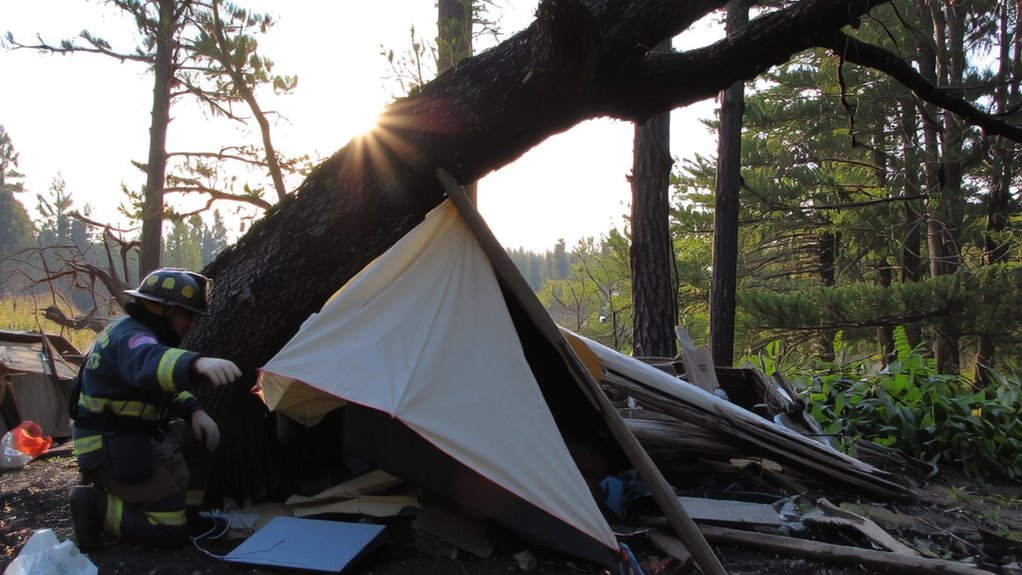
While your first instinct might be to rush to help, take a step back and scan the area-you could miss hazards that make the scene more dangerous. Look for loose branches hanging overhead; they can fall without warning and cause serious injury. Check the ground and surrounding trees for broken wires, especially if the tree hit a power line-those can carry live current and energize the ground. Don’t assume downed wires are safe; treat them as live until professionals confirm otherwise. Avoid standing near the trunk or major limbs, as shifting weight can destabilize the structure. Use a wide perimeter-at least 50 feet-until you’ve confirmed it’s clear. Move cautiously, wearing sturdy boots and gloves. Visibility matters, so use a flashlight if it’s dark. Your safety comes before action. One misstep near loose branches or broken wires risks worsening the situation. Stay alert, stay distant, and call for expert help.
Spot Hidden Risks Like Shift-Prone Limbs or Gas Leaks
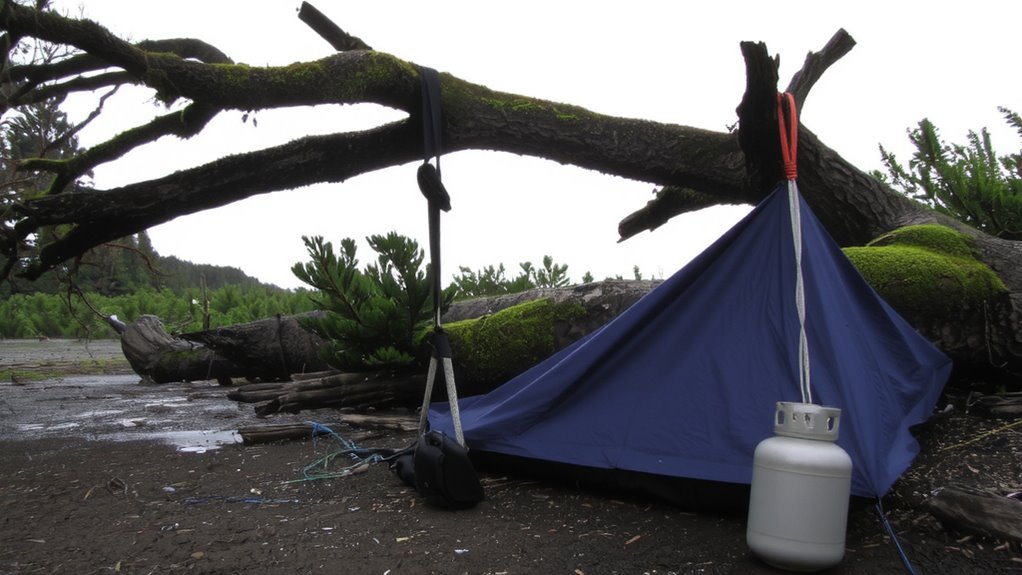
You’ve checked for obvious threats like hanging branches and downed power lines-now focus on what’s less visible. Shift-prone limbs may still hang overhead, held by weakened fibers; a gust or vibration could drop them without warning. Inspect for root decay at the base-if the soil is soft or fungi-laced, the entire trunk could shift. That instability increases risk even after the initial fall. Gas leaks from damaged camp stoves or canisters aren’t always obvious; smell for propane or hissing sounds near gear. Even small leaks pose explosion hazards near sparks or flames. Animal presence is another hidden factor-disturbed nests or dens near the tree’s fall zone may provoke defensive behavior. Avoid approaching dark cavities or rustling brush. Check around twisted tent frames or crushed storage bins-animals might investigate or seek shelter. These risks aren’t always loud or immediate, but they’re equally dangerous if ignored. Stay alert, scan repeatedly, and assume instability until proven otherwise. A reliable survival saw can help safely remove hazardous limbs and clear debris when immediate extraction is necessary.
Check for Injuries Safely
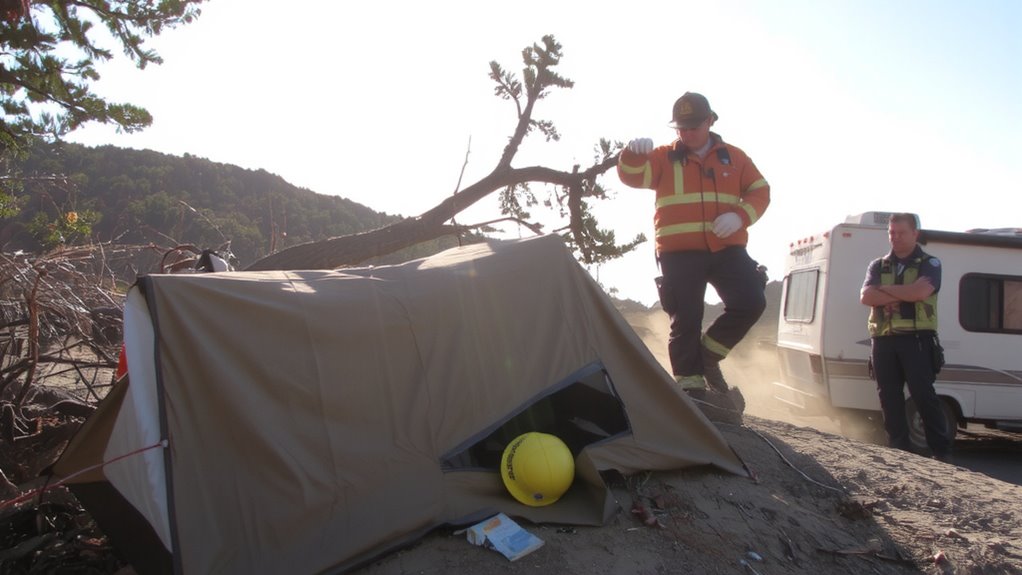
After ensuring the immediate area is stable, check for injuries without moving anyone unnecessarily-shifting a person with spinal trauma could worsen harm. Calmly assess each person’s condition. Look for obvious wounds, difficulty breathing, or unconsciousness. Check essential signs: pulse, breathing rate, and responsiveness. If someone’s unresponsive but breathing, place them in the recovery position. If they’re not breathing, begin CPR if you’re trained. Carry a first aid kit with you-it’s essential for treating cuts, fractures, or shock. Use gloves from the kit to reduce infection risk. Avoid giving food or water to injured individuals; they might need surgery. Communicate clearly with others, assigning tasks like monitoring a victim while you assist someone else. Your response time matters, but accuracy matters more. A proper first aid response increases survival odds markedly. Stay calm, act deliberately, and focus on measurable changes in essential signs. A well-stocked first aid kit can make a critical difference in emergency care.
Secure the Campsite to Stop Further Harm
If the ground’s still shaking or branches are snapping overhead, stay put until the risk of falling debris passes-your safety depends on recognizing that the danger isn’t over just because the tree has stopped moving. Once stable, secure the campsite immediately to prevent further harm. Mark hazard zones with visible tape or rocks. Establish clear paths for supply access and emergency exits. Perform an equipment check to guarantee tools like flashlights, knives, and first aid kits are functional and reachable. Avoid damaged tents or shelters near broken limbs. Set up a temporary command area upwind and downhill from the tree to reduce exposure. Consider using a portable wood-burning cook stove for safe and reliable meal preparation during extended recovery.
| Area | Action | Purpose |
|---|---|---|
| Hazard Zone | Rope off area | Prevent accidental entry |
| Pathway | Clear debris | Maintain supply access |
| Shelter | Inspect for damage | Guarantee structural safety |
| Gear | Conduct equipment check | Confirm readiness |
| Lighting | Deploy headlamps | Improve visibility at night |
Coordinate Rescue Efforts Calmly
Once the site is secure and immediate dangers are marked or cleared, focus shifts to getting help without escalating risk. You need effective team coordination to assign roles quickly-someone checks injuries, another marks hazards, while a third prepares signals for rescuers. Clear, brief instructions prevent confusion. Calm communication keeps everyone focused and reduces panic, especially if someone’s hurt. Speak in low, steady tones, even under pressure. Use hand signals if noise interferes. Avoid overlapping tasks or duplicated efforts; they waste time and increase danger. Designate one person to direct actions, ensuring decisions are consistent and informed. Rely on established signals or radios if available, but conserve battery. Prioritize movement only when safe-rushing worsens outcomes. Team coordination and calm communication aren’t just helpful-they’re critical. Measurable results in field tests show structured responses reduce response time by up to 40%. Your composure directly affects survival odds.
When and How to Call for Help
How do you know when it’s time to call for help after a tree falls on your campsite? You call immediately if someone’s injured, the tree blocks your exit, or your shelter’s compromised. Don’t wait-delaying risks worsening injuries or missing critical response windows. Use your communication devices right away. A fully charged satellite messenger works even without cell service and saves time compared to flares or signals. Store emergency contacts in multiple places-your phone, a waterproof notebook, and your device-so you can reach someone fast. Test communication devices before each trip and carry backup power. If you’re unsure whether to call, error on the side of caution. Rangers would rather respond to a false alarm than find someone too late. Make sure your location is clearly shared. Accuracy matters more than speed when help is hours away.
On a final note
You check for hazards first-live wires, gas leaks, unstable limbs-because safety starts with awareness. You don’t move the tree; you assess injuries, secure the perimeter, and call for help if needed. You know a working radio or charged phone saves time. You rely on clear thinking, not gear. No tool replaces judgment. You act, but only when risk is clear and action is necessary. That’s how you stay safe.