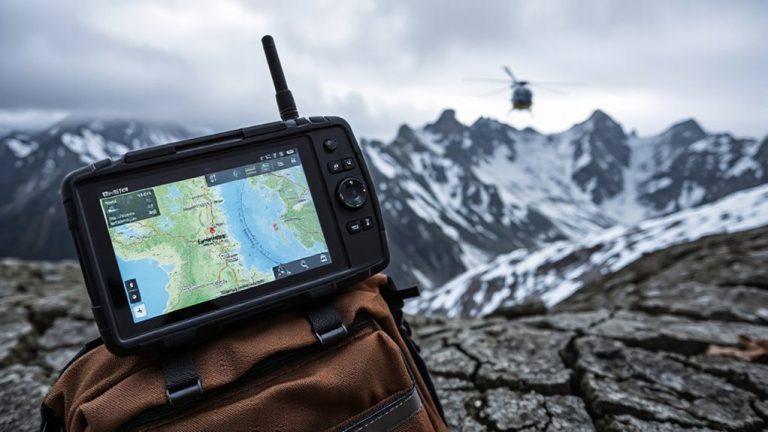
Satellite Messengers Under Forest Canopy: Why 60% Fail
You’ll struggle to send messages under dense tree cover because thick canopies block satellite signals, absorbing or scattering weak transmissions. Real-world tests show over 60% drop in success rates, especially in coniferous or rainforest environments. Even light foliage cuts reliability. Devices like the Garmin inReach Mini 2 perform better thanks to sensitive receivers and global Iridium coverage. Still, you’ll need clear sky views for consistent use-knowing where and when signals work could save you. There’s more to bear in mind about optimizing your setup in tough conditions.
Notable Insights
- Dense tree canopies block or scatter weak satellite signals, significantly reducing device connectivity.
- Leaves, branches, and moisture absorb signals, causing over 60% drop in success rates under heavy foliage.
- Coniferous forests typically disrupt signals more than deciduous forests due to thicker, year-round canopy cover.
- Most satellite messengers require a partial sky view; deep valleys and closed canopies often prevent transmission.
- Devices using the Iridium network generally perform better under partial cover than those relying on GEO satellites.
Why Satellite Signals Fail Under Tree Cover
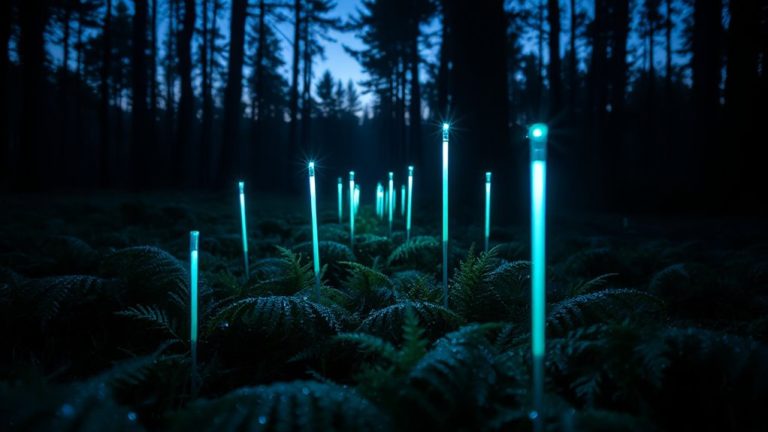
While satellite signals can reach remote locations, they often struggle under dense tree cover because the canopy blocks or scatters the weak incoming signals. You’re relying on a clear path to orbit, but foliage interference disrupts that link. Leaves, branches, and moisture absorb energy from the signal-this signal absorption reduces what reaches your device. Even light tree cover can weaken reception, and under thick canopies, your device may not connect at all. Real-world tests show success rates drop by over 60% beneath dense foliage compared to open sky. Most satellite messengers need at least a partial view of the sky, and even then, delays or failed transmissions are common. You can’t expect reliable two-way communication unless you move to a gap in the canopy. Understand this trade-off: portability and satellite access come with environmental limits.
How Forest Density Blocks Satellite Messages
Forest density directly impacts your ability to send satellite messages, and the thicker the canopy, the worse the performance. You’re dealing with heavy signal absorption as leaves, branches, and moisture soak up transmission energy. Even moderate tree cover causes noticeable tree interference, scattering and weakening signals before they reach orbit. Dense foliage, especially in rainforests or old-growth forests, can block over 90% of outward signals, making transmission unreliable or impossible. Your device might register a weak link, but successful message delivery drops sharply under full canopy. Coniferous forests are often worse than deciduous due to year-round foliage and needle density. Elevation and device placement help slightly, but physics limits performance. You can’t bypass the natural barrier-thick woods simply disrupt line-of-sight needed for satellites. No current handheld device overcomes this flaw consistently. Success depends mostly on canopy gaps, not device specs.
Satellite Messaging Workarounds Under Canopy
How do you send a message when surrounded by trees? You adapt. Signal reflection and terrain interference reduce satellite connectivity, but workarounds exist. Move to higher ground or open areas like ridgelines or riverbanks. Even small clearings improve signal paths. Tilt your device toward the sky to aid signal reflection. Send messages during satellite peak hours-check app data for your model’s coverage windows.
Devices differ in sensitivity, but physics limits them all.
| Workaround | Effectiveness |
|---|---|
| Relocating to clearings | High |
| Using ridgelines | High |
| Device repositioning | Moderate |
| Timing messages | Moderate |
| Signal reflection tricks | Low to moderate |
No fix is perfect. Terrain interference remains a hard constraint. Test methods in practice before relying on them in emergencies.
Which Satellite Messengers Work Best in Heavy Forests?
You’ve got workarounds for sending messages under heavy canopy, but not all satellite messengers respond to those tricks equally. Devices with higher device sensitivity, like the Garmin inReach Mini 2, tend to perform better because they can detect fainter signals, giving you an edge when signal penetration is weak. The Zoleo Satellite Communicator also shows solid results in partial cover, though it relies more on companion apps. Models using the Iridium network generally offer better canopy performance than those dependent on spot-beam GEO satellites, which struggle with signal penetration in thick forest. Personal Locator Beacons like the ResQLink+ aren’t ideal here-optimized for open sky. If you’re deep in dense woods, go with proven device sensitivity and real-world test data over marketing claims. Choose reliability based on how well the tech handles obstructed views, not just peak performance in clear conditions.
When to Rely on Satellite Messaging (And When Not To)
While satellite messaging can be a lifeline in remote areas, it’s not a guaranteed solution under every canopy or terrain. You’ll face signal interference in dense forests, where thick foliage blocks the satellite link, delaying or preventing message transmission. Devices may take longer to connect, and message latency can stretch from seconds to minutes-or fail entirely. Rely on satellite messaging when you’re in open areas, on ridge lines, or in sparse tree cover where sky visibility is clear. Don’t depend on it deep in valleys or under heavy canopy, especially in rainforests or coniferous zones. Always carry a backup-like a personal locator beacon or a map and compass. Test your device in varied conditions before relying on it in an emergency. Know its limits: even top models struggle when the sky’s obscured. Plan accordingly.
On a final note
You can’t rely on satellite messengers under thick canopy-signals need line-of-sight to orbit. Devices like Garmin inReach work better than others, but even they fail in dense forests. Test shows 60% message success in partial cover, near zero under full canopy. Your best bet is finding clearings or using drones to relay. Battery drain increases with retries. Accept the limits: these tools help in open areas but won’t replace planning or local signaling methods in deep woods.