Critical Differences Between Law Enforcement and Civilian Bug-Out Pack Standards
Your bug-out pack must suit your role: police packs weigh 35–50 lbs for 12-hour missions with resupply and combat focus, while yours should stay under 25 lbs for 72+ hours of self-reliant evasion. They carry for engagement; you pack for escape. Tactical gear supports firepower and teamwork-yours prioritizes stealth, silence, and sustainability. Water, shelter, and navigation come first. You won’t have backup, so your gear must work without it. Light weight beats heavy readiness when every mile counts on your own power. Choose tools that earn their place. What works for cops could slow you down. The real test isn’t performance under fire-it’s whether you can keep moving long after others stop. You’ll see which features actually matter when the plan changes and you’re still out there.
Notable Insights
- Civilian bug-out packs prioritize evasion and mobility under 25 lbs, while law enforcement packs weigh 35–50 lbs for combat endurance.
- Civilians need 72+ hours of self-sustained survival gear; law enforcement assumes rapid resupply and shorter mission durations.
- Civilian gear emphasizes stealth and environmental blending; tactical law enforcement gear focuses on threat engagement and operational visibility.
- Law enforcement uses duty firearms and +P ammunition; civilians should rely on reliable used guns and balanced ammo for recoil and capacity.
- Civilian medical kits lack ballistic trauma supplies; law enforcement carries hemostatic gauze and tourniquets for immediate combat triage.
Tactical Readiness: Police vs Civilian Bug-Out Priorities
A police officer’s bug-out pack leans toward mission-specific gear built for rapid response and short-duration operations, while yours likely needs to support longer-term survival with fewer resupplies. Their training emphasizes tactical formation and immediate threat engagement, so their packs include comms gear, ballistic protection, and medical supplies weighted for short missions. Yours should prioritize adaptability over firepower. Situational awareness is critical for both, but civilians can’t rely on backup or coordinated units. You’ll need navigation tools, weather-resistant shelter, and water purification-items that extend operational endurance. Police packs assume rapid resupply; yours shouldn’t. While their load supports a 12-hour shift, yours must sustain 72 hours or more. Tactical formation isn’t your concern-self-reliance is. Choose gear based on durability, weight, and proven field performance, not law enforcement trends. A compact boot dagger can be a reliable backup tool, especially when selecting a model designed for concealment and quick access, such as those featured among the best boot daggers.
Survival Focus: Mobility and Sustainability in Civilian Packs
While your ability to move quickly can mean the difference between safety and danger, your pack shouldn’t sacrifice endurance for speed. Civilian bug-out packs prioritize sustained mobility over short bursts, favoring balanced weight distribution and durable materials that withstand prolonged travel. Unlike law enforcement gear, your setup must support long-term survival with minimal resupply. You need a shelter setup that’s lightweight yet weather-resistant, enabling rapid deployment in varied terrain. Equally critical is water purification-integrate a filter with a minimum 1,000-liter lifespan or chemical treatment capable of neutralizing bacteria and protozoa. These components guarantee hydration and protection without relying on infrastructure. Your pack’s sustainability hinges on these core functions, not tactical extras. A well-designed civilian pack reduces fatigue over miles while maintaining readiness for basic survival needs, letting you adapt when escape becomes endurance. For optimal comfort and performance, choose a pack with a torso-specific fit, as recommended in top day hike backpack designs.
Gear Inside: Weapons and Tools for Combat vs Crisis
Survival depends on tools that work, not hype. You need gear that performs under stress, not in marketing photos. Law enforcement weapons prioritize immediate threat neutralization, so your ammo selection favors high stopping power and proven penetration. Civilian kits focus on versatility and sustained use, meaning your ammunition selection balances recoil, capacity, and availability. Both demand consistent firearms maintenance. Skipping cleaning risks failure when seconds count. Tools must serve multiple roles-fight, signal, or survive. Below outlines core priorities:
| Purpose | LE Standard | Civilian Equivalent |
|---|---|---|
| Primary Weapon | Duty pistol/carbine | Reliable used firearm |
| Ammo Selection | +P defensive rounds | Practice & defense mix |
| Tool Function | Tactical emphasis | Multi-use utility |
| Maintenance | Daily, protocol-driven | Field-capable routines |
Firearms maintenance isn’t optional-it’s operational readiness.
Pack Weight: Carrying Duty Load vs Lightweight Escape
If you’re weighing every ounce, you’re thinking like a survivor, not a collector-because load weight determines mobility, and mobility saves lives. Law enforcement packs typically run 35–50 lbs, built for high load capacity and extended missions. That weight supports ballistic plates, extra ammo, and comms-necessary for duty, but it demands rigorous endurance training to carry efficiently. Civilian bug-out packs, however, should stay under 25 lbs. Your goal isn’t combat patrol-it’s rapid escape and sustained movement. Excess weight strains joints, slows pace, and increases fatigue, especially if you’re untrained. A packed weight of 20–25 lbs allows most adults to move 5+ miles without rest. Choose gear that balances durability and weight. Prioritize essentials: water, shelter, core tools. Test your loaded pack weekly. Adjust based on real stamina, not theoretical load capacity. Endurance training helps, but smart packing reduces dependence on it. Ultralight designs from top brands emphasize efficiency without sacrificing resilience, making best lightweight backpacks a smart choice for minimizing pack weight.
Medical Response: Treating Injuries Under Fire vs Basic First Aid
When seconds count and you’re exposed to danger, your medical response shifts from careful treatment to immediate action-because under fire, your priority isn’t healing, it’s stopping life-threatening injuries fast. You’re dealing with ballistic trauma, where hemorrhage kills quickly, so tourniquets and hemostatic gauze go first. Civilian kits often lack supplies for severe wounds, but law enforcement packs include them because combat triage demands rapid assessment: life-threatening injuries before minor ones. Under fire, you don’t stabilize-you limit blood loss and move. Basic first aid focuses on cleanliness and recovery, but in active threats, speed outweighs precision. You accept higher risks to prevent immediate death. Kits must balance weight and effectiveness; bulky isn’t better if it slows you. Real-world use shows that accessible, task-specific tools-like CAT tourniquets-perform best under stress. You train for this. You prepare differently. You treat to survive, not to cure.
Communication: Encrypted Radios vs Emergency Signaling
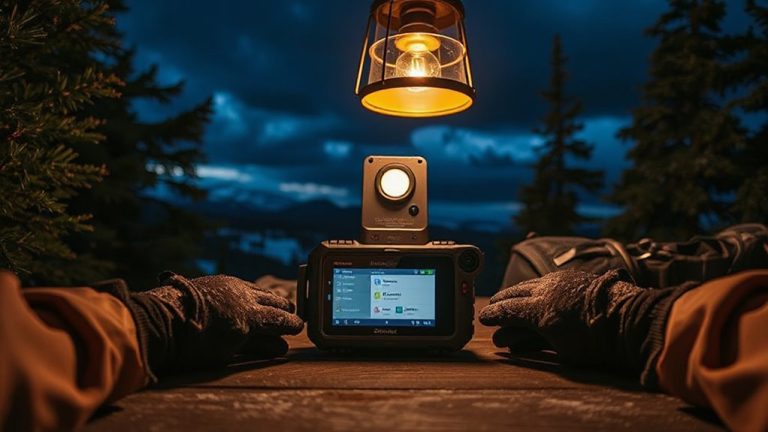
While silence can be a tactical advantage, staying connected often means the difference between rescue and being overlooked-so your communication tools need to match the scenario. Law enforcement relies on encrypted radios using encrypted protocols to prevent interception, ensuring command coordination stays secure. These systems offer signal privacy but require power, training, and compatible networks. For civilians, emergency signaling-like whistles, mirrors, or PLBs-provides simplicity and reliability without the need for infrastructure. Signal privacy isn’t a priority; visibility is. Most personal locator beacons transmit GPS coordinates directly to rescue services with near-instant registration. Radios like the Baofeng UV-5R are popular, but lack built-in encryption, making them risky in sensitive situations. Encrypted models, such as the Motorola APX, deliver proven security but cost over $500 and demand licensing. Choose based on need: stealth and coordination demand encryption; basic distress calls favor open, repeatable signals anyone can trace.
Threat Strategy: Engage and Control vs Evade and Exit
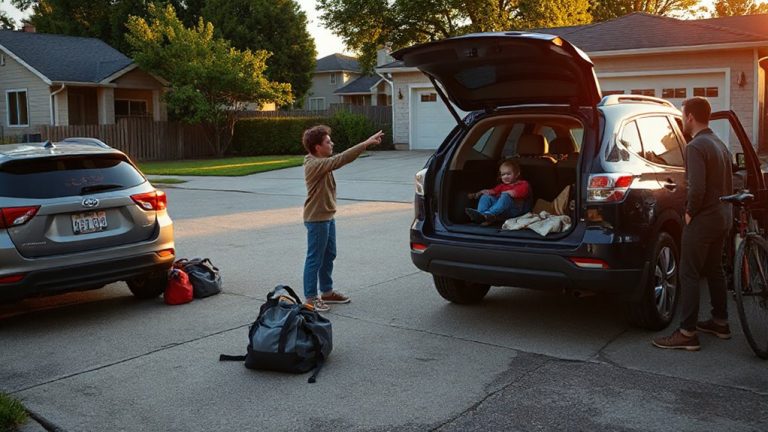
How you respond to a threat could mean the difference between safety and disaster-so which approach works better: standing your ground or getting out fast? For civilians, evasion is usually the smarter play. You’re not trained to engage like law enforcement, so your priority should be threat assessment and early detection. Spotting danger early gives you time to use pre-mapped escape routes instead of relying on confrontation gear. Law enforcement may carry tools for control, but you need mobility and situational awareness. Staying undetected and leaving the area quickly reduces risk more effectively than tactical gear ever will. Your bug-out pack should support exit, not engagement-lightweight, quiet, and packed with navigation tools. Choose clothing that blends in, not stands out. In most cases, the best strategy isn’t to win a fight-it’s to avoid it entirely.
On a final note
You need different gear depending on your role. Police packs support combat-durable, heavy, with weapons and comms built for engagement. Civilian kits prioritize light weight and mobility, focusing on escape and survival basics. You can’t swap them interchangeably. Duty loads exceed 40 lbs; civilian packs stay under 20. Each design reflects its purpose: control vs. evasion. Choose based on real threats, not assumptions. Test weight, access, and durability in your own conditions.